
About these notes: This BSN and Post RN study guide is based on the teaching and infection-prevention references listed below. It is an original source-based summary, not an extracted YouTube lecture transcript.
Everyday Relevance of Microorganisms
Microorganisms are ubiquitous, encountered in food, water, soil, homes, and within the human body. Their effects can range from helpful to harmful, or they may have little evident impact in specific situations. The study of microbiology equips nurses to teach practical prevention strategies and to explain the significance of hygiene, appropriate food storage, sanitation practices, and judicious antimicrobial use. The primary objective is to manage microbial risks effectively and sensibly, rather than pursuing the impractical goal of maintaining every household surface in a sterile state.
Useful Microbial Activities
Selected microorganisms are intentionally utilized in controlled fermentation processes, such as yeast in bread making and specific bacterial cultures in various fermented foods. Beyond fermentation, microbial activity is crucial for decomposition and nutrient cycling within ecosystems. Successful useful fermentation requires the presence of intended organisms and controlled processing conditions; this differs distinctly from uncontrolled spoilage. It is important to note that a fermented product should not be automatically presumed safe for all individuals or considered a treatment for specific diseases without further evidence.
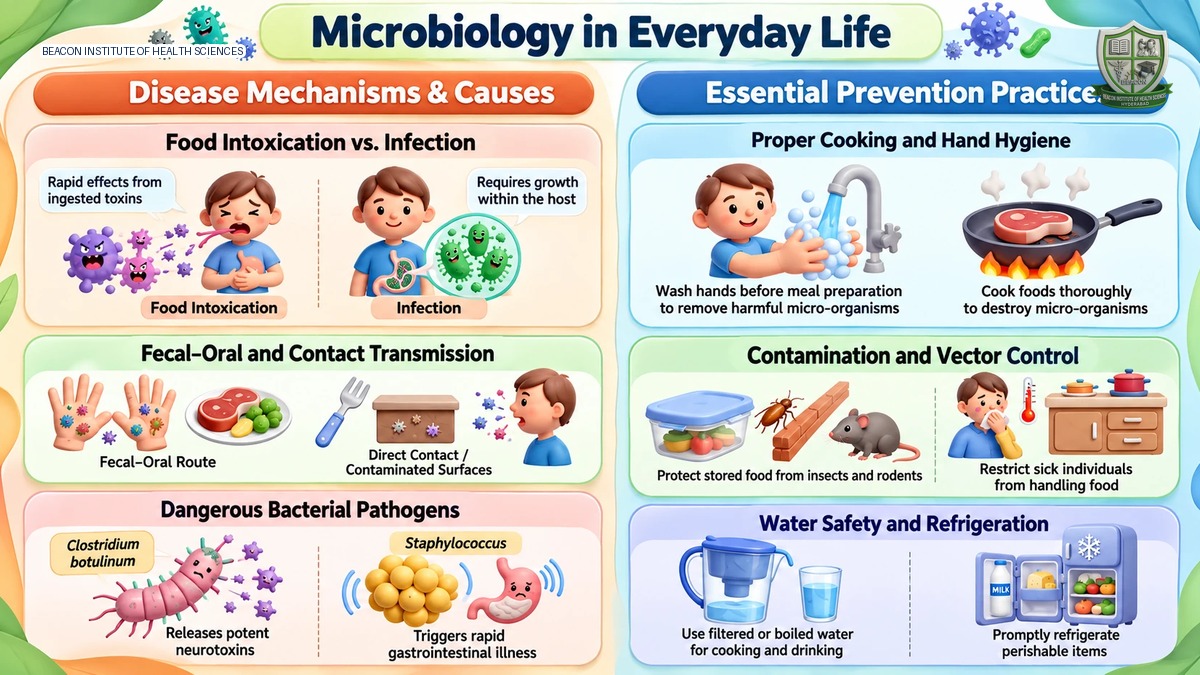
Food Contamination and Illness Prevention
Food contamination can occur at any stage, including production, storage, or preparation. Raw or undercooked animal products, as well as unpasteurized items, can harbor harmful organisms. A significant risk factor is cross-contamination, which involves the transfer of harmful microbes from hands, equipment, or raw foods to ready-to-eat foods. It is crucial for nurses to educate patients that food appearing and smelling acceptable can still be unsafe. Patient teaching should always take into account local facilities, available household resources, and individual vulnerabilities, particularly immune suppression.
Clean and Separate Practices for Food Safety
- Handwashing: Wash hands thoroughly with soap and water before preparing or eating food, and after handling any potentially contaminated items.
- Surface and Utensil Hygiene: Clean utensils and preparation surfaces appropriately.
- Produce Preparation: Rinse produce under running water.
- Preventing Cross-Contamination: Keep raw meat, poultry, seafood, and their juices strictly separate from ready-to-eat foods during purchase, storage, and preparation. Utilize separate preparation equipment for these categories or ensure thorough cleaning between tasks. Be aware that washing raw poultry can inadvertently spread contamination to the sink and adjacent surfaces.
Cook and Chill Guidelines
- Safe Cooking Temperatures: Always use suitable internal cooking temperatures and verify with a food thermometer, rather than relying solely on appearance. CDC guidance recommends an internal temperature of 74 degrees Celsius (165 degrees Fahrenheit) for poultry and reheated leftovers.
- Prompt Refrigeration: Refrigerate perishable food promptly and within two hours; do not leave it at room temperature longer than this limit. If the ambient temperature is above 32 degrees Celsius (90 degrees Fahrenheit), refrigeration should occur within one hour.
- Refrigerator Temperature: Maintain the refrigerator at 4 degrees Celsius (40 degrees Fahrenheit) or below. Refrigeration primarily slows microbial growth but does not sterilize food.
- Safe Thawing: Thaw frozen food safely in the refrigerator. If using an approved cold-water or microwave method, follow its specific food-safety instructions; never thaw perishable food on a counter at room temperature.
Hand Hygiene and Respiratory Habits
Routine hand cleaning is fundamental in reducing the transfer of microbes between contaminated objects, the mouth, wounds, and other people. Use soap and water when indicated, selecting the appropriate hand product for the specific setting. Essential respiratory etiquette includes covering coughs and sneezes, proper disposal of tissues, and cleaning hands after managing secretions. In healthcare environments, nurses must adhere to Standard Precautions and additional infection-specific measures. Household education should prioritize practical, targeted hygiene and avoid promoting indiscriminate chemical spraying.
Water, Environment, and Safe Products
Ensuring drinking-water safety and proper sanitation significantly reduces exposure to pathogens. When the safety of the water supply is uncertain, use an approved local safe-water method and reliable public-health guidance. Store water in clean, covered containers and prevent contamination of the dispensing point. Waste materials should be managed through the appropriate local system. Cleaning products must only be used for their intended application and strictly according to label instructions; never mix different chemicals or use surface disinfectants on skin or food.
Antimicrobial Stewardship and Vaccination
It is critical to understand that antibiotics are ineffective against viral infections. Patients should take prescribed medicines precisely as directed by their treating clinician and seek advice regarding any adverse effects, rather than sharing medications or saving leftovers for future illnesses. The misuse of antimicrobials contributes to the development and spread of antimicrobial resistance among microbes. Vaccination plays a vital role in reducing the risk of selected preventable diseases; nurses should advise adherence to current Pakistan schedules and individual clinical recommendations.
The Community Nurse's Role in Education
Community nurses have a crucial role in assessing a household's realistic capacity to implement health practices. Education should focus on one clear behavior at a time, and nurses should ask learners to demonstrate or repeat the key steps to ensure understanding. This education should be linked to practical tasks, such as demonstrating how to separate raw and cooked food or how to check refrigerator storage temperatures. Nurses must also recognize concerning illnesses and refer individuals through the local clinical pathway, while documenting needs and barriers to ensure that advice can be effectively followed.
Learning Example and Revision
Consider a scenario where a family is preparing raw poultry and salad on the same cutting board. A nurse would explain the concept of cross-contamination and guide them in planning to use separate utensils or ensuring effective cleaning between tasks. This example provides an opportunity to review the four fundamental food-safety ideas: clean, separate, cook, and chill. It also allows for an explanation of why harmless appearance and refrigeration alone cannot guarantee food safety, and why antibiotics are not a substitute for proper prevention practices.