
About these notes: This BSN and Post RN study guide is based on the teaching and infection-prevention references listed below. It is an original source-based summary, not an extracted YouTube lecture transcript.
Meaning and Purpose
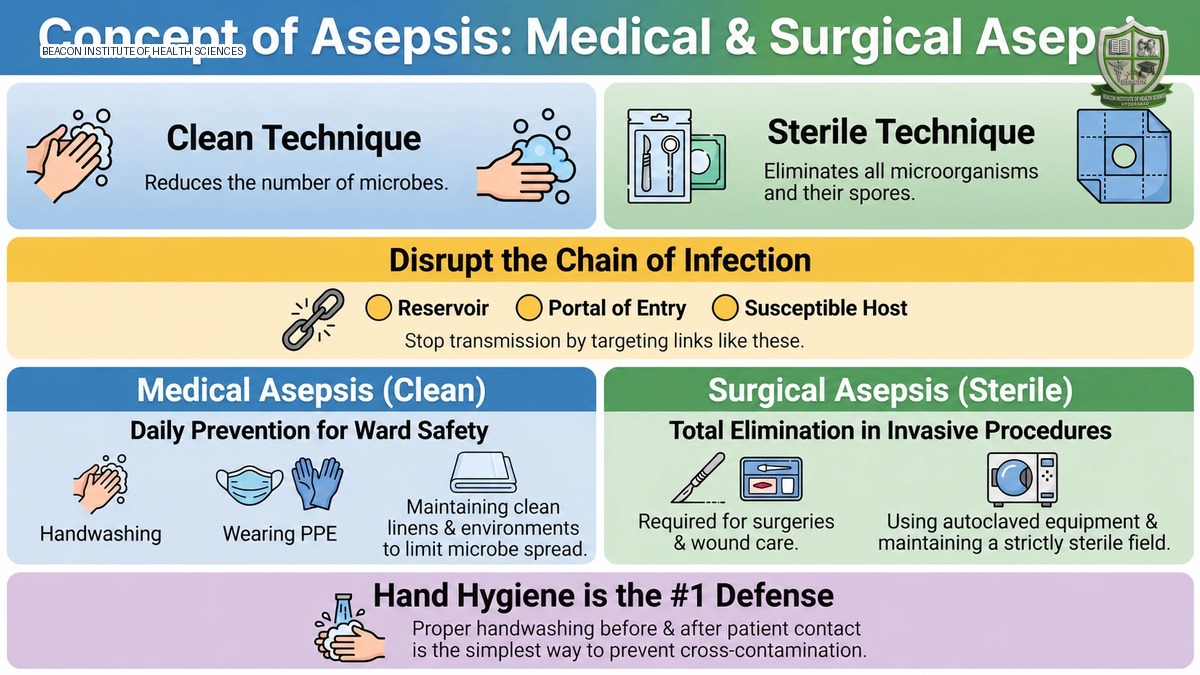
Asepsis is the prevention of microbial contamination that could lead to infection. Medical asepsis, often called clean technique in teaching, reduces contamination and transmission during routine care. Surgical asepsis, or sterile technique, protects sterile tissues and the sterile equipment used for relevant procedures. These educational terms help explain different levels of control; the required technique for a particular procedure must come from the facility policy and validated guidance.
Medical Asepsis in Routine Nursing
Routine infection prevention includes hand hygiene, appropriate protective equipment, cleaning the care environment, managing waste safely and reprocessing reusable equipment. Standard Precautions apply to all patients. Select gloves, gowns and face or eye protection according to the expected exposure. Gloves do not replace hand hygiene. Keep clean supplies away from contaminated items and avoid transferring organisms from one body site, surface or patient to another.
Surgical Asepsis in Procedural Care
Procedures involving sterile tissue or selected invasive devices require the specified sterile preparation and equipment. Assess the procedure, collect suitable supplies and protect the critical sites and components. Examples include sterile insertion equipment and components intended to enter or connect to a protected site. Sterile technique requires a controlled workflow and trained performance; sterile gloves alone cannot compensate for contaminated equipment or an unsafe working area.
Protecting Key Parts and Sites
Plan how the site and equipment will remain uncontaminated. Avoid touching critical components unnecessarily, using the approved aseptic technique for the procedure. Inspect pack integrity and indicators as required, check supplies before starting and keep sterile items within the controlled field. Do not reach across or place contaminated objects on the field. Exact setup and field rules must follow the taught procedure and local competency standards.
Antisepsis, Cleaning and Sterilization
Antisepsis is applied to living tissue; surface disinfectants are used on compatible inanimate materials. Use the correct preparation product and its application and drying instructions. Cleaning removes soil before reprocessing. Critical devices entering sterile tissue or the vascular system require sterilization; semicritical devices generally require at least high-level disinfection. A single wipe or visual cleanliness does not establish sterility.
Safe Injections
Use aseptic preparation in a designated clean area. A needle and syringe are single-use for one patient, and changing only the needle does not make a used syringe safe for another person. Do not re-enter a medication vial with a used needle or syringe. Handle single-dose and multidose containers according to the relevant policy, and prevent contamination of injection equipment and medication. Dispose of sharps immediately in the appropriate container through the approved workflow.
Responding to a Breach
If a critical item or field is contaminated, stop the affected part of the procedure and replace or re-establish the contaminated components according to the procedure. Do not conceal a breach or proceed merely because the patient is waiting. If exposure has occurred, notify the responsible clinician or infection-prevention team, assess the patient and follow reporting and follow-up requirements. Document facts and corrective action.
Nursing Responsibilities
Explain the procedure and gain the required consent, assess allergies and relevant risks, prepare the environment and use the specified technique. Monitor the patient and device site, maintain dressings according to the care plan, and review device necessity with the team. Record care and communicate any new redness, discharge, pain or systemic deterioration. Training, observation and feedback help translate principles into consistent practice.
Learning Example
While preparing an invasive-device procedure, a critical connector touches a contaminated surface. The nurse pauses and replaces it using the approved process before continuing. The decision protects the patient even when the connector looks unchanged. Visible dirt is not required for contamination to matter.
Revision Prompts
Compare medical and surgical asepsis. Explain why sterile gloves are only one part of sterile technique. Identify safe injection principles. Describe how to respond to a contaminated critical component. Explain the difference between antisepsis and equipment disinfection.