
About these notes: This BSN and Post RN study guide is based on the teaching and infection-prevention references listed below. It is an original source-based summary, not an extracted YouTube lecture transcript.
An Integrated Protective System
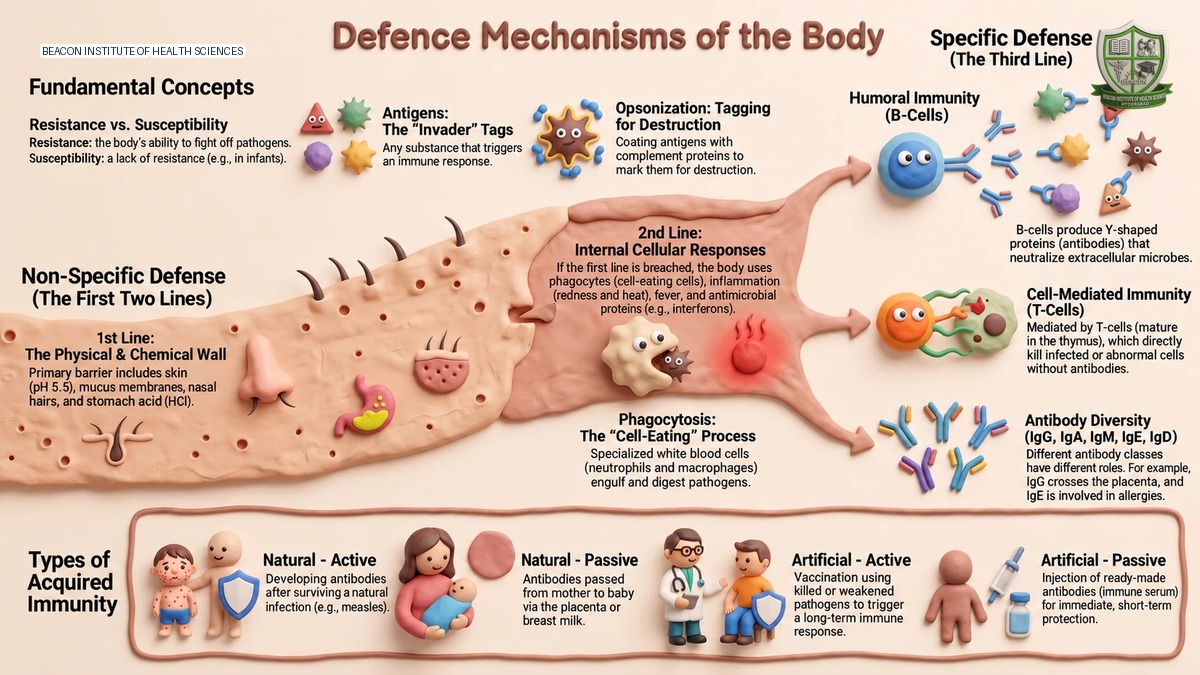
Body defence encompasses barriers, rapid innate responses, and antigen-specific adaptive responses. These systems are not three completely separate walls; rather, they interact. A wound can bypass a barrier, and illness or treatment can alter immune responses. Nurses integrate this knowledge into practice through risk assessment, skin and device care, vaccination education, and prompt recognition of patient deterioration.
First-Line Barriers
Intact skin and epithelial linings are crucial for limiting microbial entry. Mucus, ciliary movement, and flushing mechanisms help remove microbes from body surfaces. Barrier protection can be compromised by wounds and invasive devices. Effective nursing care therefore involves protecting skin integrity, assessing wounds, maintaining device sites, and preventing unnecessary disruption of normal protective surfaces.
Innate Responses
Innate immunity responds rapidly to common danger patterns. Key components include:
- Phagocytes: Neutrophils and macrophages engulf foreign material.
- Complement Proteins: Assist with microbial clearance and inflammatory signaling.
- Natural Killer Cells: Participate in early defence against abnormal cells.
- Inflammation: Helps recruit protective activity. However, excessive or poorly controlled inflammatory responses can injure tissue.
The presence of redness, warmth, swelling, and pain may indicate inflammation, but these signs alone do not identify a specific organism or establish a diagnosis.
Adaptive Responses
Adaptive immunity specifically recognizes antigens. Its components and functions include:
- B Lymphocytes: Can develop into antibody-producing plasma cells.
- T Lymphocytes: Contribute to coordination and cell-mediated responses.
- Memory Cells: Support a faster and more efficient response upon subsequent exposure to the same antigen.
- Antibodies: Are proteins, not white blood cells, and play a critical role in targeting specific pathogens.
Innate and adaptive mechanisms cooperate, including through processes like antigen presentation and immune signaling.
Active and Passive Protection
Immunity can be acquired through two main mechanisms:
Active Immunity
Active immunity develops when a person mounts their own immune response, such as after vaccination or infection. Vaccination prepares protective responses without exposing the individual to the full risks associated with the disease.
Passive Immunity
Passive immunity involves the transfer of ready-made antibodies, providing temporary protection without the development of the recipient's own immune memory.
Vaccination and Local Schedules
Protection from vaccination is not instant or absolute; factors such as timing, doses, the host's condition, and the particular vaccine type are crucial. Healthcare providers should utilize Pakistan schedules and authorized clinical advice rather than adopting schedules from other countries without verification.
Factors Affecting Susceptibility
Immune function and the risk of infection are influenced by various factors:
- Underlying illness
- Immunosuppressive treatment
- Nutrition status
- Vaccination history
- Barrier disruption
Conditions like diabetes, cancer, and organ transplantation are associated with increased infection risk. Invasive procedures, such as catheter insertion and surgery, can create new entry routes for pathogens. While a vulnerable patient may require closer observation, nurses should avoid inferring a specific immune defect based solely on age or a single laboratory value.
Assessment and Monitoring in Nursing
Nurses play a critical role in assessing and monitoring patients to support their defence mechanisms:
- Review the patient's history, including past infections, immunization status, medications, wounds, and medical devices.
- Monitor clinical trends, such as temperature, respiratory status, mental status, and wound changes, along with ordered investigations.
- Recognize that the absence of fever does not rule out infection.
- Escalate any new deterioration through established facility pathways and document observations accurately.
The primary objective is timely recognition and prevention, not an unsupported bedside diagnosis of immune failure.
Supporting Patient Defence
Nurses contribute to supporting patient defence through several actions:
- Implement Standard Precautions consistently.
- Protect device sites and skin integrity.
- Ensure adequate nutrition and hydration as part of the care plan.
- Support patient rest and adherence to prescribed treatment.
- Explain vaccines using clear, understandable language and ensure patients are referred for questions regarding contraindications or immunosuppressive therapy.
- For patients with significant immune suppression, specialized measures may be necessary; nurses should follow the individual care plan rather than implementing a universal protective environment.
Learning Example for Nurses
Consider a patient receiving immunosuppressive treatment who develops a new wound change and feels unwell. The nurse's actions would include checking observations and the wound, reviewing the care plan, promptly reporting findings, and maintaining safe wound care. It's crucial to remember that a normal temperature alone should not dismiss the concern. Treatment decisions must always remain with the appropriate clinical team.
Revision Prompts
- Compare and contrast innate and adaptive defence mechanisms.
- Explain how a catheter can disrupt the body's natural barriers.
- Distinguish between active and passive immunity.
- Describe the specific roles of antibodies and memory cells in the immune response.
- Identify nursing actions that support the body's defence mechanisms and observations that necessitate prompt communication with the healthcare team.