
About these notes: This BSN and Post RN study guide is based on the teaching and infection-prevention references listed below. It is an original source-based summary, not an extracted YouTube lecture transcript.
Purpose of Isolation Precautions
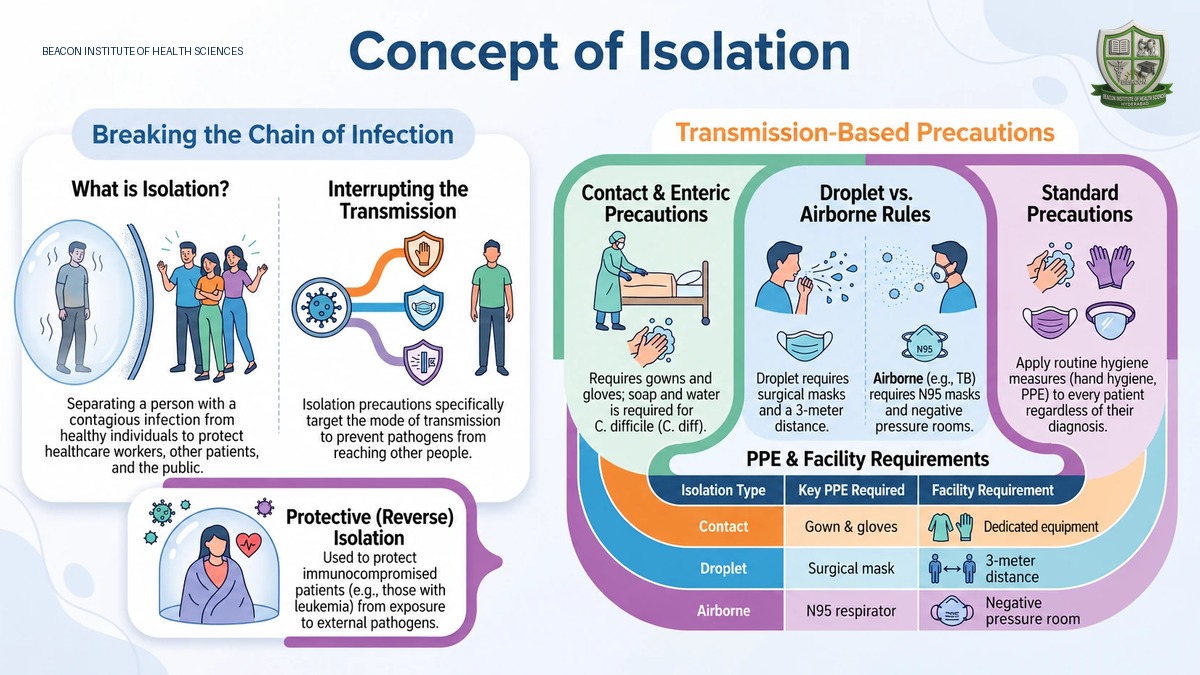
Isolation precautions are implemented to reduce the transfer of infectious agents while simultaneously maintaining appropriate patient care. The selection of specific precautions is based on the clinical presentation, likely transmission routes, microbiology findings, and advice from infection-prevention specialists. Precautions may be initiated for a suspected infection even before definitive test results are available. Patients who are colonized with certain organisms may also require additional precautions. It is crucial to remember that isolation must never compromise nursing observation, communication, or a patient's dignity.
Standard Precautions for Every Patient
Standard Precautions are foundational and continue to apply in every isolation category for every patient. These measures include:
- Hand hygiene
- Exposure-based protective equipment
- Respiratory hygiene
- Safe injection practices
- Sharps safety
- Appropriate cleaning and reprocessing of equipment
Because a patient's infection status may be unknown, nurses should not delay using these measures until a positive test result is confirmed. The type of protective equipment used depends on the specific task and the anticipated contact with blood, body fluids, mucous membranes, or nonintact skin.
Contact Precautions
Contact Precautions are additional measures specifically designed to prevent transmission through direct patient contact or contaminated environmental surfaces. Key elements include:
- Following designated room or cohort placement guidelines.
- Adhering to specific gown and glove requirements.
- Arranging equipment appropriately.
- Using dedicated patient equipment when indicated or cleaning and disinfecting shared equipment correctly before reuse.
- Safely removing protective equipment and performing thorough hand hygiene.
It is important to note that a room sign serves as a reminder but cannot replace correct bedside technique and adherence to protocols.
Droplet Precautions
Droplet Precautions are implemented to address the spread of infectious agents associated with respiratory droplets in relevant clinical scenarios. These require:
- Compliance with mask and room-placement requirements.
- Use of source control measures for the patient when appropriate and tolerated.
- Maintenance of hand hygiene and Standard Precautions.
Organism-specific guidance may necessitate additional protection, especially during certain medical procedures. It is essential not to assume that every respiratory infection requires the same type of mask, room, or duration of precautions.
Airborne Precautions
Airborne Precautions are indicated for patients with suspected or confirmed infections that require airborne control measures. Use an airborne infection isolation room (AIIR) when required and available, and promptly escalate any placement limitations to the infection-prevention team. These precautions involve:
- Appropriate ventilation controls.
- Use of specified respiratory protection.
Staff members requiring respirators must complete applicable fit-testing and participate in a use program. Tuberculosis and measles are significant examples of infections necessitating airborne measures in healthcare settings. A routine surgical mask worn by staff is not an adequate substitute for a prescribed respirator. Any limitations regarding patient placement should be escalated to the responsible team rather than attempting to improvise engineering controls.
Routes and Combinations
Some infections may require a combination of precautions or specific organism-driven recommendations. For example, measles is not solely a routine droplet-only illness. It is critical to determine the required precaution category based on current guidance and the facility's specific pathway, rather than making a decision based on a general symptom like cough alone. Precautions should be reassessed when new laboratory results become available. Discontinuation of precautions depends on the specific infection, its treatment, and relevant clinical criteria, not a universal fixed number of days.
Transport and Visitors
When transporting patients, limit movement to only necessary care. It is crucial to communicate the required precautions to the receiving area and apply indicated source control. Infected or colonized sites must be contained as directed to prevent contamination of corridors or shared equipment. Visitors should be educated on appropriate hand hygiene and protective measures in language they can understand. The receiving healthcare team requires accurate information about the patient's condition without unnecessary disclosure of private patient details.
Protective Environments
A protective environment is a distinct and specialized strategy designed for selected highly vulnerable patients, such as certain stem-cell transplant recipients. The goal and engineering requirements of a protective environment are different from those for containing an airborne infection. It is important not to confuse positive-pressure protective arrangements with negative-pressure airborne containment. The implementation of a protective environment requires specialist assessment and specific facility capabilities.
Psychological Care and Documentation
It is important to explain to patients why precautions are being used and when the plan will be reviewed. Nurses should offer regular contact, assist with communication, and assess for loneliness, anxiety, and practical needs. Essential nursing care, including observations, medication administration, rehabilitation, and safe nutrition, must continue uninterrupted. All aspects of care, including the isolation category, patient education provided, relevant observations, and handover details, must be thoroughly documented. Any breach in protocol or new patient deterioration should be promptly reported.
Learning Example and Revision
Consider a patient with suspected infectious pulmonary tuberculosis arriving before confirmatory testing. The nurse's immediate actions should include notifying the clinical and infection-prevention teams and initiating the indicated pathway promptly. Calmly explain source control measures and placement requirements to the patient. For revision, consider the following points: which precautions are universal (Standard Precautions), how Contact precautions differ from Droplet and Airborne precautions, and why a Protective Environment serves a distinct purpose.