
Learning Objectives
After completing this lesson, BSN students and nursing educators will be able to:
- Identify common mental health problem areas requiring nursing recognition.
- Understand the crucial role of nursing in initial assessment, triage, and ruling out physical causes for mental health symptoms.
- Apply principles of therapeutic communication and individual formulation in mental health care.
- Recognize various therapeutic interventions, including psychological, social, and prescribed medication treatments.
- Perform comprehensive safety assessments and identify indicators for urgent professional review in mental health contexts.
- Discuss the importance of family participation with consent in patient care plans.
Understanding Common Mental Health Problems
Mental health encompasses a broad spectrum of conditions that can significantly impact an individual's thoughts, feelings, behaviors, and overall well-being. Nurses play a vital role in recognizing these problems, which is distinct from providing a formal checklist diagnosis. Our focus is on recognizing presentations that indicate a need for support and intervention.
Common mental health problem areas include:
- Depression: Characterized by persistent sadness, loss of interest, and a range of physical and emotional symptoms.
- Anxiety: Involves excessive worry, fear, and apprehension, often accompanied by physical symptoms like palpitations or shortness of breath.
- Panic: Marked by sudden, intense episodes of fear that trigger severe physical reactions, often without real danger.
- Psychosis: A condition where an individual loses contact with reality, experiencing delusions or hallucinations.
- Mania: Characterized by periods of abnormally elevated mood, energy, and activity, often accompanied by impulsive behavior.
- Trauma-related problems: Arise from exposure to a terrifying event, leading to symptoms like flashbacks, severe anxiety, and difficulty coping.
- Substance-related problems: Involve the recurrent use of alcohol or other drugs, leading to clinically significant impairment or distress.
- Eating problems: Conditions characterized by severe disturbances in eating behaviors and related thoughts and emotions.
It is critical for nurses to understand that their role is in problem recognition and initial assessment, not in providing a definitive psychiatric diagnosis.
The Role of the Nurse in Mental Health
Initial Assessment and Triage
Upon encountering an individual presenting with mental health concerns, the nurse's first step involves a comprehensive assessment, including astute triage. This process prioritizes care and helps distinguish between mental health crises and other urgent medical conditions. A crucial aspect of this initial assessment is to actively rule out any underlying physical causes that might be mimicking psychological symptoms. Many medical conditions, such as thyroid dysfunction, neurological disorders, or medication side effects, can present with symptoms resembling depression, anxiety, or psychosis. Therefore, a thorough physical examination and relevant diagnostic tests are indispensable.
Therapeutic Communication
Therapeutic communication is the cornerstone of nursing care in mental health. It involves active listening, empathy, non-judgmental acceptance, and clear, honest communication to build trust and facilitate a supportive relationship. Through therapeutic communication, nurses can help individuals express their feelings, identify their concerns, and collaborate on care planning. This approach empowers individuals and fosters a sense of dignity and respect.
Individual Formulation and Collaborative Care
Care for individuals experiencing mental health problems requires an individualized approach, often referred to as individual formulation. This involves understanding the unique factors contributing to a person's current presentation, including their life experiences, strengths, and challenges. Therapeutic interventions are then tailored to these specific needs. Family participation, when the individual provides explicit consent, is highly valuable. Families can offer crucial insights into the individual's history and support network, and they can be vital partners in implementing care plans, fostering a supportive environment, and promoting recovery.
Therapeutic Interventions for Mental Health Problems
Overview of Treatment Modalities
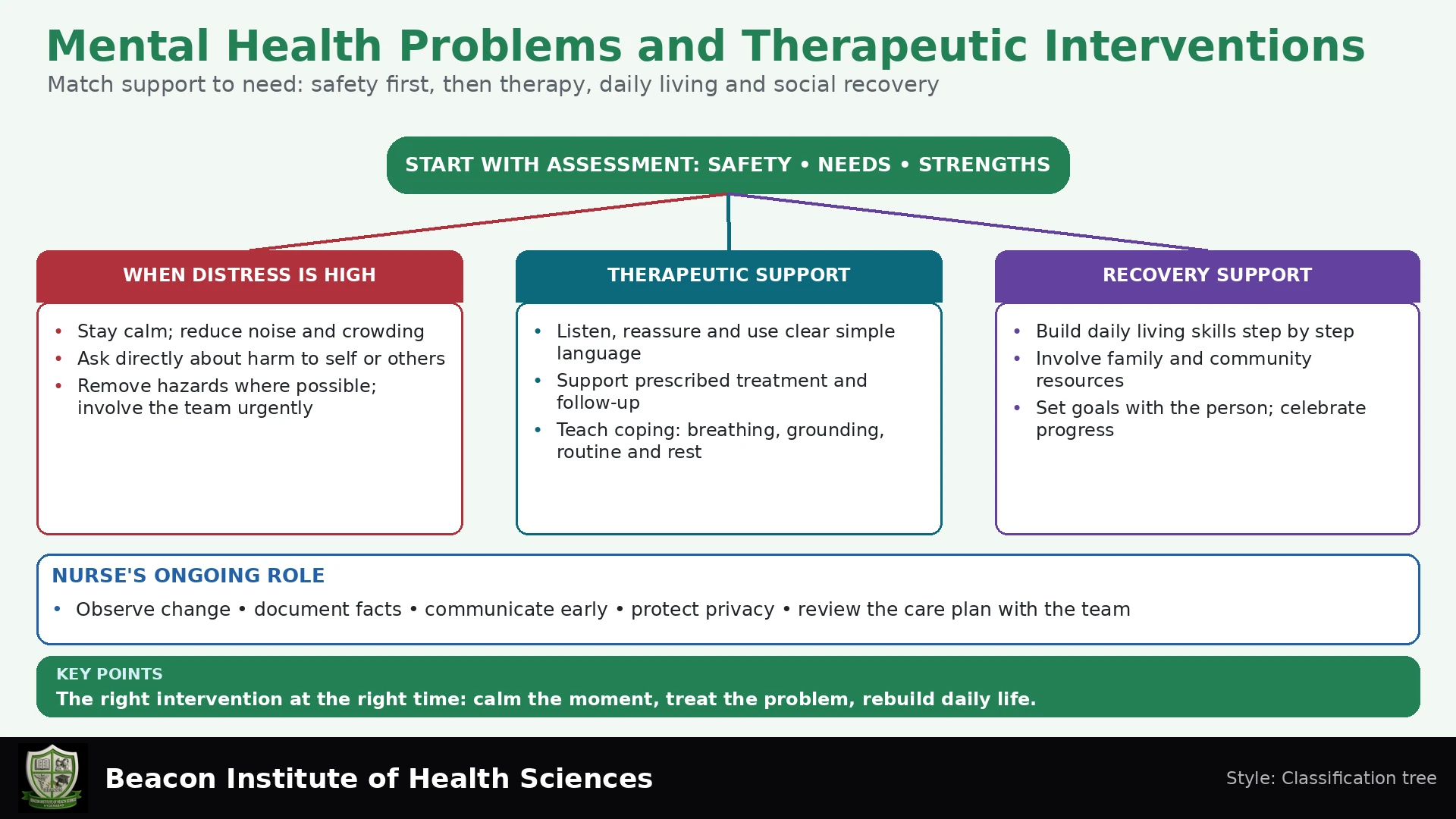
Therapeutic interventions for mental health problems are multifaceted and typically involve a combination of approaches:
- Psychological Treatments: These include various forms of psychotherapy and counseling, aimed at helping individuals develop coping mechanisms, process emotions, and change maladaptive thought patterns.
- Social Treatments: Focus on addressing social determinants of health, such as housing, employment, and social support networks, to improve overall well-being and integration.
- Prescribed Medication Treatment: Pharmacological interventions can effectively manage symptoms of many mental health conditions, often used in conjunction with psychological and social therapies. Nurses are responsible for safe administration, monitoring effects, and educating patients.
Symptom-to-Intervention Guide for Nurses
This table outlines recognized problem areas and corresponding nursing considerations and interventions, emphasizing a holistic approach.
| Recognized Problem Area | Key Nursing Considerations | Therapeutic Interventions |
|---|---|---|
| Depression | Observe for changes in mood, energy, sleep, appetite, and self-care. Assess for feelings of hopelessness or worthlessness. | Therapeutic communication to explore feelings; encourage engagement in mild activities; facilitate access to psychological therapies; support social connection; administer and monitor prescribed antidepressant medication. |
| Anxiety/Panic | Identify triggers and physical manifestations (e.g., racing heart, shortness of breath). Provide a calm, reassuring environment. | Teach relaxation techniques (e.g., deep breathing); therapeutic communication to explore worries; support psychological therapies (e.g., CBT); administer and monitor prescribed anxiolytic medication as directed. |
| Psychosis | Assess for disturbances in thought process, perception (hallucinations, delusions), and reality testing. Ensure a safe environment. | Establish trust through clear, concise therapeutic communication; avoid challenging delusions/hallucinations directly; discuss medication benefits, adverse effects and barriers collaboratively; reduce environmental stimuli; facilitate social skills training. |
| Mania | Observe for elevated mood, increased energy, decreased need for sleep, rapid speech, and impulsive behaviors. Protect from harm. | Provide a structured, low-stimuli environment; set clear, consistent boundaries; encourage rest and nutrition; administer and monitor prescribed mood stabilizers; engage in therapeutic communication focused on reality. |
| Trauma-related problems | Assess for flashbacks, nightmares, severe anxiety, and avoidance behaviors. Approach with sensitivity and patience. | Establish a safe and supportive environment; validate experiences through therapeutic communication; facilitate access to trauma-informed psychological therapies; support development of coping strategies; encourage social support. |
| Substance-related problems | Assess pattern of substance use, withdrawal symptoms, and impact on daily life. Prioritize physical safety during withdrawal. | Provide education on harm reduction; facilitate access to detoxification services and psychological therapies (e.g., CBT, motivational interviewing); support group participation; administer and monitor prescribed medications for withdrawal or cravings. |
| Eating problems | Assess nutritional status, eating behaviors, body image concerns, and associated physical complications. | Monitor vital signs and nutritional intake; provide therapeutic communication to address distorted thoughts; facilitate access to specialized psychological therapies; support re-establishment of healthy eating patterns; involve family with consent. |
Safety Assessment and Urgent Review
Safety assessment is a continuous and critical responsibility for nurses in mental health care. This involves ongoing evaluation for potential risks to the individual or others. It is imperative to understand that risk scales should not be used to predict suicide or decide treatment or discharge. Comprehensive individual assessment, clinical judgment, and direct communication are paramount.
Urgent professional review is required in specific situations, including:
- Severe deterioration: A rapid and significant worsening of mental state, indicated by profound changes in behavior, cognition, or mood.
- Inability to care for self: When an individual is unable to meet basic needs such as hygiene, nutrition, or safety, putting their health at immediate risk.
- Immediate harm concerns: Any indication of active suicidal ideation with a plan, intent, or means, or homicidal ideation, or other severe self-harming behaviors.
- Delirium: An acute disturbance in attention and cognition, often fluctuating, which may indicate an underlying medical emergency.
Nurses must be vigilant in identifying these indicators and promptly escalate care to the appropriate multidisciplinary team for urgent assessment and intervention.
Collaborative Safety and Follow-up
Ask directly about thoughts of self-harm, suicidal intent, access to means, recent actions and supports. Do not rely on a promise or a no-suicide contract. Develop a practical safety plan describing warning signs, coping actions, trusted contacts, professional help and steps to reduce access to means collaboratively where appropriate. Provide an accessible plan and check understanding. Urgent presentations require timely clinical response and appropriate observation; information sharing should follow local policy and legal requirements.
For panic-like symptoms, assess new chest pain or breathing difficulty rather than automatically attributing them to anxiety. For psychosis, acknowledge distress without agreeing with a delusional belief: “I cannot hear the voice, but I can see it is frightening.” Ask about any commands and immediate safety. Use calm, simple language and avoid arguments. For trauma-related distress, explain each step, offer choices and avoid forcing a detailed account. For eating or substance-related problems, clinical instability or dangerous withdrawal requires medical care as well as psychological support.
Fictional Case and Explained Answers
Hassan, 24, attends a clinic with racing thoughts, little sleep and unusually high energy. He has spent money he cannot afford and has recently used a stimulant. His family calls him “just excited.”
- Can the nurse diagnose mania from this account? No. The presentation needs prompt assessment of duration, functioning, substance use, medicines, physical health and safety. Several causes may produce similar signs.
- What immediate care helps? Offer a calm setting, clear communication, assessment of hydration, nutrition, exhaustion and immediate harm, and timely clinical review. Avoid confrontation and help reduce stimulation.
- How can the family participate? With consent, obtain information about baseline behavior, sleep and recent change. Explain concerns without blaming Hassan. Share the agreed follow-up and crisis plan.
- How is effectiveness reviewed? Track sleep, functioning, adverse effects and the person's own goals, and communicate changes to the team. Reassess safety as circumstances change.