
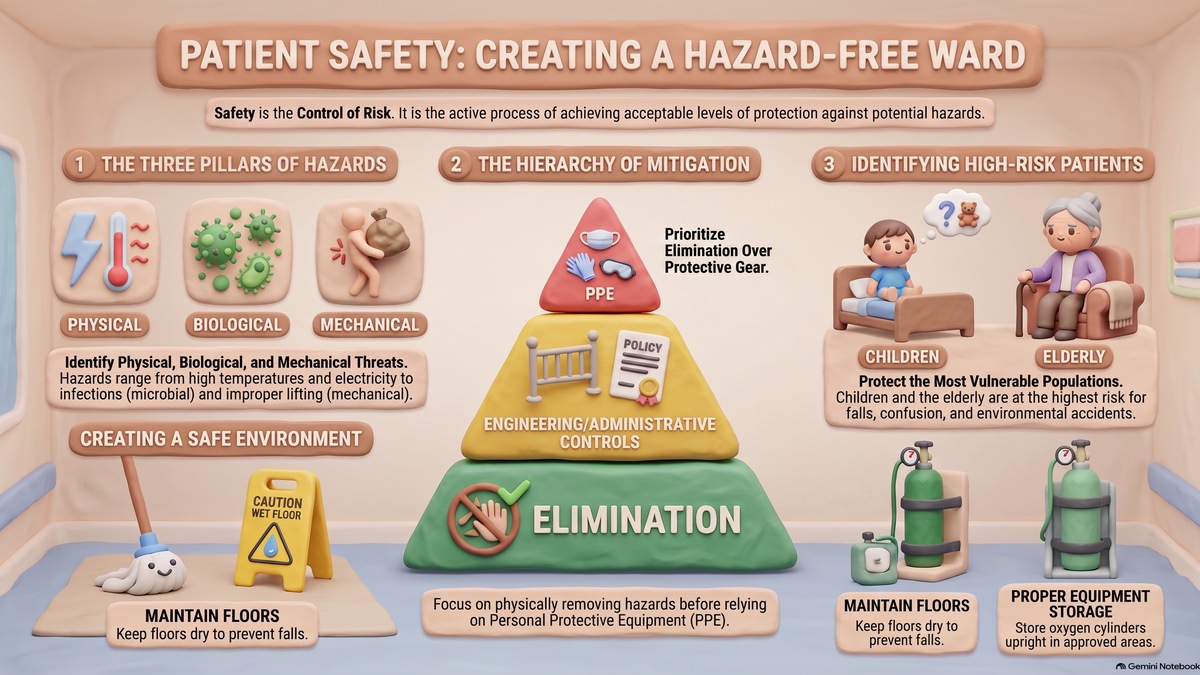
1. Introduction and Defining Safety
Within clinical nursing education, the study of safety and risk management forms a critical foundational pillar. Clinical safety focuses on establishing standard protocols to prevent adverse outcomes and to protect both patients and healthcare personnel from avoidable environmental hazards.
Clinical Definition of Safety
Safety is defined as the state of being safe; the condition of being protected from hurt, injury, harm, or other non-desirable outcomes. This state also directly refers to the control of recognized clinical hazards and risks in order to achieve an acceptable level of safety against potential risk. If an individual senses any type of hazard or threat in their environment and implements acceptable measures or protocols to protect against it, that active mitigation constitutes safety.
2. Characteristics and Benefits of Safety
Ensuring robust safety measures in clinical settings provides six key systemic benefits:
- Provides a Safe Environment for Nurse and Client Interaction: Establishing safety creates a clinical atmosphere built on trust and comfort. The patient feels secure, allowing the nurse to conduct a detailed, unhurried assessment or interview. Under these safe conditions, the client can share sensitive personal health details openly without fear or hesitation.
- Reduces Harm and Environmental Hazards: Proper safety design actively prevents falls, accidents, and exposure to various physical, biochemical, or mechanical hazards. This protection extends beyond the patient to include all healthcare team members, preventing workplace injuries and cross-infection.
- Accelerates Patient Recovery: When a patient feels genuinely safe and protected within their clinical environment, their physiological and mental stress levels decrease, which significantly accelerates their physical healing and overall recovery process.
- Enhances the Reputation of the Healthcare Facility: Hospitals that maintain impeccable safety standards build strong institutional trust. Consequently, patients actively prefer to seek treatment at these facilities because they know the environment is clean, controlled, and free from external hazards or harassment.
- Provides Calm and Comfort: A safe hospital environment minimizes hospital-induced anxiety, stress, and clinical depression. It helps patients remain calm and comfortable, making it significantly easier for them to adjust to prolonged hospital admissions and clinical procedures.
- Enables Professional Staff Performance: Healthcare workers and nursing staff can execute their clinical tasks confidently and efficiently when working in an environment where safety hazards are actively managed, eliminating occupational fear and anxiety.
3. Understanding Hazards and Classifications
Before safety measures can be implemented, the threats within the clinical environment must be clearly defined and classified.
Definition of a Hazard
A hazard is defined as any physical agent or situational circumstance that has the inherent potential to cause harm, injury, illness, or damage to a vulnerable target.
Natural vs. Human-Induced Hazards
- Natural Hazards: These hazards originate from unavoidable environmental or geological forces such as floods, earthquakes, or extreme meteorological storms.
- Human-Induced Hazards: These hazards stem directly from human activity, negligence, environmental interference, or a failure in protective infrastructure (for example, if a human-built dam or safety barrier fails due to poor engineering or maintenance, the resulting disaster is human-induced).
The Five Basic Classifications of Clinical Hazards
- Physical Hazards: Environmental factors that cause direct bodily harm. These include high environmental temperatures, excessive noise levels, ionizing radiation, mechanical vibrations, high pressure, and electrical currents.
- Microbial or Biological Hazards: Pathogenic microorganisms, including parasites, bacteria, viruses, and fungi, that cause infectious disease. In healthcare agencies, these frequently lead to healthcare-associated (nosocomial) infections.
- Chemical Hazards: Toxic substances, chemical dust, aerosols, fumes, noxious gases, chemical vapors, or harmful organic compounds that can cause systemic toxicity, tissue damage, or severe localized allergies.
- Mechanical Hazards: Physical trauma resulting from slips, trips, and falls, as well as ergonomic hazards. Ergonomic hazards are caused by wrong patient lifting techniques (improper transfers), awkward postures, and bad body mechanics during bed-to-stretcher, bed-to-wheelchair, or bed-to-bed movements.
- Psychosocial Hazards: Psychological stressors, high work-pressure, extreme shifts, and resulting mental distress or occupational disorders.
4. The Hierarchy of Hazard Controls
To minimize and manage hazards within a healthcare facility, clinical risk management utilizes a structured hierarchy. This system progresses from the most effective control measure at the top to the least effective (yet highly essential) control at the bottom:
s>5. Clinical Environmental Safety Assessment
Healthcare professionals must conduct systematic assessments to proactively identify hazards and establish a safe clinical environment for their clients. This process consists of six distinct phases:
- Identify Hazards: Perform thorough environmental sweeps to identify any active or latent biological, physical, chemical, or mechanical hazards.
- Determine Who Might Be Harmed and How: Analyze which individuals are in the immediate vicinity (patients, healthcare personnel, or visitors) and determine the exact clinical mechanisms through which they could be injured (e.g., slipping on wet surfaces, receiving electrical shocks).
- Assess Vulnerability: Evaluate the specific vulnerability level of people present. Vulnerable populations have a higher risk of injury and cannot navigate hazards without assistance. Key examples include: (1) Young children, who lack the cognitive capacity to recognize environmental dangers such as electrical outlets or hot surfaces, and (2) Older adults, who frequently suffer from age-related physical declines, unsteady gait, and impaired motor coordination.
- Evaluate Risks and Formulate Combat Strategies: Assess the probability and severity of each risk, and formulate targeted combat protocols. For example, to combat pediatric electrical hazards, install childproof safety plug protectors in outlets or position sockets at heights beyond a child's reach.
- Record Findings: Document all identified hazards, calculated risks, and documented incidents within the hospital or home setting to maintain a transparent, reviewable safety log.
- Review and Update Assessments: Periodically review risk assessments and adjust protocols as clinical dynamics change, ensuring that no new environmental hazards are left unaddressed.
6. In-Depth Analysis of Clinical Hazards
A rigorous clinical safety plan requires a deep, physiological understanding of how specific environmental hazards directly compromise patient safety:
A. Physical Hazards
- High Environmental Temperature: Excessive heat triggers superficial vasodilation, where blood vessels on the skin surface dilate. This physiological response causes a sudden drop in systemic blood pressure (BP), leading to orthostatic hypotension, dizziness, and fainting (syncope). A fainting patient is at high risk of falling and sustaining traumatic brain injuries or lacerations from hitting sharp edges.
- Fire Hazards: Extremely dangerous in healthcare facilities because a significant percentage of patients are bedridden, paralyzed, or immobile and cannot evacuate without physical assistance. In a closed ward fire, healthy personnel can escape, but immobile patients are trapped. Nurses must master emergency evacuation procedures, including transferring patients to adjacent fire-safe zones or, in extreme cases, breaking windows for emergency exits.
- Patient Falls: The leading cause of accidental injury in clinical facilities, primarily affecting pediatric and geriatric populations. Falls often occur when weak, medicated, or immobile patients attempt to move (e.g., to use the bathroom or walk) without waiting for assistance, especially on slippery surfaces.
- Improper Patient Positioning: Failing to position patients in medically prescribed arrangements (such as Fowler's, supine, or prone positions) causes sustained, excessive pressure on superficial tissues. This leads to localized ischemia, skin breakdown, and the development of severe pressure ulcers (bedsores).
- Suffocation and Impaired Breathing: The disruption of a patient's breathing can occur due to poorly fitted oxygen masks, incorrect gas flow rates, or unexpected drops in oxygen concentration. This hazard is highly critical for patients on mechanical ventilators in the ICU, where minor technical or nursing errors can result in fatal suffocation.
- Excessive Environmental Noise: High decibel levels from hospital machinery, alarms, and communication cause auditory nerve strain, sleep deprivation, and elevated physiological stress levels.
- Ionizing Radiation: Frequent diagnostic procedures (such as X-rays or continuous ultrasounds) cause skin irritation. High-dose therapeutic radiations are highly damaging, causing severe skin breakdown, deep radiation burns, and long-term tissue wounds.
- Electrical Shocks: Frayed, ungrounded, or exposed electrical wiring poses a severe risk of high-voltage shock. In addition to direct burns, a sudden electrical shock can cause immediate, fatal cardiac arrest. All clinical wiring must be insulated and routed underground.
- Ergonomic (Mechanical) Hazards: Skeletal and muscular injuries caused by poor body mechanics, incorrect posture, or wrong lifting techniques when manually transferring heavy or dependent patients between beds, stretchers, and wheelchairs.
B. Microbial and Biological Hazards
Pathogenic microbes (parasites, bacteria, viruses, fungi) serve as the primary source of healthcare-associated (nosocomial) infections. When standard safety precautions are neglected—such as failing to utilize Personal Protective Equipment (PPE), reusing or improperly disposing of syringes, leaving contaminated gloves exposed, or failing to wash hands—pathogens are rapidly transmitted between patients (cross-contamination), leading to severe hospital-acquired infections.
7. General Preventive Measures
To maintain a safe clinical environment, healthcare professionals must strictly adhere to established preventive measures categorized by hazard type:
Preventive Measures for Physical Hazards
- Proper Floor Maintenance: Clean and dry ward floors systematically. Avoid excessive or inappropriate wet mopping that leaves corridors slippery, and establish highly visible warning signs when floors are wet.
- Immediate Spill and Leak Management: Promptly report and clean up any fluid leaks, chemical spills, or water accumulation on clinical surfaces to eliminate slip hazards.
- Upright Cylinder Storage: Ensure all heavy oxygen or medical gas cylinders are secured in a stable, upright position to prevent tipping, which can cause physical injury or explosive decompression.
- Flammable Liquid Protocols: Store highly volatile and flammable substances (such as medical spirit or rubbing alcohol) in closed, approved, fire-resistant containers away from heat sources.
- Task-Specific PPE: Consistently wear appropriate personal protective equipment, such as hearing protection in high-noise areas and safety glasses during procedures with splash risks.
- Electrical Equipment Standards: Inspect, service, and maintain all clinical electrical devices according to strict manufacturer and safety standards to prevent current leaks and short circuits.
- Routine Cord and Piping Audits: Perform regular inspections of electrical cables, groundings, power strips, and medical gas piping (oxygen lines) to ensure they are fully intact, clean, and functioning.
- Lock Out / Tag Out (LOTO): When repairing or servicing electrical or mechanical hospital machinery, ensure the power source is completely disconnected and locked out. Never work on live equipment, as it poses a lethal risk.
- Heat Stress Monitoring: Learn to recognize early clinical signs of heat stress (such as profuse sweating, rapid pulse, and dizziness) in patients, and administer adequate fluids to maintain hydration.
- Radiation Warning and Shielding: Strictly isolate and clearly mark radiation zones (such as X-ray and CT suites). Warn unauthorized individuals to stay clear, and ensure staff utilize proper shielding (e.g., lead aprons) when inside.
- Aggressive Patient Management: Never assess, interview, or treat an aggressive or hostile patient in a closed, confined room where you could easily be cornered. Conduct evaluations in open areas where you can maintain a safe physical distance, have a clear escape route, and protect your own safety.
- Prompt Threat and Hazard Reporting: Immediately report any physical or verbal assaults, security breaches, safety threats, or damaged medical equipment to the direct supervisor, ward manager, or head nurse.
Preventive Measures for Microbial and Biological Hazards
- Accurate Specimen Labeling: Label all biological samples, blood vials, and specimens immediately and accurately at the bedside to prevent cross-contamination or diagnostic errors.
- Restricted Eating and Drinking Zones: Never consume food or beverages in clinical areas where biological specimens, used syringes, contaminated strips, or intravenous lines are handled or disposed of.
- Aseptic Tool Handling: Avoid touching hazardous biological agents, dressings, or sharp instruments directly with bare hands. Always utilize specialized aseptic tools such as forceps or clamps.
- Latex Allergy Mitigation: Identify patients or staff members with latex allergies, and immediately substitute standard latex gloves with non-latex alternatives, such as nitrile, vinyl, or polyethylene gloves.
- Safe Needle Handling (Scoop Method): Never recap a used needle manually using both hands. If recapping is absolutely required, use the one-handed scoop technique: place the cap on a flat surface, slide the needle into the cap using only one hand, and then snap it shut securely once hands are away from the needle tip. This prevents accidental needle-stick injuries and transmission of bloodborne pathogens.
- Emergency Eyewash Stations: Know the exact location of emergency eyewash stations in the clinical unit and instruct other team members. Ensure rapid, unhindered access in case of accidental ocular splashes from hazardous chemicals or medications.
- Color-Coded Medical Waste Disposal: Strictly segregate medical waste into designated, color-coded disposal containers. Use needle cutters to cut and crush used syringe needles and hubs immediately after use, and place them into puncture-proof sharps containers. Store all biohazardous waste in locked, designated containment zones.
8. Identifying Patients at Risk for Dysfunctions
To prevent environmental accidents, healthcare professionals must systematically identify patients who are predisposed to safety dysfunctions. This clinical identification is conducted through three primary assessment components:
A. Comprehensive Nursing History and Physical Examination
A structured nursing history and physical assessment are essential to uncover latent patient vulnerabilities. The nurse must systematically evaluate:
- The client's developmental level (infant, child, adult, or elderly) to determine age-specific risks.
- General physical strength, gait stability, and mobility status.
- The presence of sensory and physiological deficits (including visual, auditory/hearing, olfactory/smell, tactile/touch, or taste impairments). For instance, a client with a hearing impairment cannot hear clinical safety alarms, rendering silent hazards far more dangerous.
- Cognitive and mental capacity.
- Safety history, including the client's awareness of safety precautions, their home layout, and their reliance on assistive devices such as wheelchairs, walkers, or guardrails.
B. Standardized Risk Assessment Tools
Clinical facilities utilize standardized assessment scales (such as fall risk scoring tools) to calculate a patient's numerical risk score for specific injuries in both the home and healthcare settings.
C. Specific Clinical Risk Factors (Vulnerable Patient Assessment)
| Control Level | Methodology & Operational Description | Clinical Environmental Example |
|---|---|---|
| 1. Elimination (Most Effective) | Physically removing the hazard from the workspace entirely so there is zero risk of contact or harm. | Removing a faulty, broken, or contaminated piece of medical equipment permanently from the clinical ward. |
| 2. Substitution | Replacing a high-risk material, device, or surface with an alternative that poses significantly lower risk. | Replacing highly slippery floor carpets or tiles with slip-resistant vinyl flooring to reduce patient fall risk. |
| 3. Engineering Controls | Designing physical barriers, enclosures, or structural isolation to separate people from the hazard. | Installing physical security guards, automated isolation doors, or specific protective enclosures on laboratory equipment. |
| 4. Administrative Controls | Altering standard operating procedures, workflows, and rules to change the way clinical staff work. | Implementing central closed oxygen piping lines rather than bedside gas cylinders to minimize high localized fire hazards. |
| 5. PPE (Least Effective) | Providing physical barrier equipment to protect the individual worker or patient from direct exposure. | Wearing proper masks, sterile gloves, protective gowns, and shoe covers, and replacing them between patient contacts. |
| Clinical Risk Factor | Operational Description & Safety Threat | Pathophysiological / Clinical Mechanism |
|---|---|---|
| Visual Impairment | Severely reduced sight or blindness. | Inability to spot environmental obstacles, cords, or changes in floor levels, leading directly to trips and falls. |
| Confusion & Cognitive Impairment | Altered mental status and impaired judgment. | Patient lacks cognitive awareness of their surroundings or physical limitations, leading to highly unsafe behaviors (e.g., pulling out IV lines or attempting to climb out of bed). |
| Disorientation | Lack of awareness of person, place, or time. | Disoriented patients are unable to follow safety instructions and may wander into hazardous, unmonitored hospital zones. |
| Impaired Memory | Inability to retain information or instructions. | Patient repeatedly forgets their physical limitations or safety instructions, such as attempting to walk without their walker or calling for assistance. |
| Impaired Gait & Balance | Unsteady walking or motor coordination deficits. | Difficulty transferring or maintaining equilibrium, making falls highly probable during simple movements. |
| Orthostatic Hypotension | Sudden drop in BP when changing positions. | When standing from a sitting/lying position, blood pools in the lower extremities within 5-10 minutes. This reduces blood flow to the brain, causing sudden dizziness, syncope (fainting), and severe falls. |
| Urinary Frequency | Urgent, frequent need to urinate. | Forces the patient to make sudden, rushed movements to the bathroom (especially at night in dim lighting), which is a primary driver of slips and falls. |
| Weakness from Underlying Disease | Generalized muscular and systemic weakness. | Underlying chronic illnesses deplete the patient's physical reserves, leaving them unable to support their own weight or recover from a minor slip. |
D. Home Hazard Appraisal (Environmental Evaluation)
A patient's home is a major site for accidental injury, particularly for children and elderly individuals. A home safety appraisal must evaluate:
- The structural safety of the home to identify hazards leading to accidental falls, fires, poisoning, or suffocation.
- The proper and safe use of household equipment and machinery (such as drills or power tools).
- Kitchen safety, including the safe operation of cooking equipment, stoves, and the handling of hot liquids or cookware to prevent severe burns.
Clinical Note on Risk Identification: By identifying these risk factors early through systematic nursing assessments and home appraisals, the healthcare team can implement targeted, individualized preventive interventions to ensure continuous safety across both clinical and domestic settings.