
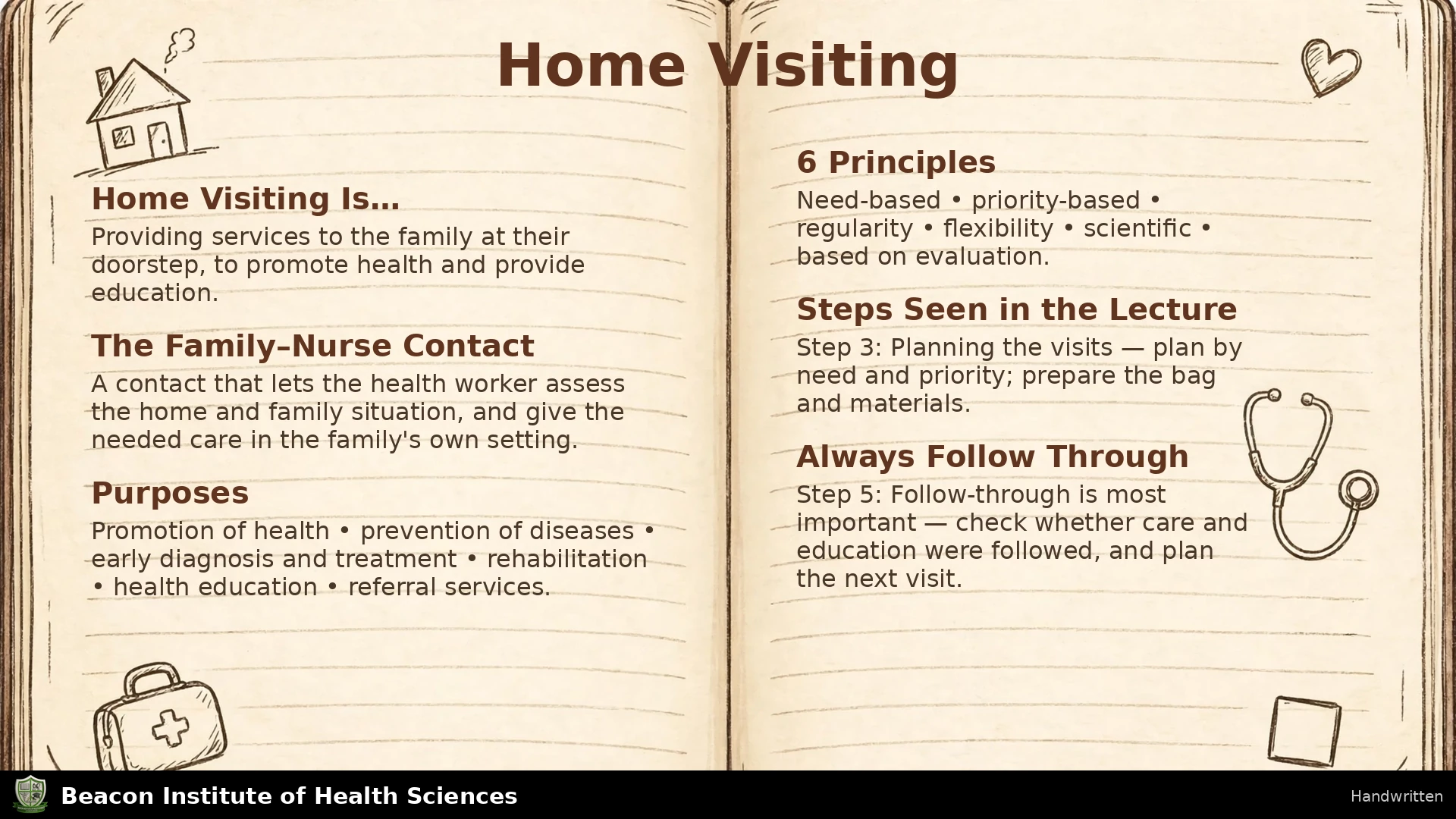
1. Learning objectives and purpose
Home visiting is a planned professional contact with a person or family in their living environment. It may support assessment, education, follow-up or authorized clinical care. After this lesson, explain visit stages, prepare a visit plan, identify safety and privacy concerns and document a meaningful outcome. A home visit is not an informal social call. Its purpose, professional boundaries and next steps should be clear to the household and the responsible service.
2. Types and reasons for visits
Visits may include an initial assessment, routine follow-up or a contact after discharge. The purpose can change as needs change. A first visit may focus on understanding the home situation; later visits can review an agreed plan. Distinguish a nursing home-care service from a general community outreach visit, because training, equipment and responsibilities differ. Do not assume that every person needs the same visit schedule. Frequency should follow the appropriate service plan and individual needs.
3. Selecting priorities and planning
Review the authorized information and identify what the visit needs to achieve. Agree the timing where possible and check the location, contact arrangements and relevant service instructions. Make a realistic plan for the available time. A focused visit might assess one concern, explain one action and confirm one referral. An overloaded plan can leave no time to hear the family's priorities. Students should discuss the plan with their supervisor and clarify what requires qualified assessment.
4. Preparation and supplies
Prepare the equipment and materials needed for the approved purpose. Check that items are usable and that records can be handled securely. Consider transport, communication and the route for obtaining help. Clinical supplies require appropriate storage and infection-prevention arrangements. Carrying a bag does not establish readiness: the nurse must know how to use the equipment and what to do if the home environment is unsuitable. Avoid taking unnecessary identifiable records or materials that cannot be secured.
5. Worker safety before entry
Assess the immediate surroundings and follow organizational safety arrangements. Risks can include traffic, aggressive animals, violence, unsafe structures or environmental hazards. The service should know the visiting worker's location through its approved system. Do not enter an unsafe setting merely to complete a checklist. Seek assistance or reschedule through the responsible team when appropriate. A student should never be expected to manage an unfamiliar hazard alone or perform a visit outside agreed supervision arrangements.
6. Introduction, permission and trust
Introduce yourself, explain your role and confirm the purpose of the visit. Ask permission to enter and to carry out the proposed activities. A household invitation does not automatically authorize examination, photography or sharing information. Explain who will receive the relevant record and how follow-up will occur. Use respectful language and avoid judging the home. A clear introduction helps people distinguish legitimate professional contact from an unexpected visitor asking for private information.
7. Family and environmental assessment
Ask about the priority concern, daily routines, support and barriers to the care plan. Observe only what is relevant and permitted. Home conditions can reveal practical difficulties such as inaccessible washing facilities or obstacles to movement. Record observations separately from interpretations. A cluttered room does not by itself prove neglect or inability to care. Ask how the family manages and identify strengths as well as difficulties. Clinical findings require the appropriate qualified assessment and response.
8. Listening and shared priorities
Allow the person and family to explain what matters to them. Their immediate concern may differ from the original referral. Summarize what you heard and agree which issues can be addressed during this visit. Do not let one family member silence another person's preferences or private concerns. Arrange a suitable private discussion when needed and feasible. Partnership means building a plan with the household while remaining clear about professional responsibility and the limits of available services.
9. Education and practical support
Use a small number of relevant messages and materials suited to language and literacy needs. Ask the person to explain the information in their own words or demonstrate an appropriate taught skill. Adapt the plan to actual household resources. Do not prescribe a procedure or medication change outside authorized practice. If the agreed method cannot be carried out at home, communicate the barrier to the responsible team rather than recording the person as noncompliant without explanation.
10. Infection prevention and waste
Apply the service's infection-prevention instructions and use a suitable clean working area for any authorized care. Hand hygiene, equipment handling and waste arrangements need planning before procedures begin. Sharps and clinical waste require approved disposal routes. Do not leave hazardous material for the household to improvise a solution. If conditions prevent safe care, pause and seek guidance. General community teaching and clinical treatment involve different requirements, so the visit purpose should remain explicit.
11. Referral and escalation
When a concern exceeds the visit's scope, use the appropriate referral pathway and explain the next step. Record relevant findings, destination and urgency. Emergencies require prompt action through the local emergency system and qualified assessment, rather than waiting for the next routine visit. Check foreseeable access barriers when suitable. A referral is not complete simply because an address has been given; continuity depends on communication and confirmation through the authorized care arrangement.
12. Ending the visit and documentation
Summarize the main findings, agreed actions and follow-up arrangements. Check what the household understands and provide a way to contact the appropriate service. Document promptly, objectively and securely. Include the purpose, relevant observations, education, referrals and outcome. Separate a person's report from your direct observation. Do not put identifiable home details or photographs in a classroom group chat. Students should follow placement instructions for records and discuss uncertainty with the supervisor.
13. Worked visit case and evaluation
A fictional visit aims to help a family confirm clinic follow-up after discharge. The family knows the destination but lacks the clinic date and transport information. The nurse checks the authorized plan, explains the verified arrangements and records the unresolved transport barrier for the responsible team. At follow-up, evaluate whether the appointment was accessible and completed. This is more meaningful than counting the visit alone. A completed contact may still leave an important care need unresolved.
14. Answered review and practical task
Create a fictional visit plan with purpose, preparation, consent, assessment, one teaching objective and follow-up. Answers: a home visit needs a defined professional purpose; permission to enter is not permission for every activity; safety assessment begins before entry; observations and interpretations differ; sharps need approved disposal; documentation should be timely and confidential. Explain why visits should identify family strengths too. Recap: prepare carefully, assess respectfully, act within scope and close the visit with a clear next step.