
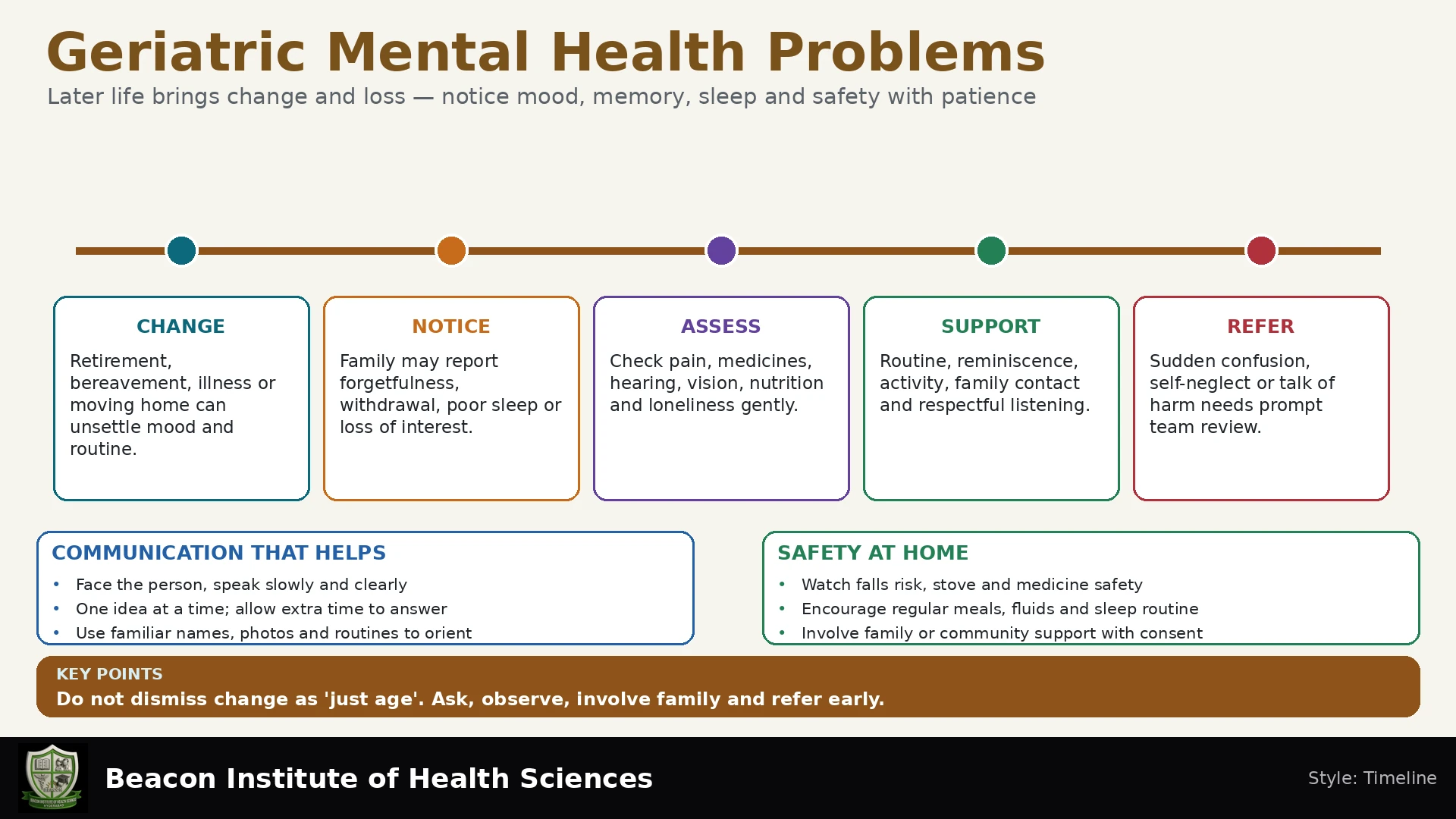
Introduction to Geriatric Mental Health
As nursing professionals, understanding the complexities of geriatric mental health is crucial for providing holistic and compassionate care. Older adults may experience a range of mental health challenges, often compounded by physical health issues, social changes, and medication regimens. It is vital for BSN students and educators to recognize that conditions such as depression and dementia are not inevitable consequences of aging but rather treatable and manageable health concerns that require skilled nursing assessment and intervention.
Common Geriatric Mental Health Conditions
The mental well-being of older adults encompasses various conditions, each demanding specific approaches to care.
Depression and Anxiety
Depression and anxiety are prevalent mental health problems in the older adult population. These conditions can significantly impact quality of life, functional abilities, and overall health outcomes. Early identification and appropriate interventions are essential.
Delirium
Delirium is a serious and acute mental state characterized by a disturbance in attention and awareness that develops over a short period (hours to days) and tends to fluctuate in severity. It is considered a medical urgency requiring immediate investigation and management of underlying causes. Delirium can coexist with other cognitive disorders, including dementia, making accurate assessment particularly challenging.
Dementia
Dementia refers to a group of symptoms affecting cognitive functions such as memory, thinking, and reasoning, severe enough to interfere with daily life. Unlike delirium, dementia is typically chronic and progressive. While often associated with aging, it is not a normal part of the aging process.
Other Important Considerations
- Grief and Isolation: Older adults often experience significant losses, including partners, friends, and independence, leading to profound grief and social isolation.
- Substance Use: Substance use disorders, including alcohol and prescription medication misuse, can affect older adults and often go unrecognized.
- Polypharmacy: The concurrent use of multiple medications is common in older adults and can lead to adverse drug reactions, drug interactions, and mental status changes, mimicking or exacerbating mental health conditions.
- Caregiving Challenges: The physical and emotional demands on caregivers for older adults with mental health problems are substantial, necessitating support and resources for both the patient and their caregivers.
Differentiating Delirium and Dementia
Distinguishing between delirium and dementia is critical for appropriate diagnosis and management, as their etiologies and prognoses differ significantly.
| Feature | Delirium | Dementia |
|---|---|---|
| Onset | Acute (hours to days) | Gradual (months to years) |
| Course | Fluctuating, often worse at night | Progressive, generally stable over a day |
| Attention | Impaired, difficulty focusing or shifting | Often preserved in early stages |
| Awareness | Reduced or altered | Generally clear |
| Medical Urgency | Yes, requires immediate investigation | Usually chronic; any sudden deterioration still needs urgent review |
| Reversibility | Potentially reversible if underlying cause is treated | Generally irreversible and progressive |
| Coexistence | Can occur in someone with dementia | Dementia increases vulnerability to delirium |
Comprehensive Nursing Assessment
A thorough and systematic nursing assessment is foundational for identifying and managing geriatric mental health problems. This assessment extends beyond mere mental status evaluation.
Key Assessment Areas
- Physical Assessment: Evaluate for acute illness, infection, pain, and other physiological disturbances that can manifest as mental status changes.
- Sensory Needs: Assess vision, hearing, and other sensory impairments that can contribute to confusion, isolation, or misinterpretation of the environment. Provide appropriate sensory aids.
- Pain Assessment: Unmanaged pain can severely impact mental well-being, leading to agitation, withdrawal, or exacerbating cognitive deficits.
- Medication Review: Scrutinize all current medications, including over-the-counter drugs and supplements, for potential side effects, drug interactions, and polypharmacy risks that affect mental status. Specialist review may be needed.
- Functional Status: Assess activities of daily living (ADLs) and instrumental activities of daily living (IADLs) to understand the impact of mental health issues on independence.
- Nutritional Status: Malnutrition and dehydration can significantly affect brain function and overall mental health.
- Sleep Patterns: Disturbances in sleep-wake cycles are common and can worsen cognitive function and mood.
- Support Systems: Evaluate the availability and quality of social support, family involvement, and caregiver well-being.
Essential Nursing Interventions and Safe Care
Nursing care for older adults with mental health problems focuses on promoting safety, maintaining function, and supporting well-being through evidence-based interventions.
- Orientation: Provide frequent reorientation to person, place, and time using calendars, clocks, and consistent routines.
- Sensory Aids: Ensure glasses are clean and correctly fitted, hearing aids are functional, and adequate lighting is provided to optimize sensory input.
- Hydration: Actively promote and monitor adequate fluid intake to prevent dehydration, a common contributor to delirium.
- Safe Mobility: Implement measures to prevent falls and ensure a safe environment, especially for those with cognitive impairment or fluctuating mental status.
- Medicine Risks: Meticulously manage medication administration, monitor for adverse effects, and collaborate with physicians for regular medication reviews, seeking specialist input when necessary to minimize polypharmacy and drug-related cognitive impairment.
- Capacity: Understand that capacity to make decisions is decision-specific and not automatically absent due to age or cognitive impairment. Assess an individual's ability to understand, appreciate, and reason through a specific decision at a specific time.
Case Study: Sudden Confusion in an Older Adult
Patient Scenario
In this fictional teaching case, Mrs. Sharma, an 82-year-old woman, is admitted to the medical ward from her assisted living facility with a sudden onset of confusion, disorientation, and fluctuating attention over the past 24 hours. Her daughter reports that Mrs. Sharma was "fine yesterday, just a bit tired," but today she is pulling at her IV line, talking to people who aren't there, and doesn't recognize her room. She has a history of mild cognitive impairment, hypertension, and osteoarthritis, managed with several medications. Her vital signs show a low-grade fever (38.1°C) and slight tachycardia. The nurse notes Mrs. Sharma seems more lucid at times but then drifts back into confusion.
Nursing Plan Development
Based on Mrs. Sharma's presentation, the primary nursing concern is acute confusion, highly suggestive of delirium, possibly superimposed on her mild cognitive impairment. The nursing plan should prioritize identifying and treating the underlying cause while ensuring safety and comfort.
- Immediate Medical Workup: Collaborate with the medical team to initiate a rapid investigation for underlying causes. The clinician selects investigations based on history, examination and possible causes, including infection, dehydration, medicines, pain or metabolic disturbance. Confusion alone does not establish a urinary infection; avoid automatic testing or treatment for an assumed UTI.
- Safety Measures: Ensure a safe environment. Lower the bed, use bed alarms if appropriate, keep essential items within reach, and ensure adequate lighting without creating excessive shadows. Address her pulling at the IV line by assessing the need for the IV, explaining its purpose calmly, and considering diversional activities if safe.
- Reorientation and Calm Environment: Provide frequent, gentle reorientation using her name, the date, and location. Keep the environment quiet, minimize noise and distractions, and maintain a consistent daily routine. Involve her daughter in providing familiar cues.
- Sensory Support: Ensure her glasses and hearing aids (if any) are available and functioning correctly. Speak clearly and slowly.
- Hydration and Nutrition: Monitor intake and output closely. Offer fluids frequently and assist with feeding if needed to prevent dehydration and malnutrition.
- Pain Management: Assess for pain regularly, as her osteoarthritis could be contributing. Administer analgesics as prescribed, monitoring for sedation.
- Medication Review: Advocate for a thorough review of Mrs. Sharma's current medications by the physician and pharmacist to identify any potential drug interactions or side effects contributing to her confusion.
- Sleep Hygiene: Promote natural sleep-wake cycles by maximizing light exposure during the day and minimizing disturbances at night.
Explained Answers
- Mrs. Sharma's sudden onset of confusion, fluctuating attention, disorientation, and hallucinations are classic signs of delirium, distinguishing it from the gradual decline of dementia. The low-grade fever suggests a possible infection, a common precipitant of delirium in older adults.
- The emphasis on immediate medical workup is crucial because delirium is a medical urgency; identifying and treating the underlying cause, such as an infection (e.g., UTI), is paramount for resolution.
- Safety measures are vital due to her confusion and risk of falls or injury (e.g., pulling at IV).
- Reorientation, sensory support, hydration, nutrition, and pain management are direct nursing interventions aimed at managing the symptoms of delirium, providing comfort, and supporting optimal brain function, aligning with the principles discussed earlier in the lesson.
- A medication review is essential due to polypharmacy risk and potential medication-induced delirium, which requires specialist review to manage medicine risks.
- The nursing plan correctly focuses on a multidisciplinary approach to reverse the acute condition and prevent further complications, aligning with the understanding that delirium is often reversible.
Test Your Knowledge
Assess your understanding of geriatric mental health problems by taking our interactive quiz: