
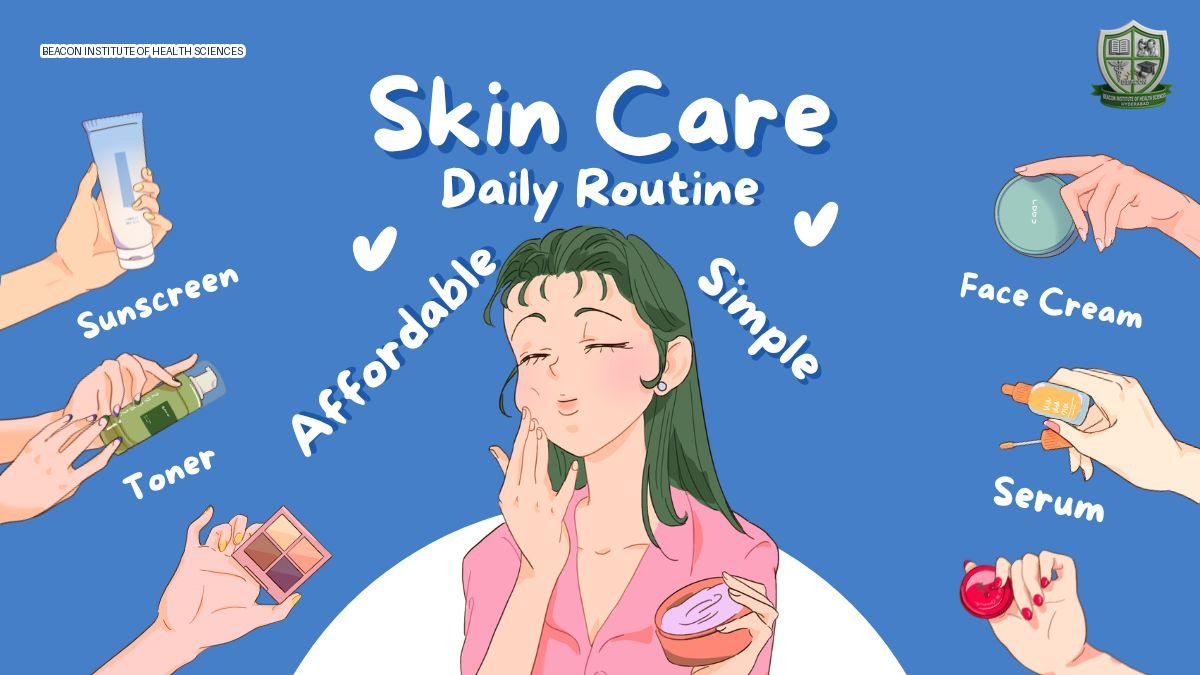
The transition into teenage years brings massive biological and hormonal shifts. Almost overnight, baby-soft childhood skin can develop breakouts, oiliness, and foreign inflammatory bumps known as acne. This sudden change often leaves teenagers confused, asking whether they are applying too many products, why their skin stings, whether they need physical exfoliators, or what complex terms like 'AHA' and 'BHA' mean. However, achieving healthy, clear skin does not require high-end, expensive products, or stuffing your bathroom with complex formulations. The most effective approach is to master the basic biological concepts and construct a simple, gentle, and affordable routine.
The Biology of Teenage Skin
To construct a logical and effective skincare routine, it is essential to first understand the biological makeup and natural mechanisms of your skin. Skin is composed of two primary and distinct layers, each performing crucial, healthy functions:
- The Epidermis: This is the outermost, visible layer of the skin. It is primarily made up of dead skin cells that are constantly shedding in a natural process known as cell turnover. This process helps naturally exfoliate the top layer, revealing and pushing up fresh new skin. In teenagers, cell turnover functions like a highly efficient, well-oiled machine that constantly churns. This rapid cell renewal is the exact reason why teenage faces appear plumper, more vibrant, and less dull without even trying. As individuals enter their 20s, 30s, 40s, and beyond, this cell turnover rate gradually slows down.
- The Dermis: Lying directly beneath the epidermis, this layer is composed of two powerful structural proteins: collagen (which provides structural plumpness and youthfulness) and elastin (which provides elasticity and snap). Teenagers benefit from a highly elevated, natural production of both proteins, giving their skin a look of natural 'immortality' and resilience. Biologically, skin is at its thickest and most resilient during teenage years, allowing it to efficiently protect the body from injuries, invading substances, and harsh environmental factors.
Understanding Teen Acne: Mechanisms, Triggers, and Causes
Despite having natural youthfulness and structural resilience on their side, teenagers are highly susceptible to developing pimples, breakouts, and acne on their forehead, cheeks, chin, or back. Understanding how acne develops at a mechanical level helps remove the panic and confusion surrounding breakouts:
- The Physical Mechanism of Acne: Your skin contains numerous hair follicles that reach from the deep dermis layer up to the surface. Within these follicles lie sebaceous glands, which produce a natural oil called sebum designed to lubricate the hair and moisturize the skin. When there is a biological overproduction of sebum combined with a rapid buildup of dead skin cells and environmental dirt, the hair follicles (pores) become clogged. This blockage triggers a natural inflammatory response. When bacteria enter this clogged follicle, a localized, swollen, and infected area develops—resulting in a pimple.
- Hormonal Surges (Androgens): During puberty, adolescents experience a dramatic rise in hormones known as androgens. This sudden hormonal surge directly causes the sebaceous (oil) glands to enlarge several times their normal size. The enlarged glands produce a massive excess of sebum, which directly drives the development of blackheads, whiteheads, and deeper, inflamed acne cysts. Teen acne is a completely normal, biological milestone.
- Stress-Induced Inflammation: High stress levels trigger systemic inflammation within the body. While stress does not directly create acne, it severely exacerbates existing breakouts, making them significantly more inflamed, painful, and slower to heal.
- Genetics and Skin Type: If family members have experienced acne, a teen is genetically predisposed to it. This is not due to a single 'acne gene,' but because families share inherited physical traits such as highly active sebum glands, oily skin profiles, or similar immune/inflammatory responses to bacterial clogged pores.
Core Principles of a Teen Skincare Routine
Before selecting products, teenagers should memorize three core skincare rules to avoid damaging their skin barrier:
- More is Not Better: Loading your skin with numerous high-potency products, strong active ingredients, and multi-step routines is highly damaging. This rule applies to everyone, but especially to highly sensitive teen skin.
- Learn Your Genetic Skin Type: Identify whether your skin is dry, oily, normal, or combination. This understanding is your absolute starting point for selecting any functional product.
- Find What Works for You: Skincare is deeply individual. What works beautifully for a friend or an influencer may irritate your skin. Listen to your skin's feedback (e.g., stinging, tight feelings).
Rowena's Skincare Philosophy - Keep It Stupid Simple (K.I.S.S.): Teenage skin is already working its natural biological magic. It is highly active, resilient, and self-exfoliating. Your only goal is to assist its natural functions, protect it, and avoid overcomplicating things. The entire routine can be broken down into three simple, foundational steps: Cleansing, Moisturizing, and Sun Protection (SPF).
The Nighttime Routine — Step 1: Cleansing
Cleansing is the absolute foundation of any skincare routine. It is critical to wash away a full day's accumulation of excess oils, sweat, environmental dust, dirt, and bacteria before sleeping. However, 'gentle cleansing' must be tailored specifically to your genetic skin type:
- Dry Skin Cleansing: Dry skin types must stay completely away from cleansers with heavy fragrances or strong scents, which trigger irritation. They should look for milky, gel, or creamy consistencies. These textures are highly nourishing and maintain hydration. Foaming cleansers must be avoided, as they are too harsh and will strip dry skin of its limited natural oils, leading to a tight, uncomfortable sensation.
- Oily Skin Cleansing: Oily skin types respond best to foaming cleansers, which are formulated to break down heavy sebum and clear rapid dead skin cell buildup. Cleansing thoroughly twice a day is crucial to prevent pores from becoming clogged and developing breakouts. Gentle cleansers formulated with Salicylic Acid (BHA) are highly recommended to penetrate deep into pores and dissolve trapped sebum and debris.
- General Guidelines for All Skin Types: Avoid physical scrubs completely. Your skin's natural cell turnover does the exfoliating work; physical scrubs are too abrasive and cause micro-tears. Additionally, always choose products labeled non-comedogenic, meaning they are formulated specifically not to clog pores. Wash twice daily (morning and night); however, dry skin types can skip the morning cleanse and wash with water only, whereas oily types must wash twice daily.
Dermatologist-Approved Cleanser Recommendations
| Skin Type Focus | Recommended Product | Key Properties & Benefits |
|---|---|---|
| Normal to Dry | The Ordinary Squalane Cleanser | An oil-based, highly hydrating, and completely non-stripping cleanser. |
| Normal to Dry | CeraVe Hydrating Facial Cleanser | Cleanses, hydrates, and respects the natural skin barrier. |
| Normal to Dry | KraveBeauty Matcha Hemp Hydrating Cleanser | A gentle, nourishing, and antioxidant-rich formula (hosts' favorite). |
| Normal to Dry Sensitive | La Roche-Posay Hydrating Gentle Cleanser | Extremely gentle, fragrance-free, and non-stripping formula. |
| Oily & Acne-Prone | CeraVe Renewing SA Cleanser | Formulated with Salicylic Acid to gently dissolve pore-clogging gunk. |
| Oily & Acne-Prone | CeraVe Foaming Cleanser | Breaks down heavy oil and sebum without stripping the skin barrier. |
| Oily & Acne-Prone | Cetaphil Daily Facial Cleanser | A classic, lightweight, daily foaming cleanser for oily skin types. |
| Oily & Acne-Prone | La Roche-Posay Effaclar Medicated Gel Cleanser | Medicated gel cleanser targeting excess sebum and acne bacteria. |
The Nighttime Routine — Step 2: Moisturizing
Moisturizing is essential to protect and assist your skin barrier. While a basic teen routine completely skips active-heavy toners and serums, moisturizer is a daily non-negotiable. It acts like a protective barrier over the epidermis—similar to the protective dome over Wakanda in Marvel movies—keeping essential hydration locked inside while blocking external bacteria, dirt, and environmental irritants from entering.
The Oily Skin Moisturizing Myth: A major skincare mistake is thinking: 'My skin is already oily, so I do not need moisturizer.' In reality, if oily skin is dehydrated, it triggers the sebaceous glands to produce even more oil to compensate. Moisturizing is absolutely vital to balance sebum production. Furthermore, if you are using anti-acne spot treatments, drying lotions, or prescription medications, your skin will become highly dried out, making a soothing, lightweight moisturizer essential to prevent barrier damage.
Dermatologist-Approved Moisturizer Recommendations
| Skin Type Focus | Recommended Product | Key Active Ingredients & Skin Actions |
|---|---|---|
| Normal to Dry | Neutrogena Hydro Boost Gel Cream (Extra Dry) | Unscented; contains Sodium Hyaluronate to lock in deep skin moisture. |
| Normal to Dry | Weleda Skin Food Original Ultra-Rich Cream | A thick cream with Calendula & Chamomile extracts to soothe irritation. |
| Dry & Sensitive | The Lab by Blanc Doux Oligo Calming Cream | Packed with low-molecular Hyaluronic Acid for deep, gentle hydration. |
| Dry & Irritated | Skin & Lab Barrierderm Intensive Cream | Contains Fila seeds, Ceramides, & Hyaluronic Acid to rebuild barrier. |
| Normal & Dry | Sweet Chef Superfood & Vitamins Moisture Boost | Rich but lightweight; features Vitamins A, B, C, Reishi, Chia, & Ginseng. |
| Oily & Combo | CeraVe PM Facial Moisturizing Lotion | Lightweight, non-comedogenic; features Ceramides & Niacinamide. |
| Oily & Combo | Garnier SkinActive 3-in-1 Face Moisturizer | Formulated with Green Tea; zero silicones, parabens, or mineral oils. |
| Oily & Combo | Simple Water Boost Hydrating Gel Cream | A fresh, fast-absorbing gel-cream that provides instant hydration. |
| Oily & Combo | Bliss What a Melon Watermelon Daily Hydrator | A lightweight, refreshing daily gel-cream (hosts' favorite). |
| Oily & Combo | Earth to Skin Manuka Honey Day Gel Cream | Nourishing Manuka Honey gel-cream; suitable for both day and night. |
| Acne-Prone | Differin Soothing Moisturizer | Actively fights acne-causing bacteria while deeply calming irritation. |
| Acne-Prone | La Roche-Posay Effaclar Mat | Features Salicylic Acid to absorb excess sebum and control shine. |
| Acne-Prone | Skin & Lab Medicica Calming Cream | Features Centella Asiatica to reduce redness and regulate sebum production. |
The Morning Routine & The Mandatory Role of Sunscreen (SPF)
The morning routine follows a very similar pattern: a gentle cleanse (or water-only rinse for dry skin) and a light moisturizer. However, it must always, always end with sunscreen (SPF). Protecting your skin from Ultraviolet (UV) damage is the single most important skincare step at any age. The earlier you start applying SPF, the healthier your skin will be in the future, as cumulative sun exposure is the primary cause of premature skin aging, wrinkles, sunspots, and hyperpigmentation.
Dermatologist-Approved Sunscreen Recommendations
| Skin Type Focus | Recommended Sunscreen | Key Protective & Nourishing Benefits |
|---|---|---|
| Normal to Dry | Aveeno Protect + Hydrate SPF 30 | Infused with skin-soothing Oat and antioxidants for hydration. |
| All Skin Types | Kiehl's Ultra Facial Moisturizer SPF 30 | Daily broad-spectrum protection; lightweight and highly affordable. |
| Oily & Acne-Prone | CeraVe AM Facial Moisturizer SPF 30 | Oil-free, non-comedogenic; contains Niacinamide & Ceramides. |
| Oily & Acne-Prone | Neutrogena Healthy Defense SPF 50 | Lightweight, oil-free, non-comedogenic; works as a dual-action option. |
| All Skin / Sensitive | Purito Centella Green Level Safe Sun SPF 50 | Infused with Centella Asiatica; ultra-soothing (Rowena's favorite). |
| All Skin / Sensitive | KraveBeauty The Beet Shield SPF 50 | High-protection antioxidant formula; lightweight fluid texture. |
Exfoliation, Toners, and Serums: Are They Necessary for Teens?
Marketing campaigns often target teenagers with multi-step routines involving chemical exfoliators, toners, and potent serums. However, from a biological perspective, these steps are largely unnecessary:
- Exfoliation: Chemical exfoliants (AHA/BHA) are effective at removing dead skin. However, since teenage skin turnover is already highly rapid and efficient, adding daily heavy exfoliants can be too harsh, stripping away the skin's natural protective barrier prematurely. For active breakouts, a cleanser or moisturizer containing Salicylic Acid (BHA) is more than sufficient. Salicylic Acid dissolves oil and bacteria in pores, but it is not a magic overnight cure. Acne is also heavily driven by internal pubertal hormones and diet (e.g., sugar or dairy).
- Toners: Toners are formulated to provide additional hydration. While hydration benefits everyone, toners are optional. Rowena shares that she did not start using toners until her 20s, after college, having relied solely on a basic Aveeno moisturizer-sunscreen during her youth.
- Serums: Serums are highly concentrated formulations designed to target specific skin concerns such as anti-aging, fine lines, dark circles, or severe hyperpigmentation. Because teenage skin does not require corrective anti-aging, serums are unnecessary. Any basic hydration needs can easily be met through a high-quality moisturizer or toner. Save your money and focus on the core basics: cleanser, moisturizer, and sunscreen.
Crucial Lifestyle Habits for Clear and Healthy Skin
Clear skin is not achieved through topical products alone; it requires supporting your body from the inside out. Incorporate these healthy lifestyle habits to complement your routine:
- Avoid Overnight At-Home Treatments: Stay completely away from 'overnight' acne treatments or harsh home remedies like applying toothpaste or squeezing lemon juice onto a pimple. These natural remedies do not address the root causes beneath the skin and will only dry out the area, cause severe irritation, and damage your skin barrier. Real pimples take at least a full day to heal and recover.
- Practice Strict Makeup Hygiene: Wearing makeup is perfectly fine, but good hygiene is mandatory. Always thoroughly wash your face before bed. Sleeping in foundation, concealer, or even just heavy sunscreen will clog your pores and trigger severe breakouts. Regularly wash your makeup brushes and sponges to remove bacteria buildup, and never share products with others to prevent spreading infections. Always wash your hands before applying makeup or cleansing your face.
- Hydration and Balanced Diet: Drink plenty of water throughout the day. Support your skin with a balanced diet containing greens, proteins, carbohydrates, and healthy fats. It is important to enjoy treats like cookies or donuts in moderation, but do not starve yourself or eliminate entire food groups.
- Manage Emotional Stress: Stress triggers inflammation in the body, making existing pimples more inflamed and slowing the recovery process. Find healthy ways to channel and cope with stress, such as physical exercise, jogging, deep breathing exercises, or meditating.
- Consult a Professional Dermatologist: If you have built a simple, hydrating routine, maintained strict hygiene, adjusted your diet, managed your stress, and still cannot clear persistent, severe, or painful breakouts, it is time to consult a professional dermatologist for specialized medical advice.
Summary: Teenage Skincare Comparison Matrix
| Skincare Characteristic | Dry & Normal Skin Types | Oily & Acne-Prone Skin Types |
|---|---|---|
| Cell Turnover | Naturally active, but prone to a tight, dry, and dull feeling. | Highly rapid; easily accumulates dead skin cells in pores. |
| Cleanser Consistency | Milky, gel, or creamy textures; strictly fragrance-free. | Foaming textures to actively dissolve heavy sebum buildup. |
| Key Active Ingredients | Hydrating agents (Hyaluronic Acid, Squalane, Oat). | Salicylic Acid (BHA) to break down gunk within the pores. |
| Moisturizer Style | Rich, barrier-repairing creams (Ceramides, Fila seeds). | Lightweight, soothing, and non-comedogenic gel-creams. |
| Cleansing Frequency | Once or twice daily (can wash with water only in AM). | Strictly twice daily (morning and night) without exception. |
| Sunscreen Priority | Nourishing, hydrating formulas with antioxidant protection. | Oil-free, non-comedogenic, and lightweight non-greasy fluids. |
| Optional Elements | Hydrating toners if extra moisture is desired. | Salicylic Acid (BHA) spot treatments for active breakouts. |