
Clinical Significance: Nutrition and dietary metabolism is a core biological pattern defining a patient's healing rate, cell recovery, and physiological resilience. Nurses must integrate nutritional assessments and evidence-based dietary interventions to manage patient recovery and prevent multi-systemic clinical complications.
Syllabus Objectives and Clinical Concepts
This study manual addresses core objectives from the BSN Fundamentals of Nursing curriculum for Unit 5. Clinical nursing intervention necessitates an understanding of these learning outcomes:
- Define the concepts of Nutrition and the Nutrition-Metabolic Pattern.
- Review the biological role of macronutrients and identify excellent food sources for each.
- Review the normal physical pathways of digestion, absorption, and metabolism for carbohydrates, proteins, and lipids (fats).
- Discuss specific nutritional considerations, guidelines, and restrictions across different phases of the lifespan (from infancy to older adulthood).
- Identify clinical, biological, and lifestyle factors that directly influence dietary patterns.
- Describe the systemic clinical manifestations of altered nutritional status (undernutrition, excess, or metabolic imbalances).
- Explain specific nursing interventions, educational strategies, and clinical assessments that promote optimal nutritional and metabolic health.
The Science of Nutrition and Energy Balance
Nutrition-Metabolic Pattern
Under Marjory Gordon's functional framework, the Nutrition-Metabolic Pattern is defined as the systemic pattern of food and fluid consumption relative to metabolic needs, and indicators of local nutrient supply. This involves describing the dynamic balance and relationship between food intake and metabolism—identifying which foods actively promote, slow, or disrupt metabolic pathways, and determining the appropriate intake required to satisfy the body's energy demands.
Nutrition Defined
Nutrition is the science related to the physiological requirements of the body. It is the study of food substances, their chemical components, and their specific relationships, proportions, and daily intakes required to maintain life, support growth, and optimize body functions. Broadly, it represents the intake of food considered in relation to the body's dietary needs.
Good Nutrition
This is characterized by an adequate, well-balanced diet combined with regular physical activity. Good nutrition forms the absolute cornerstone of good health, physical development, and immune system integrity.
Poor Nutrition (Undernutrition / Malnutrition)
Poor nutrition occurs when the intake of nutrients does not meet the body's dietary demands. In clinical settings, poor nutrition acts as a catalyst for major physiological decline, leading directly to:
- Reduced Immunity: The body's immune system is weakened, leaving the patient highly vulnerable and exposed to infectious diseases.
- Impaired Physical and Mental Development: Structural growth and cognitive development are severely compromised, especially in growing children.
- Reduced Productivity: The overall functional capacity and productivity of the individual are diminished.
Macronutrients: Proteins, Fats, & Carbohydrates
Nutrients Defined
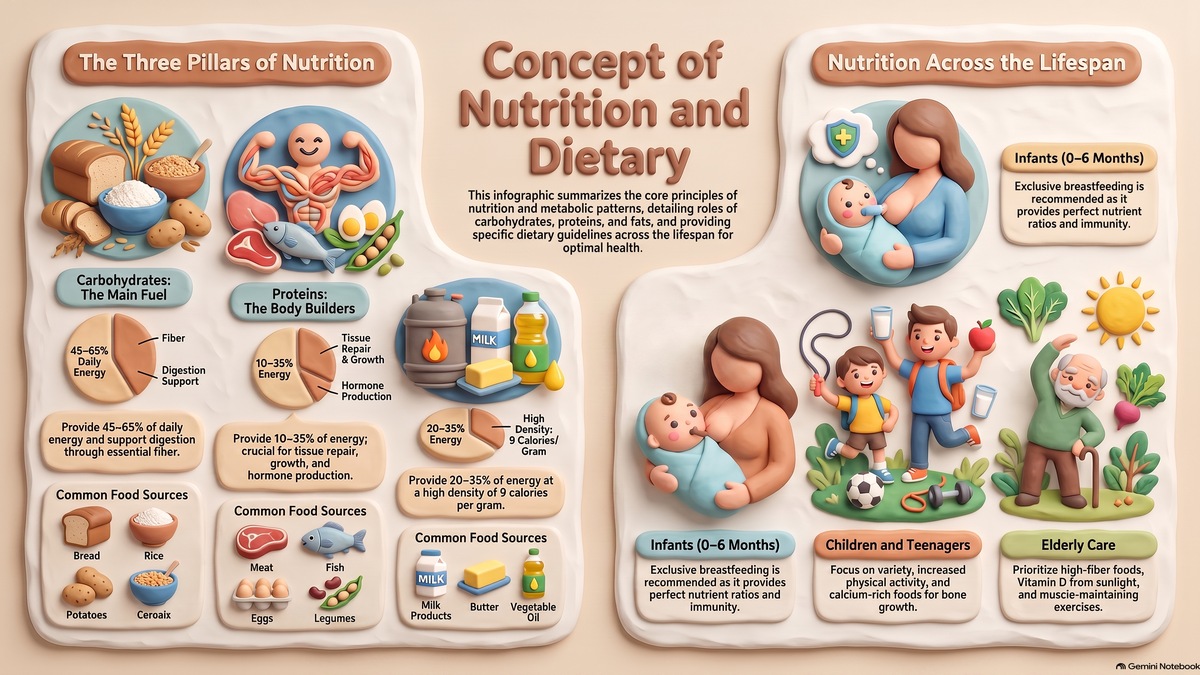
Nutrients are the chemical compounds found in food items that are used by the body to function properly, perform cellular processes, maintain physiological health, grow, and recover from damage. The primary energy-providing nutrients required by the body in large amounts are known as macronutrients: Proteins, Fats, and Carbohydrates.
| Macronutrient | USDA Intake Rec. | Energy Value | Core Physiological Functions | Good Food Sources |
|---|---|---|---|---|
| Proteins | 10% to 35% of total daily calorie intake. | Not specified in source for calorie density. | Essential for building body structures, physical growth, and tissue/cell repair. It is the primary building block of most hormones, biological enzymes, and immune antibodies. | Meat, poultry, fresh fish, and eggs. |
| Fats (Lipids) | 20% to 35% of total daily calorie intake. | 9 kcal / gram (Dense energy source). | Serves as a concentrated energy source and major structural component of cellular and cell membranes. Enables the absorption of fat-soluble vitamins (Vitamins A, D, E, and K). Provides physical cushioning and insulation for vital internal organs. | Meat, poultry, milk, butter, dairy products, and various cooking oils. |
| Carbohydrates | 45% to 65% of total daily calorie intake. | 4 kcal / gram (Efficient energy source). | Acts as the primary, most direct source of energy. Glucose is metabolized to yield energy (ATP) for muscles, brain cells, and tissue functions. Aids in digestion and fecal elimination (bowel function). Stored as glycogen in the liver and muscles for future use. | Bread, rice, wheat/flour (roti, chapatis), cereals, pasta, and potatoes. |
The Critical Role of Dietary Fiber
Fiber is a specific, complex type of carbohydrate that the human body cannot digest or break down. Because it cannot be broken down, fiber passes through the stomach and intestinal tract relatively intact. Its primary physiological functions are: (1) adding bulk to fecal waste, (2) stimulating intestinal peristalsis, and (3) helping to move and eliminate solid wastes out of the body, thereby preventing bowel dysfunction and constipation.
Digestive Physiology: Digestion, Absorption & Metabolism
The conversion of ingested food into absorbable, functional chemical compounds is coordinated through highly structured physical and biochemical digestive pathways. Each major macronutrient undergoes a unique sequence of digestion, absorption, and metabolic processing:
Carbohydrate Digestion & Metabolic Pathway
The primary objective of carbohydrate metabolism is to break down complex starches and sugars to provide glucose for immediate cellular energy.
- Digestion Phase: The process of carbohydrate digestion begins in the mouth (via salivary enzymes) and is completed in the small intestine through specialized pancreatic and intestinal enzymes. These enzymes break complex carbohydrates down into simple sugars (monosaccharides) such as glucose, fructose, and galactose.
- Absorption Phase: These simple sugars are absorbed directly through the mucosal wall of the small intestine into the bloodstream.
- Metabolic Phase: Once absorbed, the monosaccharides travel via the portal circulation to the liver. The liver is the main metabolic hub where these sugars are metabolized and converted into glucose. Most carbohydrate metabolism results in the production of glucose molecules, which represent the most direct and efficient source of energy (ATP) utilized by brain cells and muscle tissues to maintain physiological activity.
Protein Digestion & Metabolic Pathway
Proteins must be systematically decomposed into their basic building blocks—single amino acids—before the body can utilize them for cellular synthesis.
- Digestion Phase: Unlike carbohydrates, protein digestion typically begins in the stomach. The highly acidic gastric environment activates the enzyme pepsin, which initiates the breakdown of complex protein chains. The semi-digested proteins then pass into the small intestine, where pancreatic enzymes such as trypsin and chymotrypsin are released to complete the breakdown, converting proteins into simpler peptide chains and free amino acids.
- Absorption & Metabolism: These single amino acids are absorbed through the intestinal walls into the bloodstream and utilized by body tissues for growth, muscle building, cellular repair, and hormone synthesis.
Lipid (Fat) Digestion & Metabolic Pathway
Due to their hydrophobic (water-insoluble) nature, lipids require a specialized chemical emulsification process to allow enzymatic digestion and absorption to occur:
- Digestion Phase: When fats enter the small intestine, they trigger the release of local hormones that stimulate the pancreas and the liver. The pancreas is stimulated to release pancreatic lipase, and the liver/gallbladder is stimulated to release bile.
- Emulsification Process: Bile acts as a natural detergent. It performs emulsification, which physically breaks down large fat globules into tiny, water-soluble droplets. This dramatically increases the surface area of the fats, allowing the pancreatic lipase enzymes to easily access and chemically digest the lipids.
- Absorption & Metabolism: Pancreatic lipase chemically digests these emulsified fat droplets into their absorbable components: fatty acids and glycerol. These are absorbed through the intestinal mucosa, repackaged, and utilized by the body for dense energy production, cell membrane structures, or stored in adipose tissues.
Lifespan Nutritional Management
Nutritional requirements, physiological capacities, and metabolic demands shift dramatically across different stages of the human lifespan. Nursing care plans must be tailored to these unique developmental and age-specific guidelines:
Infancy Phase: 0 to 6 Months of Age
- Exclusive Breastfeeding Recommendation: In alignment with global pediatric standards, the KMU curriculum strongly recommends exclusive breastfeeding for all infants up to 6 months of age. At this stage, infants should be given breast milk exclusively—no other foods, formulas, or even plain water are necessary unless clinically indicated.
- Right Proportion of Nutrients: Breast milk is the ideal nutritional source because it is naturally formulated with the exact right amount of nutrients, water, and energy required to satisfy the infant's rapid metabolic demands during these first six months.
- Immunological & Biological Protection: Breast milk is rich in active, protective, and immunological factors (antibodies) that provide passive immunity, protect the baby's vulnerable digestive tract, and enhance overall physiological and mental development.
- Infant Formula: When breastfeeding is not possible, a commercial infant formula (a combination of nutrients and food combination for babies) may be utilized as a substitute.
- Vitamin D Requirements: To support healthy bone development, the infant must receive regular, controlled exposure to direct sunlight. Safe exposure to the sun stimulates natural skin synthesis of Vitamin D, ensuring the infant meets their structural growth requirements.
Infancy Phase: 6 to 12 Months of Age (Weaning Phase)
At 6 months, breast milk alone is no longer sufficient to support the rapid physical and metabolic growth of the infant. Solid and semi-solid foods must be systematically introduced into the diet. Nurses must educate parents on these crucial weaning guidelines:
- Restriction on Commercial Milk: Regular, unprocessed commercial milk (cow's or goat's milk) must not be given as a primary beverage to infants under 12 months. It is difficult for the infant's immature digestive system to process and lacks appropriate nutritional ratios.
- Cereal & Custard Mixing: Small, measured amounts of pasteurized milk can be safely utilized only as an ingredient to mix and prepare solid infant foods like cereals and custards.
- The Pasteurization Mandate: Any external milk given to the baby must be completely pasteurized or boiled to eliminate harmful pathogens and reduce the risk of gastrointestinal infections.
- Aspiration & Choking Hazards: Avoid giving hard, round, or un-mashed foods (such as small round candies or un-cut fruits) that present a high risk of choking or entering the airway (aspiration).
- Diarrhea Management: If the infant experiences diarrhea, reduce the volume of commercial milk and focus on rehydration to prevent rapid fluid volume deficits.
Young Children (Toddlers & Preschoolers)
- Selective Eating Patterns: Young children are notoriously selective and picky eaters. Nurses should educate parents not to force-feed, but to encourage children to eat a wide variety of healthy foods to ensure a broad spectrum of nutrient intake.
- Managing Overweight & Accelerated Weight Gain: If a young child's weight gain is crossing normal curves, parents must take immediate corrective measures: (1) limit energy-dense, high-calorie foods that are poor in nutrients, (2) provide nutrient-dense options (fresh fruits, vegetables), and (3) actively increase the child's daily physical activity and play.
- Hydration & Sugary Drink Restrictions: Ensure the child drinks plenty of fluids, particularly plain water, to support healthy metabolism. Processed fruit juices and soft drinks should be strictly limited to prevent childhood obesity and tooth decay. Offer whole, fresh fruits instead of juices.
Teenagers / Adolescents
The teenage years are characterized by rapid physical growth spurts, hormonal changes, and increased physical activity, creating a significantly higher demand for calories and key nutrients. Nurses must guide teenagers toward healthy choices using these parameters:
- Nutrient Density vs. Simple Calories: The required extra energy must be obtained from nutrient-dense, balanced foods rather than empty-calorie simple sugars or junk foods.
- Skeletal & Bone Health: Growing bones require high amounts of calcium. Teenagers should include milk, cheese, and dairy products in their daily diet to optimize bone density.
- Adolescent Girls' Health: Adolescent girls must be highly encouraged to consume milk, calcium-rich dairy products, and iron-rich foods to prevent osteoporosis and iron-deficiency anemia later in life.
- Fast Food & Takeaway Balance: Fast foods should be limited and balanced with highly nutritious foods such as whole-grain bread, high-fiber cereals, fresh fruits, vegetables, fish, and lean meats.
Older People (The Elderly)
As individuals transition into older age, their physical activity levels, basal metabolic rate, and overall appetite naturally decline. Because they consume smaller volumes of food, elderly individuals are at a significantly higher risk of failing to meet their daily nutritional requirements. Nurses must utilize the following structured dietary and lifestyle protocols for older adults:
- Maintain Physical Activity: Be as physically active as possible. Regular movement and exercise help stimulate appetite, maintain physical strength, and preserve muscle mass (preventing muscle wasting).
- Outdoor Sunlight Exposure: Spend dedicated time outdoors in the daylight each day to stimulate skin synthesis of Vitamin D, which is essential for maintaining healthy, strong bones.
- Avoid Empty Calories: Strictly limit high-energy, calorie-dense foods that are low in nutrients (such as sugary snacks, sweet drinks, and refined pastries).
- Prioritize High-Fiber Foods: Choose foods rich in dietary fiber to promote normal gastrointestinal motility, enhance bowel elimination, and prevent age-related constipation.
- Reduce Table Salt: Limit the use of table salt during cooking and avoid adding raw salt at the table, especially for older adults managing hypertension or cardiovascular conditions.
- Emphasize Nutrient-Dense Foods: The elderly diet should focus on foods that pack high nutritional value into moderate calories, including:
- Protein Sources: Eggs, lean fish, and skinless poultry.
- Legumes & Dairy: Lentils, split peas (pulses/legumes), and low-fat dairy products.
- Plant Foods: A wide variety of fresh fruits and vegetables.
- Grains: Whole-grain breads and high-fiber cereals.
Clinical Signs of Altered Nutrition (Systemic Malnutrition)
When a patient experiences an imbalance in nutrition (due to deficiency, excess, or metabolic disturbances), the body exhibits systemic, physical changes. Nurses must be highly vigilant in assessing these physical signs of altered nutrition:
| Organ / Body System | Clinical Manifestations of Imbalance | Nutritional / Clinical Implication |
|---|---|---|
| Gastrointestinal (GI) | Disturbed gastrointestinal function, including frequent diarrhea, chronic constipation, indigestion, and abdominal cramping. | Indicates compromised digestive processes, intestinal mucosal atrophy, or inadequate dietary fiber and fluid intake. |
| Cardiovascular | Altered cardiac function, irregular pulse rate, blood pressure variations, and poor peripheral circulation. | Often tied to severe electrolyte imbalances, fluid volume deficits (dehydration), or lipid-related cardiovascular diseases. |
| Oral Mucosa & Gums | Dry, cracked lips (cheilosis) and easily bleeding gums. | Bleeding gums indicate a localized or systemic Vitamin C deficiency (Scurvy); cracked lips point to B-complex vitamin deficiencies. |
| Ophthalmic (Eyes) | Dry eyes, localized eye lesions, and a gradual or sudden loss of night vision (night blindness). | Classic indicator of severe Vitamin A deficiency, which is essential for retinal health and corneal moisture. |
| Integumentary (Skin) | Excessively dry, scaling, or peeling skin; presence of skin lesions, rashes, and poor wound healing. | Dryness reflects essential fatty acid or hydration deficits; slow healing points to severe protein and Vitamin C deficiencies. |
| Integumentary (Hair) | Dry, brittle, thinning, or easily pluckable hair; presence of dandruff and scalp itching. | Reflects severe, chronic protein energy malnutrition and mineral (like zinc or iron) deficiencies. |
| Musculoskeletal | Generalized muscle wasting (muscle atrophy), severe physical weakness, and decreased handgrip strength. | Reflects the body burning its own skeletal muscle protein for energy due to severe protein-calorie malnutrition (cachexia). |
| Weight Variations | Obesity (excessive fat accumulation and weight gain) or cachexia (unintended, extreme weight loss and underweight status). | Obesity indicates chronic caloric excess; underweight points to severe energy-deficit states or malabsorptive disorders. |
| Systemic Hydration | Dehydration, dry mucous membranes, delayed skin turgor recovery, and dark-colored urine. | Reflects an acute or chronic fluid volume deficit that impairs metabolic waste clearance and organ perfusion. |
Comprehensive Nursing Assessment Protocols
To accurately evaluate a patient's nutrition-metabolic pattern, the professional nurse must collect a balanced mix of objective physical measurements and subjective interview data. These clinical assessment protocols are structured as follows:
Objective & Physical Assessment Methods
The nurse must perform direct physical examinations and measurements to obtain concrete, clinical data:
- Chewing & Swallowing Function: Actively assess the patient's capacity to chew and swallow solid foods. Identify signs of dysphagia (difficulty swallowing) or choking.
- Weight & Height History: Measure the patient's current height and weight, and calculate their Body Mass Index (BMI). Compare these with their historical weight records to identify recent unintended weight gain or loss.
- Skin & Tissue Integrity: Inspect the skin for dryness, peeling, lesions, and pressure sores. Check skin turgor (elasticity) on the forearm or clavicle to assess hydration. Inspect for the presence of localized or systemic swelling (edema) in the hands, feet, or sacrum.
- Functional Handgrip Strength: Assess the patient's handgrip strength by asking them to squeeze the nurse's hands. A weak grip can indicate progressive muscle wasting and poor functional status.
- Vital Signs & General Inspection: Measure the patient's body temperature, pulse, and respiration. Inspect the structural integrity of the hair, skin, nails, teeth, and oral mucous membranes.
Subjective Assessment (The Patient Interview)
During the patient interview, the nurse must ask highly focused, non-judgmental questions to extract comprehensive details about their dietary habits, lifestyle, and symptoms. These questions are categorized below:
Dietary & Fluid Intake Patterns
- "Describe the exact type and amount of food you consume for breakfast, lunch, and dinner every day."
- "How much water or other fluids do you drink daily?"
- "Are you currently following a specific dietary restriction or diet plan?"
- "What times do you normally eat your meals?"
- "What types of snacks do you eat between your main meals?"
- "Do you take daily vitamin, mineral, or other nutritional supplements?"
- "Do you feel that your regular diet is high in fats, sugars, or salt?"
Oral, Dental & Swallowing Symptoms
- "Do you experience any difficulty, pain, or discomfort when chewing or swallowing solid foods?"
- "When was your last dental examination, and what were the results?"
- "Do you wear dentures? If so, do they fit comfortably?"
Gastrointestinal & Elimination Symptoms
- "Do you experience frequent nausea or vomiting?"
- "Do you suffer from abdominal cramps, bloating, or stomach pain?"
- "Do you use antacids? If so, how often and what type?"
Integumentary & Metabolic Symptoms
- "Describe the condition of your hair. Is it dry, oily, or brittle? Have you noticed sudden hair loss?"
- "Do you experience scalp itching or dandruff?"
- "Have you noticed any changes in your nails (such as splitting, lines, or brittleness)?"
- "How quickly do cuts or wounds heal on your skin?"
- "Do you have any skin rashes, lesions, or dry patches?"
- "Have you noticed any recent weight gain or loss?"
- "Do you feel unusually sensitive to heat or cold?"
Nursing Process: Diagnoses & Clinical Interventions
Following a comprehensive nutritional assessment, the nurse analyzes the data to formulate accurate nursing diagnoses and implement targeted clinical interventions:
Actual & Potential Nursing Diagnoses
- Imbalanced Nutrition: Less Than Body Requirements: Intake of nutrients insufficient to meet metabolic needs (e.g., related to dysphagia, anorexia, or severe calorie restriction).
- Imbalanced Nutrition: More Than Body Requirements: Intake of nutrients exceeding metabolic needs (e.g., related to high caloric intake and sedentary lifestyle).
- Risk for Imbalanced Nutrition: Vulnerability to nutritional intake that does not meet or exceeds metabolic demands.
- Deficient Fluid Volume (Dehydration): Decreased intravascular, interstitial, and/or intracellular fluid.
- Excess Fluid Volume (Fluid Retention): Increased isotonic fluid retention (edema).
- Ineffective Breastfeeding: Difficulty providing breast milk directly to the infant.
- Impaired Swallowing (Dysphagia): Abnormal functioning of the swallowing mechanism.
- Impaired Dentition: Disruption in tooth development, structure, or dental health (making chewing difficult).
- Impaired Skin Integrity / Impaired Tissue Integrity: Damage to epidermal, dermal, or deeper tissues (often secondary to protein-calorie deficits).
Clinical Nursing Interventions to Promote Optimal Nutrition
To help patients achieve and maintain optimal nutritional and metabolic health, the nurse must implement the following six core evidence-based interventions:
- Comprehensive Dietary Education: Actively educate patients and families on healthy eating habits. Identify modifiable risk factors (such as high-fat, high-sodium diets) and guide them to modify their eating patterns to prevent chronic diseases.
- Promote Physical Activity & Exercise: Instruct patients on the importance of combining a balanced diet with regular physical exercise. Physical activity helps maintain muscle mass, prevents muscle wasting, and optimizes overall metabolic rates.
- Discourage Harmful Substances: Strongly advise patients against the excessive use of alcohol and caffeine. Explain that these harmful substances can impair nutrient absorption and disrupt normal digestive metabolism.
- Determine Daily Caloric Needs: Assess each patient's individual height, weight, activity level, and medical status to determine their daily caloric requirements.
- Educate on Portion Control & Balanced Foods: Teach patients how to plan balanced, nutrient-dense meals. Emphasize the importance of portion control, lean protein sources, and high-fiber foods to support metabolic health and bowel function.
- Maintain Hydration Protocols: Educate patients—especially children and older adults—on the critical role of drinking adequate water daily. Proper hydration supports metabolic processes, maintains tissue integrity, and aids in waste elimination.
Clinical Practice Note: The nurse is the healthcare professional who spends the most direct time with the hospitalized patient. Therefore, having a deep, scientifically grounded understanding of nutrition, digestion, and lifespan requirements is critical. The nurse must act as a clinical educator, helping patients modify behaviors to achieve dietary health and prevent long-term metabolic complications.