
Understanding Mental Health and Mental Illness
Mental health and mental illness are fundamental concepts in nursing education, representing distinct yet interconnected aspects of human well-being. Grasping these definitions and their implications is crucial for providing holistic and empathetic care.
Defining Mental Health
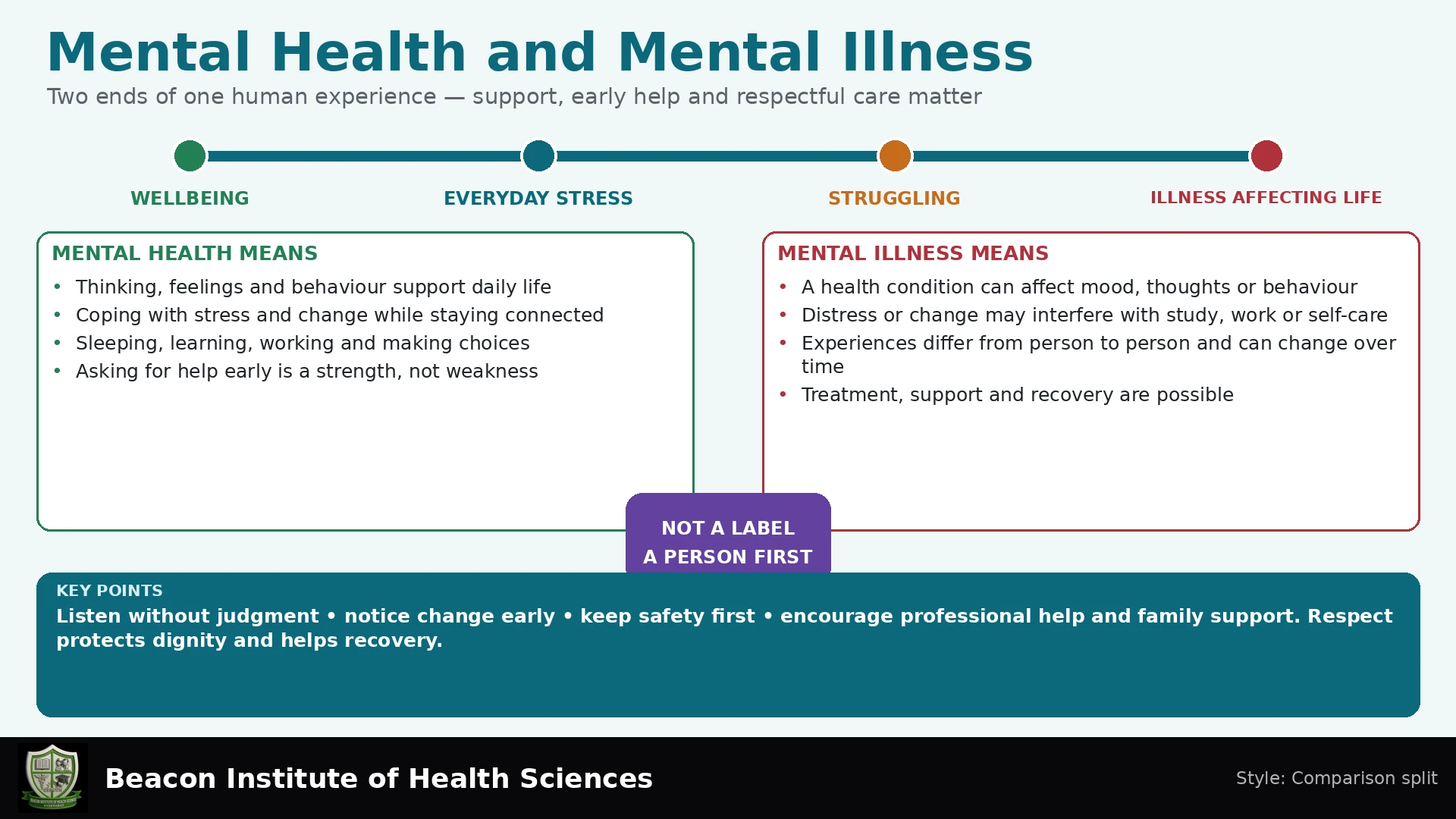
Mental health is characterized by a state of successful performance of mental functioning, resulting in productive activities, fulfilling relationships with other people, and the ability to adapt to change and cope with adversity. Essentially, it encompasses an individual's overall psychological, emotional, and social well-being, signifying functioning and wellbeing.
Defining Mental Illness
In contrast, mental illness refers to a clinically significant behavioral or psychological syndrome or pattern that occurs in an individual. It is associated with present distress (e.g., a painful symptom) or disability (i.e., impairment in one or more important areas of functioning) or with a significantly increased risk of suffering death, pain, disability, or an important loss of freedom. It represents a clinically significant disturbance with distress or impairment.
The Mental Health Continuum: Beyond a Binary View
It is important to understand that mental health and mental illness exist on a continuum rather than as a false healthy/ill binary. An individual can experience varying degrees of mental health, ranging from optimal well-being to severe mental illness. This continuum recognizes that mental health is dynamic and can fluctuate over time. It allows for the understanding that one can have mental health challenges without having a diagnosable mental illness, and conversely, someone diagnosed with a mental illness can still experience periods of good mental health.
A critical distinction within this continuum is between normal stress and persistent impairment. Normal stress is a natural, often temporary response to challenging life events, which typically resolves as circumstances change or coping strategies are employed. Persistent impairment, however, signifies a prolonged and significant disruption in an individual's ability to function in daily life, a reason for assessment rather than proof of a diagnosis.
| Aspect | Mental Health (Optimal Functioning) | Mental Illness (Clinically Significant Disturbance) |
|---|---|---|
| State | Functioning and wellbeing | Clinically significant disturbance |
| Experience | Productive activities, fulfilling relationships, adaptation to change, coping with adversity | Distress (painful symptoms) or impairment (disability in functioning) |
| Duration | Generally stable, adaptive responses to stressors | Duration varies; some episodes develop acutely |
| Impact | Ability to thrive and manage life challenges | Significant risk of suffering, pain, disability, or loss of freedom |
Influences on Mental Health
Mental health is shaped by a complex interplay of various factors:
- Biological Influences: Genetic predispositions, neurodevelopment, brain function, and neurological conditions can significantly impact mental health.
- Psychological Influences: An individual's personality, coping skills, resilience, and past experiences (e.g., trauma) play a crucial role.
- Social Influences: Socioeconomic status, cultural background, support systems, access to resources, and experiences of discrimination or poverty can profoundly affect mental well-being.
Common Mental Disorder Groups
While specific disorders are numerous, they are broadly categorized into groups such as mood disorders, anxiety disorders, psychotic disorders, eating disorders, and substance-related disorders. These groups represent common patterns of clinically significant disturbance.
Assessment in Mental Health Nursing
A thorough assessment is the cornerstone of mental health nursing care. This involves gathering comprehensive data about the patient's biological, psychological, and social history, current symptoms, functional abilities, and support systems.
The Mental Status Examination (MSE)
A key component of mental health assessment is the Mental Status Examination (MSE). The MSE is a structured way of observing and describing a patient's current state of mind under the domains of appearance, attitude, behavior, mood and affect, speech, thought process, thought content, perception, cognition (including orientation, memory, and attention), and insight and judgment. It provides a snapshot of the patient's psychological functioning at the time of examination.
Addressing Stigma and Promoting Person-First Language
Stigma, often fueled by misunderstanding and prejudice, remains a significant barrier to individuals seeking help for mental health challenges. It can lead to discrimination, isolation, and shame, hindering recovery.
To combat stigma, nurses must actively use person-first language. This practice emphasizes the individual, not their diagnosis. say “a person living with schizophrenia” rather than reducing someone to a diagnostic label. Ask about preferred language and respect cultural meanings of distress.
Learning Objectives
- Distinguish wellbeing from a diagnosable disorder.
- Describe biological, psychological and social influences.
- Use respectful assessment and identify urgent needs.
Nursing Care and Safety
Build trust by explaining your role, asking permission and listening without judgment. Ask about onset, duration, sleep, appetite, physical health, medicines, substance use, relationships, functioning and personal strengths. Screening tools support assessment; they do not independently establish a diagnosis. Consider medical causes of new symptoms, particularly sudden confusion or changes after a medication.
Ask directly and sensitively about thoughts of self-harm, suicidal intent, access to means and immediate safety. A risk score cannot predict suicide or decide discharge. Arrange timely clinical assessment and a collaborative safety plan. If immediate danger, severe inability to meet basic needs, or acute confusion is present, obtain urgent professional help and maintain appropriate observation according to local clinical policy. Explain confidentiality and its safety limits without promising absolute secrecy.
Care may include psychological therapy, prescribed medicines, support for housing or education, and help with sleep and physical health. Decisions should reflect the person's preferences and treatment goals. Involve family or other supporters with consent, and review progress through both symptoms and the person's own priorities. Recovery can include meaningful relationships and participation even when some symptoms continue.
Fictional Case and Explained Answers
Amina, a nursing student, reports three weeks of poor sleep, low mood and loss of interest. She is missing classes and worries that asking for help means she is weak. She recently moved away from family. She has not yet received a diagnosis.
- Does this establish depression? No. Persistent changes and impairment warrant assessment, including physical health, medicines, substance use, safety and other possible causes. A qualified clinician determines the diagnosis.
- What is the first therapeutic response? “You have been carrying a lot. Could you tell me how this is affecting your day?” This acknowledges distress and invites her perspective.
- Which care goals are useful? Agree on a timely assessment, a feasible sleep routine, one supportive contact and a plan for academic support. Ask about safety and document what help she would use if distress increases.
Review Questions
Can someone with a mental disorder experience wellbeing? Yes: wellbeing and diagnosis are related but do not form a simple either-or distinction. Is mental illness a character flaw? No. It involves interacting health and life factors and deserves respectful care.