
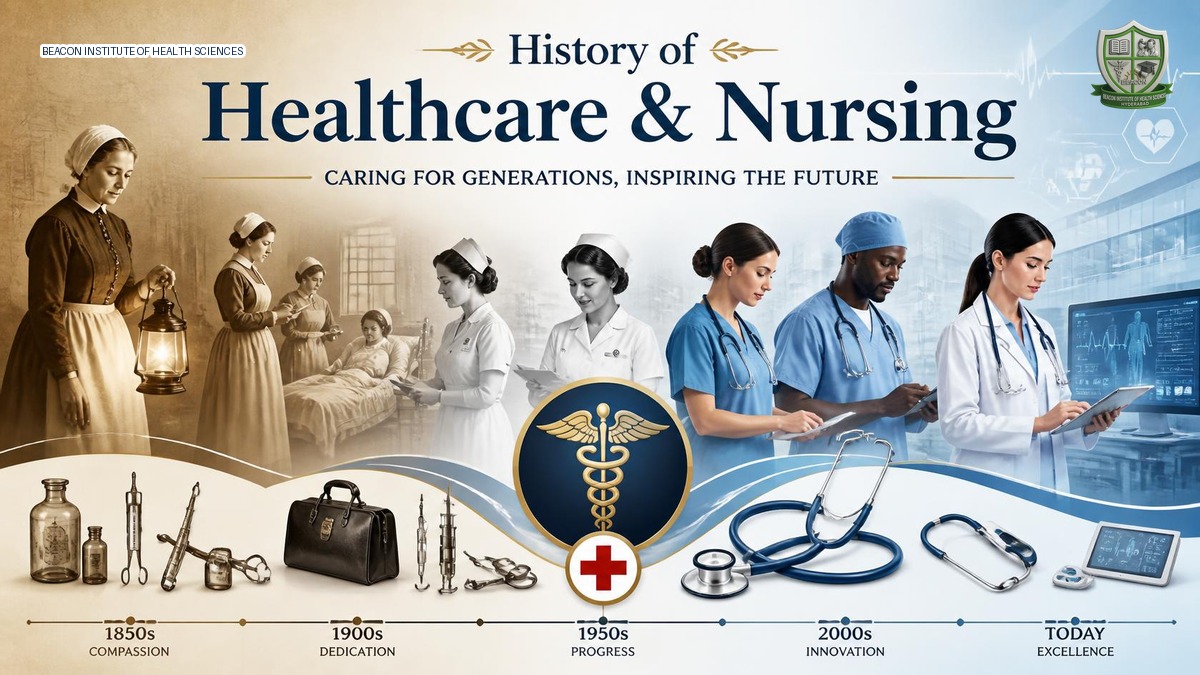
Section 1: Healthcare and Nursing in Ancient Cultures
The history of healthcare and nursing demonstrates how early civilizations developed unique methods to treat illnesses, manage bodily injuries, and provide compassion to their populations.
1. Ancient Egypt (Early Civilization)
The ancient Egyptian civilization was renowned for its highly advanced society, including significant progress in science, education, and healthcare. Far from being primitive, their healthcare systems were highly organized and capable. The Egyptians recognized and practiced clinical specialization in distinct medical areas, including the treatment of internal diseases, bone fractures, and wound management. Despite having no modern concepts of clinical sanitation or sterilization, they performed successful procedures and provided high-quality healing therapies. Historically, childbirth and deliveries were managed by experienced, local women who were called in to assist mothers. These women are recognized as the first recorded nurses in human history.
2. Ancient Greece
Ancient Greek healthcare was deeply rooted in spirituality and mythology, where diseases and healing were believed to be controlled by deities. Apollo was revered as the Greek God of Healing, and people offered intense prayers and performed magic rites or spells to obtain protection and cures. They held a spiritual theory of disease, viewing illness as a direct punishment for personal sins or moral failures, while health was a symbol of moral goodness. Consequently, individuals prayed constantly to avoid committing wrong deeds. This mythological framework was broken by Hippocrates, the father of medicine, who was the first to state that diseases have natural, physical causes rather than supernatural origins. Hippocrates proved that personal habits, lifestyle factors, and environmental variations (such as seasonal or climate changes) are the actual causes of human illnesses.
3. The Roman Empire
The Romans built directly upon the clinical foundations established by the Egyptians and Greeks, adopting their educational and treatment philosophies. Their most famous advancement was the formal development of physical healthcare infrastructure. The Romans established small, dedicated hospitals and organized clinical settings where patients could be brought from their homes and treated systematically.
4. Christianity and the Rise of Formal Nursing
The adoption and spread of Christianity is recognized as the 'Golden Period' of healthcare history. During this era, nursing transitioned from an unorganized household task into a formal, structured role. Christianity introduced the revolutionary medical doctrine that love, compassion, and care are just as vital to healing as physical therapies and medicines. Nursing became heavily female-dominated, as women were believed to possess a natural, God-given capacity for deep sensitivity, compassion, and caregiving. The profession became highly formalized, driven by the core Christian slogan: 'Love thy neighbor as thyself'.
5. The Middle Ages (Medieval Period)
The medieval period saw Christian religious institutions take absolute leadership in organizing and advancing the nursing profession. Large-scale hospitals were established under the patronage of the Church, where nurses provided direct care to patients under the formal direction and instructions of physicians. In addition to dedicated lay nurses, religious orders including priests and nuns actively took on bedside caregiving roles. This established a highly disciplined, systematic, and compassionate framework for patient care within churches and monastery clinics.
6. The 15th to 20th Century (The Period of Crisis)
This lengthy period was characterized by massive global upheaval, marked by devastating wars, civil unrest, struggles for independence, and severe poverty throughout Europe. During this era, the social status of nursing declined drastically. Respectable women were strictly restricted to the home, and working outside the home was heavily stigmatized. Since reputable women refused to work in hospitals, authorities began recruiting female criminals and prisoners, forcing hospital care work upon them as a legal sentence and punishment. Prior to the late 18th and 19th centuries, nursing operated entirely without formal organization, structured education, or social respect.
Section 2: Historical Sites of Health Care
The physical locations where sick individuals were brought for treatment evolved in step with religious systems, imperial structures, and warfare.
The Ancient Era (BC to 500 AD)
In ancient civilizations, the ruling royal classes, courtiers, and priests functioned as physicians, treating patients based on ancestral knowledge and traditions. The primary physical sites of healthcare were Temples and places of worship. Temples were selected because people believed these sites had divine relations, positive spiritual thoughts, religious influence, and the direct, watchful eyes of the gods, which would naturally facilitate healing.
The Military Battlefield
During times of war, permanent temples or churches were inaccessible. Military forces began setting up temporary military tents and dedicated field shelters. Wounded and injured soldiers were brought directly to these tents to receive whatever medical or nursing care was available.
The Christian and Imperial Era
The rapid expansion of Christianity led to the systematic construction of permanent, dedicated civil hospitals, which advanced both the medical and nursing professions. This era saw the establishment of structured Roman military hospitals and highly advanced Arab hospitals across the Middle East.
Ancient India and the Ayurvedic System
Ancient India possessed an incredibly old and advanced healthcare history based on the Ayurvedic system (traditional medicine derived from the Vedas). During the historic reign of King Ashoka, highly advanced Indian hospitals were established. These ancient hospitals featured incredibly sophisticated capabilities, including dedicated facilities for performing Caesarean sections (C-sections), structured sanitation systems, and effective sterilization systems adjusted to their era to prevent infections.
Section 3: Islam and Nursing (Rufaida Al-Aslamia)
Islamic history contains a rich legacy of professional caregiving and clinical medicine, pioneered by the world's very first recognized nurse.
Rufaida Al-Aslamia (Rufaida binte Saad)
Rufaida Al-Aslamia is celebrated as the first female nurse in Islam and the first professional nurse in global history. She lived during the era of Prophet Muhammad (S.A.W.) and worked as one of his dedicated companions. She personally participated in major historical battles, including the Battle of Badr, Battle of Uhud, and the Battle of Khandaq (the Trench).
On the battlefield, Rufaida pioneered the concept of field hospitals. She set up temporary, mobile military tents close to the active fighting, where she washed the wounds of injured soldiers, treated physical trauma, and cared for diseased warriors. Long before modern nursing science, Rufaida recognized that patient recovery depends on cleanliness, focusing heavily on strict environmental hygiene in her tents.
She organized and trained a group of volunteer female nurses, who served as her clinical students and assistants, creating a structured nursing team. Beyond bedside care, she was a vocal advocate for public health education, disease prevention, and healthcare rights. Rufaida designed the first formal Code of Ethics for nursing and medical care, based on Islamic principles, mandating that healthcare providers must treat patients with dignity, kindness, and respect, without any prejudice or personal bias.
She learned her medical practices directly from her father, who was an expert physician. Using this knowledge, she established a specialized school to teach Muslim women emergency care, wound dressings, and first aid. This school is recognized as the first nursing school in the Middle East.
Section 4: Key Nursing Leaders and Pioneers
The development of nursing from a domestic chore into an independent, organized science was driven by several visionary women who established its fundamental parameters.
Florence Nightingale (The Founder of Modern Nursing)
Known as the 'Bright Spirit' or the 'Guardian Angel/Angel of Mercy,' Nightingale revolutionized nursing into a professional science. During the Crimean War, she worked tirelessly day and night, earning the name 'The Lady with the Lamp'. She established the Environmental Theory, proving that modifying a patient's physical environment (ventilation, cleanliness, light) directly accelerates recovery. As the first nursing scientist, she wrote 'Notes on Nursing: What It Is, and What It Is Not'. Using a £50,000 public gift, she established the Nightingale Training School for Nurses, cementing formal nursing education.
Clara Barton
Originally a schoolteacher, Barton became a dedicated volunteer and nurse during the American Civil War, providing emergency healthcare and comfort to wounded soldiers on the frontlines.
Lillian Wald
Recognized as the founder of public health nursing, Wald dedicated her career to providing free, high-quality healthcare and nursing services directly to impoverished families living in the New York slums.
Lavinia Dock
A prominent nurse, feminist, and political activist, Dock campaigned aggressively against doctors controlling the nursing profession. She argued that physicians did not understand the unique, practical challenges of nursing. She demanded that senior, experienced nurses must have the sole authority to manage their own departments and resolve their professional issues.
Margaret Sanger
Sanger was the first nurse to develop and establish public birth control information clinics. At the time, discussing reproductive health was highly controversial, and she was arrested and imprisoned for her clinical advocacy.
Mary Breckinridge
Breckinridge established the Frontier Nursing Service, a pioneering NGO bringing healthcare to remote, underserved populations. She also did extensive relief work in France during and after major conflicts, providing food, healthcare, and resources to families in crisis.
Section 5: Historical Perspectives and Factors of Development
Four primary historical drivers catalyzed the evolution of nursing from a domestic service to a formal scientific discipline:
1. Traditional Role of Women
Nursing has deep, natural roots in the home. Historically, women have always functioned as the primary caregivers within families. Whenever a family member falls ill, females (wives, mothers, daughters, sisters) assume the responsibility of cooking tailored meals, maintaining hygiene, managing physical comfort, and coordinating the household. This fundamental labor of physical maintenance, comfort-giving, and support is the bedrock upon which the clinical science of nursing was built.
2. The Influence of Religion
Religious beliefs provided the moral imperative for nursing. Christianity, in particular, elevated caregiving to a spiritual calling, emphasizing values of absolute devotion to duty, hard work, self-sacrifice, and compassionate service. It taught that caring for the sick was a direct religious obligation, which would lead to a healthier, more compassionate society and lower the prevalence of disease.
3. The Catalyst of War
Warfare creates extreme crises, massive physical casualties, and chaotic environments that demand organized medical intervention. The constant global conflicts from the 15th to the 20th century forced societies to recognize that traditional, unorganized family care was insufficient. Florence Nightingale's revolutionary work during the Crimean War proved to the world that organized, sanitary, and dedicated nursing care directly saved thousands of lives. In military hospitals, Nightingale's team established structured laundries, professional kitchens, and patient recreation spaces. This transformed depressing hospital environments into clean, encouraging, and meaningful spaces, boosting the internal confidence and recovery speeds of wounded soldiers.
4. Evolution of Societal Attitudes
In ancient and medieval times, respectable women were strictly confined to the home; working in hospitals was associated with criminals and social outcasts. The visible success, intelligence, and dedication of early nursing leaders (such as Nightingale, Lillian Wald, and Margaret Sanger) completely shattered these prejudices. Society's attitude shifted, recognizing nursing as a vital, highly respectable, and indispensable professional service for the entire community.
Section 6: Nursing in the Mughal Period
The Indian subcontinent during the Mughal Empire possessed a highly structured, respected, and unique nursing tradition.
Nurses who cared for the Mughal princes and princesses were honored with the prestigious titles of 'Aya' or 'Mahamanga'. These royal nurses were highly influential and occupied a prominent, respected position in the imperial Mughal court. The royal families relied heavily on the services of these wet nurses, placing complete, unquestioning trust in them to breastfeed and raise their children.
The recommendations and decisions made by the 'Mahamanga' regarding the child's health, diet, and upbringing were accepted immediately without any secondary judgment, bias, or interference from the royal family. As recorded by the royal historian Abul Fazl in the famous Akbarnama, these wet nurses were selected through an incredibly rigorous process: they had to belong to highly respected, noble, and religious families. The Mughals believed that a wet nurse's milk did not just provide physical nutrition; they believed it carried genetic habits, moral character, and psychological traits from the nurse's family into the royal child.
Abul Fazl explicitly noted that a royal nurse must be contemplative (having a highly organized and calm mind), possess an excellent thought process, be spiritually and mentally sound, and have the intellect to understand complex administrative and personal matters.
Section 7: Scientific Definitions of Nursing
The definition of nursing has evolved from a simple environmental description to a complex, multi-dimensional healthcare science.
1. Florence Nightingale:
'The act of utilizing the environment of the patient to assist him in his recovery'.
Clinical Core: Emphasizes modifying the physical environment (ventilation, cleanliness, light, warmth) to support natural healing.
2. American Nurses Association (ANA):
'Nursing practice is direct, goal-oriented, and adaptable to the needs of the individual, the family, and the community during their health and illness'.
Clinical Core: Direct hands-on therapeutic contact, guided by the specific goal of patient recovery, adaptable to individuals, families, and communities.
3. Virginia Henderson (1966):
'The unique function of the nurse is to assist the individual, sick or well, in the performance of those activities contributing to health or its recovery (or to peaceful death) that he would perform unaided if he had the necessary strength, will or knowledge. And to do this in such a way as to help him gain independence as rapidly as possible'.
Clinical Core: Assist any individual (sick or well) with health/recovery activities, compensating for missing physical strength, will, or knowledge, with the ultimate goal of rapid independence.
4. World Health Organization (WHO):
'Nursing encompasses autonomous and collaborative care of individuals of all ages, families, groups and communities, sick or well and in all settings'.
Clinical Core: Independent (autonomous) and cooperative (collaborative) healthcare across all ages, families, groups, and settings, including health promotion, disease prevention, and care of the ill, disabled, or dying.
Section 8: Types of Nursing Educational Programs
Nursing education is structured as an academic ladder transitioning from basic technical diplomas to terminal doctoral research degrees.
| Program | Duration | Core Focus | Credential |
|---|---|---|---|
| Certified Nursing Assistant (CNA) | 1 - 2 Years | Basic technical care skills, patient comfort, and clinical assistance under RN supervision. | Technical Diploma |
| Licensed Practical Nurse (LPN) | 1 - 2 Years | Clinical bedside training, technical skills, practical-focused curriculum over theoretical studies. | Practical License |
| Registered Nurse (RN) | 2 Years (Post-RN) | Advanced nursing theory, leadership, and professional practice bridge for LPNs (Upgrades to BPS 16/17 in Pakistan). | Associate Degree |
| Bachelor of Science in Nursing (BSN) | 4 Years + 1 Year Internship | Comprehensive academic degree, theory, clinical foundations, replacing the older 3-year diploma. | Baccalaureate Degree |
| Master of Science (MSN) / MPhil | 2 Years | Clinical specialization (MSN) or academic theory, research, and education leadership (MPhil). | Master's Degree |
| Doctoral Program (PhD) | 3 - 5 Years | Terminal academic degree, advanced clinical science, and leadership research. | PhD in Nursing |
Section 9: History of Nursing Education in Pakistan
Since the independence of Pakistan in 1947, the national nursing education landscape has undergone systemic development across three distinct phases.
| Phase / Era | Key Developments | Achievements & Regulatory Growth |
|---|---|---|
| Phase 1: Foundations (1947 - 1955) |
|
|
| Phase 2: Specialization (1956 - 1972) |
|
|
| Phase 3: Modern Era (1972 - Present) |
|
|
Regulatory Oversight and Licensing
Today, the Pakistan Nursing Council (PNC) actively maintains the national Nursing Code of Ethics and regulates all clinical standards. Following completion of the 4-year BSN degree, all graduates are legally required to pass the comprehensive National Licensure Examination to obtain their professional practice license. Passing this exam registers them as Registered Nurses (RNS) and authorizes them to practice clinically nationwide or pursue international nursing careers.