
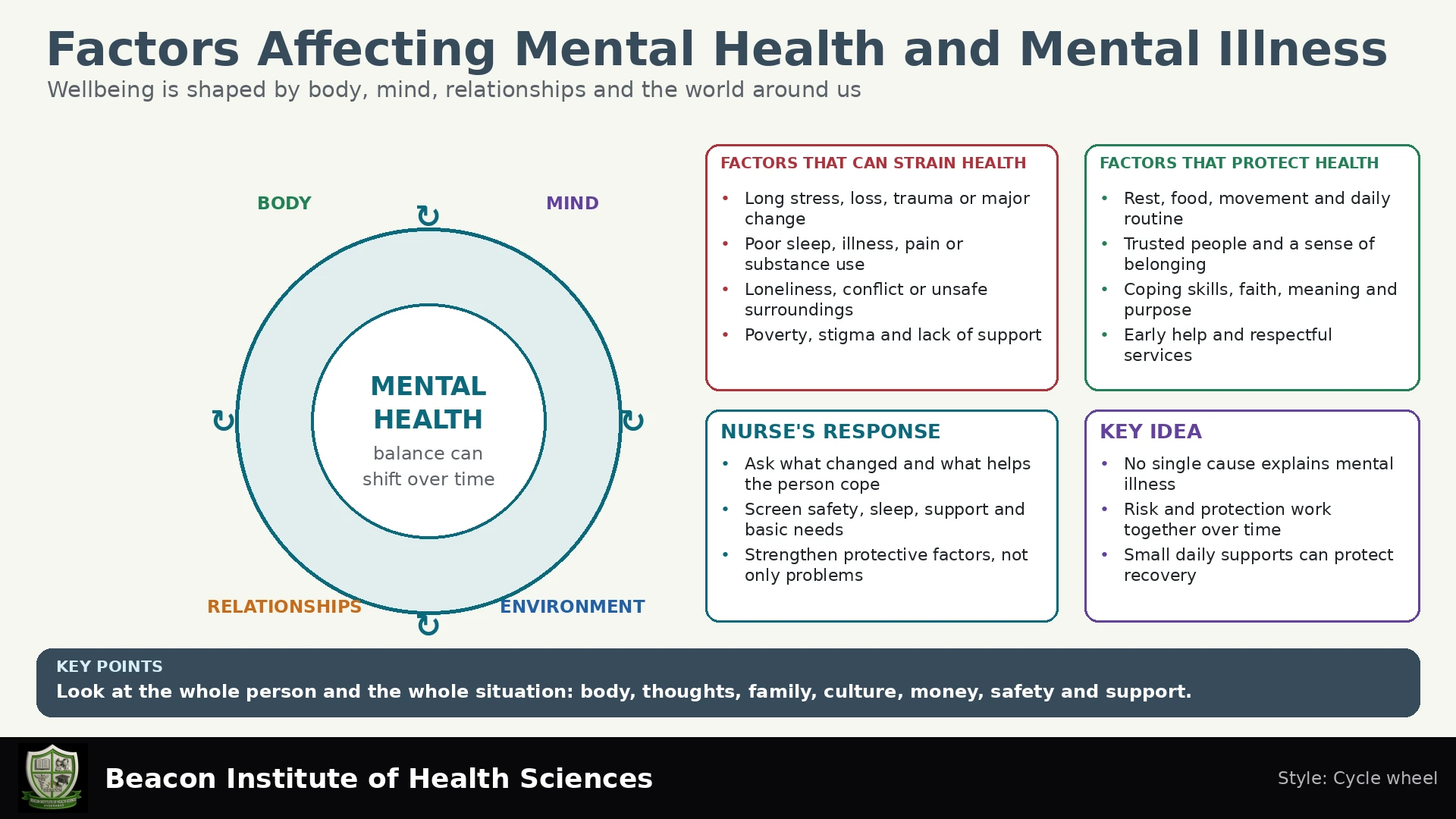
Understanding the Multifaceted Nature of Mental Health and Illness
Mental health and mental illness are complex phenomena, not reducible to single causes or simple solutions. They arise from an intricate interplay of various determinants. For BSN students and nursing educators, comprehending these interacting factors is crucial for holistic assessment, empathetic care, and effective intervention. This lesson explores the biological, psychological, social, cultural, environmental, and structural determinants that shape an individual's mental well-being, providing a framework for understanding and nursing practice without blaming the person or their family.
Understanding Mental Health Determinants
The journey through mental health or illness is profoundly influenced by a constellation of factors that can be broadly categorized. Recognizing these determinants allows nurses to develop a comprehensive and nuanced understanding of their patients' experiences.
Biological Determinants
- Genetic Vulnerability: While genetics can predispose an individual to certain mental health conditions, it is crucial to understand that genetic vulnerability is not destiny. It represents an increased risk, not a certainty, often requiring other factors to trigger the onset of illness.
- Physical Illness: Chronic or acute physical illnesses can significantly impact mental health. The stress of managing a condition, pain, disability, or changes in body chemistry can contribute to depression, anxiety, or other mental health challenges.
- Medication Effects: Certain medications prescribed for physical conditions can have psychiatric side effects. Conversely, psychotropic medications can also influence physical health. Nurses must be vigilant in monitoring these interactions.
- Sleep: Adequate and restorative sleep is fundamental to mental health. Chronic sleep deprivation or disturbed sleep patterns are strongly linked to various mental health disorders, including mood disorders and psychosis.
- Substance Use: The use and abuse of substances, including alcohol, illicit drugs, and even some prescription medications, can directly induce mental health symptoms, exacerbate existing conditions, or contribute to their development over time.
Psychological Determinants
- Coping: An individual's repertoire of coping mechanisms—how they manage stress and adversity—plays a significant role. Maladaptive coping strategies can perpetuate distress, while healthy coping can foster resilience.
- Appraisal: How individuals perceive and interpret life events (their appraisal) profoundly affects their emotional response. A perceived threat, even if objectively minor, can lead to significant psychological distress if appraised negatively.
- Trauma: Experiences of trauma, whether single events or prolonged exposure, can have profound and lasting psychological impacts, often leading to post-traumatic stress disorder (PTSD), anxiety, depression, and other conditions.
- Life Transitions: Significant life changes such as bereavement, job loss, divorce, migration, or even positive events like marriage or parenthood, can be stressors that precipitate or exacerbate mental health issues.
Social, Cultural, Environmental, and Structural Determinants
- Poverty: Socioeconomic disadvantage, including poverty and food insecurity, is a major determinant, increasing stress, limiting access to resources, and contributing to poor mental health outcomes.
- Discrimination: Experiencing discrimination based on race, ethnicity, gender, sexual orientation, disability, or other factors can lead to chronic stress, trauma, and negative self-perception, significantly impacting mental health.
- Bullying: Being a victim of bullying, especially during formative years, can result in long-term psychological distress, affecting self-esteem, social relationships, and increasing the risk of mental illness.
- Relationships: The quality of an individual's relationships—family, friends, community—can be either a source of immense support and protection or significant stress and isolation, impacting mental well-being.
- Access: Structural determinants such as limited access to healthcare, education, stable housing, meaningful employment, and mental health services can create significant barriers to recovery and well-being.
Organizing Factors: A Framework for Understanding
To systematically understand the interplay of these determinants, nurses often utilize a framework that categorizes factors based on their role in the development and course of mental illness. It's crucial to remember that no single factor predicts the outcome; rather, it is their unique combination and interaction that shapes an individual's experience.
Predisposing Factors
These are long-term, underlying vulnerabilities that increase an individual's susceptibility to developing a mental illness. Examples include family vulnerability, childhood adversity and longstanding physical illness. They increase susceptibility but do not make illness inevitable.
Precipitating, Perpetuating and Protective Factors
| Category | Meaning | Example |
|---|---|---|
| Precipitating | A recent event linked to onset or worsening | Bereavement, acute illness, loss of work |
| Perpetuating | Something maintaining the problem | Unmanaged pain, isolation, unsafe housing, disrupted sleep |
| Protective | A strength or support helping wellbeing | Trusted relationships, accessible care, coping skills, safe accommodation |
The same factor can have different roles over time. This formulation organizes an individual story; it is not a diagnostic test or a suicide prediction tool. Culture influences the meaning and expression of distress. Ask what the person believes is happening, what matters to them and what support feels acceptable.
Nursing Assessment and Intervention
Explore symptoms, functioning, developmental history, physical health and medicines. Ask about sleep, nutrition, substance use, trauma and safety sensitively. Give the person control over how much trauma detail they share; an initial assessment does not require repeated retelling. Identify practical barriers such as transport, cost, caregiving responsibilities and language. Obtain consent before involving supporters.
Address changeable factors together. Arrange physical assessment for new symptoms, seek medication review when indicated, support realistic daily routines and link the person with available psychological and social care. Coping advice cannot resolve unsafe housing or discrimination by itself; advocacy and coordinated services may be needed. Record strengths as well as difficulties, and choose outcomes that the person values. Review safety through an individual clinical assessment rather than a numerical label.
Fictional Case: Connecting Factors to Care
Bilal, 32, reports anxiety, exhaustion and missed shifts after losing secure accommodation. He has chronic pain and has begun drinking at night to sleep. His sister offers support, but he worries about burdening her.
- Which factors might contribute? Pain and previous vulnerability may predispose; housing loss may precipitate; poor sleep, drinking and insecurity may perpetuate distress. His sister and willingness to seek help are potential protective factors. These are hypotheses to discuss, not proven causes.
- What should the nurse assess first? Current physical health, safety, drinking pattern, possible withdrawal risk, sleep and immediate housing needs. New or severe symptoms require clinical review.
- What is a practical plan? With Bilal's agreement, coordinate pain and mental health assessment, discuss safer sleep support and substance-use care, investigate available housing assistance and invite the sister's involvement with consent.
- How is progress evaluated? Review symptoms, sleep, attendance, housing stability and Bilal's own sense of control. If one goal is not met, explore barriers and adjust the plan rather than blame him.