
Understanding Sexually Transmitted Infections (STIs)
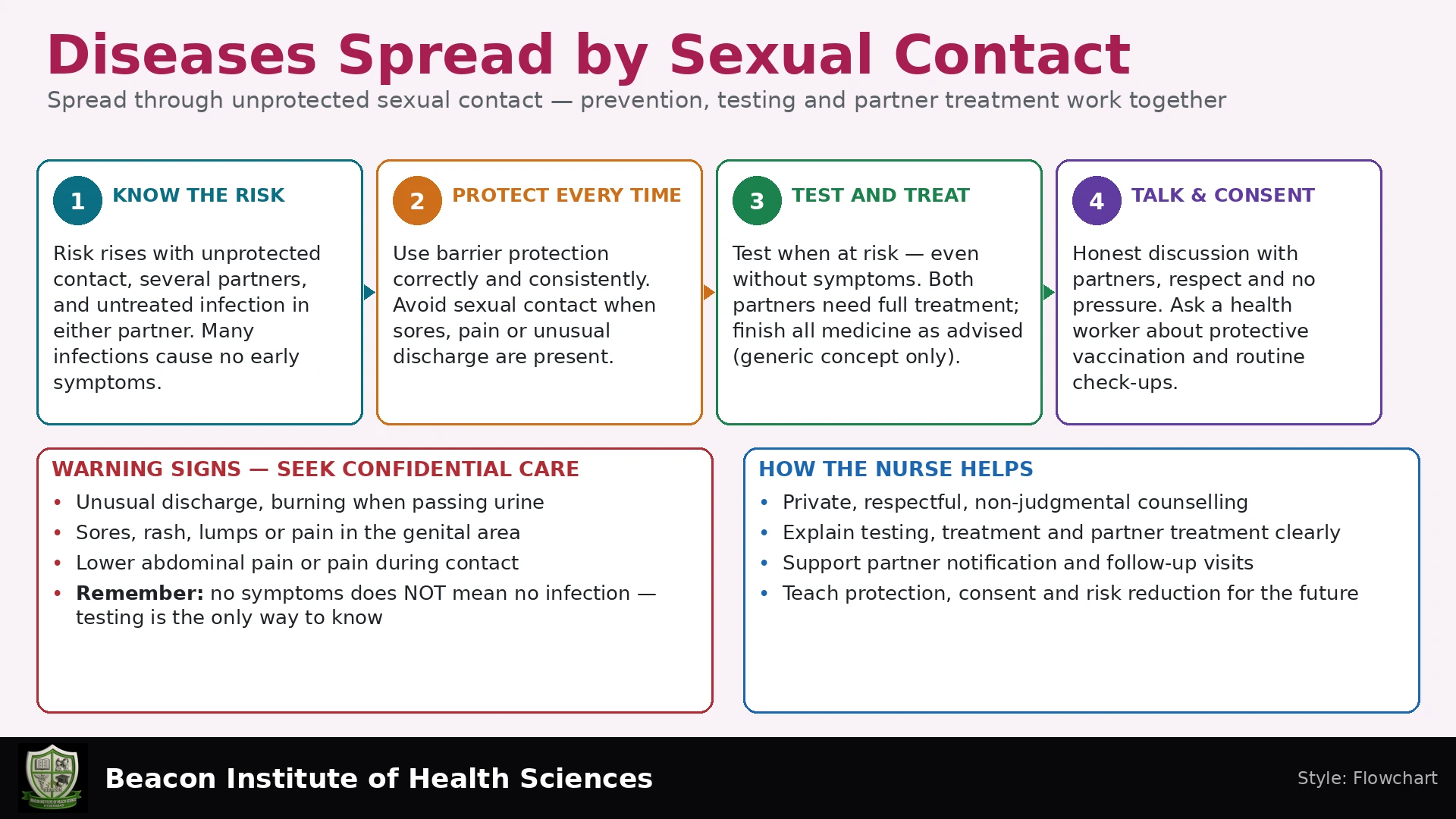
Sexually Transmitted Infections (STIs), also commonly referred to as Sexually Transmitted Diseases (STDs), represent a significant public health concern globally. As future nursing professionals, understanding the various types of STIs, their modes of transmission, clinical manifestations, potential complications, and effective management strategies is paramount. This lecture provides a foundational overview of common STIs, emphasizing the critical role of nurses in prevention, education, and patient care.
Key Characteristics of STIs
- Often Asymptomatic Nature: A crucial characteristic of many STIs is that individuals may carry and transmit infections without exhibiting any noticeable symptoms. This 'silent' spread underscores the importance of screening guided by risk, pregnancy, age and applicable recommendations, and comprehensive patient education.
- Importance of Early Detection and Testing: Due to their asymptomatic nature, timely and accurate testing is essential for early diagnosis. Early detection allows for prompt treatment, which can prevent severe health complications and reduce further transmission.
- Potential for Serious Complications if Untreated: Untreated STIs can lead to a range of severe health issues, including infertility, chronic pain, certain cancers, and increased susceptibility to other infections.
Common Bacterial and Parasitic STIs (Curable)
These infections are caused by bacteria or parasites and can typically be cured with appropriate antibiotic or antiparasitic medications.
Chlamydia
Chlamydia is a common bacterial infection, often asymptomatic. If symptoms occur, they may include abnormal vaginal discharge, burning during urination, or testicular pain. Untreated chlamydia can lead to serious complications such as Pelvic Inflammatory Disease (PID) in women, which can cause infertility, ectopic pregnancy, and chronic pelvic pain. For newborns, transmission during childbirth can result in conjunctivitis or pneumonia. Testing involves urine tests or swabs. Adherence to prescribed antibiotics is crucial for cure and prevention of complications.
Gonorrhoea
Gonorrhoea is another widespread bacterial STI that frequently presents without symptoms. When symptoms are present, they can include painful urination, abnormal discharge from the penis or vagina, and rectal pain or discharge. Similar to chlamydia, untreated gonorrhoea can lead to PID, infertility, and chronic pain. It can also cause disseminated gonococcal infection, affecting joints, skin, and heart. Newborns exposed during birth can develop severe eye infections. Diagnosis is typically made via urine tests or swabs. Treatment involves antibiotics, and adherence is vital.
Syphilis
Syphilis is a bacterial infection that progresses through several stages, with varied symptoms, and is often asymptomatic in its early stages. Primary syphilis is characterized by a painless sore (chancre). Secondary syphilis may involve a non-itchy rash, fever, and swollen lymph nodes. Latent syphilis has no visible signs. Untreated infection may cause late organ damage. Neurosyphilis, ocular syphilis and otosyphilis can occur at any stage, so neurological, visual or hearing symptoms require prompt review. Syphilis can be transmitted from mother to child during pregnancy, leading to congenital syphilis with devastating consequences for the newborn. Testing is done through blood tests. Syphilis is curable with penicillin, and early treatment is most effective.
Trichomoniasis
Trichomoniasis is a common parasitic STI. Many individuals with trichomoniasis are asymptomatic. When symptoms do occur, they can include frothy, foul-smelling vaginal discharge, itching, burning, and painful urination. Complications in women can include increased risk of other STIs and preterm birth. In men, it rarely causes symptoms but can lead to urethritis. It is diagnosed by microscopic examination of discharge or nucleic acid amplification tests (NAATs). It is curable with specific antiparasitic medications, and both partners should be treated simultaneously.
Common Viral STIs (Manageable, Not Curable)
Viral infections differ. HIV and herpes require long-term management, while many HPV infections and acute hepatitis B infections resolve. Persistent infection may require ongoing monitoring or treatment; do not describe every viral STI as necessarily lifelong.
Human Immunodeficiency Virus (HIV)
HIV is a viral infection that attacks the body's immune system, potentially leading to Acquired Immunodeficiency Syndrome (AIDS) if untreated. Initial infection may present with flu-like symptoms (acute retroviral syndrome), but many people are asymptomatic for years. Testing involves blood or oral fluid tests. Complications include opportunistic infections and certain cancers due to a weakened immune system. Protection of newborns is critical, with interventions like antiretroviral therapy for pregnant mothers significantly reducing mother-to-child transmission (PMTCT). While not curable, HIV is a chronic viral infection that can be effectively managed with antiretroviral therapy (ART) to maintain a healthy immune system and prevent progression to AIDS. Adherence to ART is lifelong and critical.
Genital Herpes (Herpes Simplex Virus - HSV)
Genital herpes is a common viral infection caused by HSV, primarily HSV-2, though HSV-1 can also cause genital herpes. Many individuals are asymptomatic or have very mild symptoms that go unnoticed. Symptoms can include painful sores, blisters, itching, or burning in the genital area. Asymptomatic viral shedding is common, meaning the virus can be transmitted even without visible sores. Complications can include recurrent outbreaks and psychological distress. Neonatal herpes, a rare but severe condition, can occur if a mother transmits the virus to her newborn during vaginal delivery, necessitating careful management during pregnancy and labor. While not curable, outbreaks can be managed with antiviral medications to reduce their frequency, severity, and duration.
Human Papillomavirus (HPV)
HPV is a very common viral infection, with many types being asymptomatic and resolving spontaneously. Low-risk HPV types commonly cause genital warts. Persistent high-risk types can cause cervical and other anogenital or oropharyngeal cancers. Low-risk types can cause benign genital warts. A Pap test checks cervical cell changes; an HPV test detects selected high-risk HPV types. They are different tests. Screening follows the applicable age and clinical recommendations. There is no cure for the virus itself, but warts can be treated, and precancerous lesions can be removed. HPV vaccines are highly effective in preventing infection with the most common high-risk HPV types and types that cause genital warts, significantly reducing the risk of associated cancers and disease.
Hepatitis B
Hepatitis B is a viral infection that primarily affects the liver. Many people with hepatitis B are asymptomatic, especially in the acute phase. Symptoms, if present, can include fatigue, nausea, vomiting, dark urine, and jaundice. Acute infection can resolve spontaneously, but some individuals develop chronic hepatitis B, which can lead to serious complications like cirrhosis, liver failure, and liver cancer. Maternal transmission to newborns is a significant concern, but newborn protection through vaccination at birth is highly effective. Testing involves blood tests. There is no cure for chronic hepatitis B, but antiviral medications can help manage the virus, slow disease progression, and reduce the risk of liver damage. The Hepatitis B vaccine is safe and highly effective in preventing infection.
Essential Nursing Considerations for STI Care
Patient-Centered Care Principles
- Consent: Always obtain informed consent before any examination, testing, or treatment.
- Confidentiality: Protect the patient’s information and explain any applicable clinical reporting or safeguarding limits to confidentiality. Building trust is essential for open communication.
- Nonjudgmental Approach: Provide compassionate, empathetic, and nonjudgmental care to all patients, regardless of their sexual history or lifestyle choices. This encourages patients to seek care and adhere to treatment.
Prevention and Risk Reduction Strategies
- Condoms Reduce Risk but Not All Skin-to-Skin Risks: Consistent and correct use of barrier methods, such as condoms, significantly reduces the risk of transmitting many STIs. However, it is important to educate patients that condoms do not protect against all skin-to-skin transmitted STIs (e.g., genital herpes, HPV, or syphilis sores that may be present on areas not covered by a condom).
- Vaccines: Promote and educate patients about available vaccines for STIs, specifically the Hepatitis B vaccine and the HPV vaccine, which offer significant protection against these infections and their associated complications.
Importance of Partner Services
Partner services, including partner notification and expedited partner therapy (where applicable and appropriate), are crucial to interrupting STI transmission chains. Nurses play a vital role in educating patients about the importance of informing sexual partners and facilitating these services while respecting patient confidentiality.
Adherence to Treatment and Management Plans
For both curable infections and chronic viral conditions, patient adherence to prescribed treatment regimens and ongoing management plans is critical for successful outcomes, preventing complications, and reducing further transmission. Nurses are key in educating patients on medication schedules, potential side effects, and the importance of follow-up care.
Clinical Application: Fictional Case Study
Case Scenario:
Ms. Emily Chen, a 22-year-old university student, presents to the campus health clinic with concerns about recent unprotected sexual contact. She reports experiencing unusual vaginal discharge and mild burning during urination for the past few days. She expresses significant anxiety and embarrassment.
Practice Questions:
- What initial nursing actions are priorities when Ms. Chen presents with her concerns?
- What specific STI screenings might the nurse anticipate for Ms. Chen based on her symptoms and history?
- How would the nurse educate Ms. Chen about prevention and the importance of partner services?
Answered Practice:
- Initial Nursing Actions: The nurse's immediate priorities include establishing a trusting and confidential environment. This involves actively listening to Ms. Chen's concerns without judgment, ensuring her privacy, and reassuring her that her feelings of anxiety and embarrassment are normal. Obtaining a thorough, non-judgmental sexual history, including the number of partners, types of sexual contact, and condom use, is crucial. The nurse should also provide clear information about the visit process, including potential tests and what to expect, ensuring informed consent is obtained before any procedures.
- Anticipated STI Screenings: Based on Ms. Chen's symptoms (unusual vaginal discharge, mild burning during urination) and history of unprotected sexual contact, the nurse would anticipate screening for common bacterial STIs that often cause these symptoms. This would include tests for Chlamydia and Gonorrhoea (e.g., urine sample or vaginal swab). Depending on the comprehensive sexual history and local protocols, tests for Trichomoniasis, Syphilis (blood test), and HIV (blood test) might also be considered to provide a complete picture of her sexual health.
- Education on Prevention and Partner Services: The nurse would educate Ms. Chen on several key points:
- Prevention: Emphasize the importance of consistent and correct condom use for future sexual encounters to reduce the risk of STI transmission. Discuss safer sex practices and the availability of vaccines for HPV and Hepatitis B.
- Partner Services: Explain the importance of informing her recent sexual partner(s) about potential exposure so they can also get tested and treated. This helps prevent reinfection for Ms. Chen and stops further spread of the STI in the community. The nurse would clarify that these services can be confidential, and resources are available to help with partner notification without necessarily revealing Ms. Chen's identity directly, if that is a concern.
Study Points and Self-Assessment
Understanding diseases spread by sexual contact is a cornerstone of nursing practice. Remember to prioritize patient-centered care, promote prevention, and advocate for comprehensive screening and treatment. For further self-assessment and to test your knowledge, please complete the following quiz:
https://bi.edu.pk/quiz-test/?quiz=diseases-spread-by-sexual-contact
Conclusion
Nurses are at the forefront of sexual health, playing an indispensable role in educating individuals, preventing transmission, and providing compassionate care for those affected by diseases spread by sexual contact. By applying knowledge of epidemiology, clinical manifestations, and evidence-based interventions, BSN students can significantly contribute to improving public health outcomes and reducing the burden of STIs in their communities.