
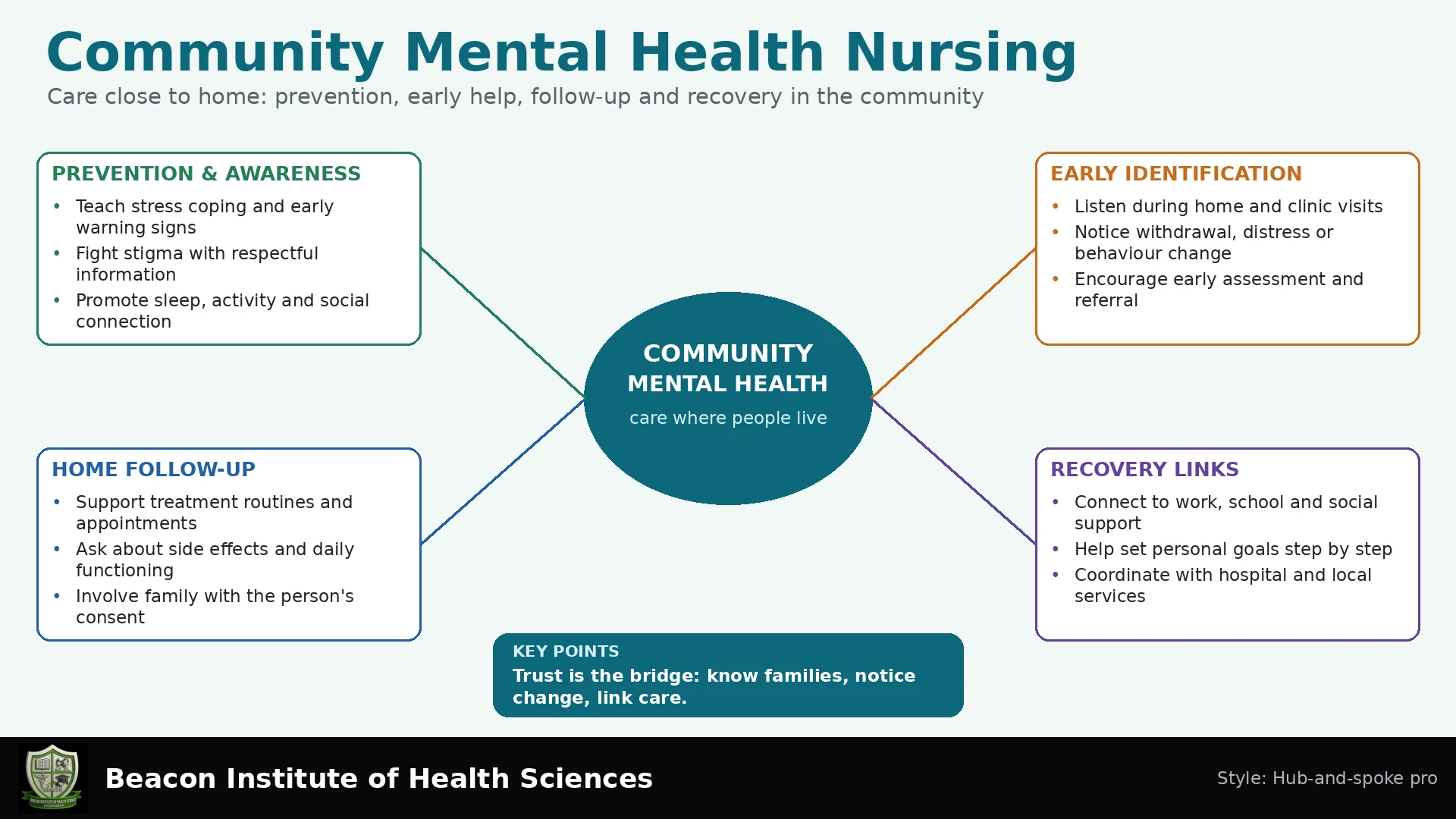
Core Concepts in Community Mental Health Nursing
Community Mental Health Nursing (CMHN) is a specialized field focusing on promoting mental well-being, preventing mental illness, and providing care and support to individuals and families within their community settings. This approach emphasizes holistic care, integrating mental and physical health, and addressing social determinants that impact health outcomes.
Levels of Prevention
CMHN operates across all three levels of prevention:
- Primary Prevention: Aims to prevent the onset of mental illness through health promotion activities. This includes initiatives like community education on stress management, resilience building, and early childhood mental health promotion, targeting the general population to enhance mental well-being before problems arise.
- Secondary Prevention: Focuses on early detection and prompt intervention to reduce the duration and severity of mental health conditions. Activities include screening programs, crisis intervention, and early identification of individuals at risk, ensuring timely access to care.
- Tertiary Prevention: Involves reducing the impact of an existing mental illness, preventing relapse, and promoting rehabilitation and recovery. This level includes ongoing support, medication monitoring, therapy, and assisting individuals in achieving their highest possible level of functioning and integration into the community.
Key Principles and Activities
The practice of community mental health nursing involves a range of principles and activities to ensure comprehensive and person-centered care:
- Early Detection: Proactive identification of mental health concerns or risks in individuals and families.
- Collaborative Assessment: Working with patients, families, and other healthcare providers to conduct thorough assessments that consider physical, psychological, social, and environmental factors.
- Referral: Guiding patients to appropriate specialized services or community resources when needed.
- Continuity of Care: Ensuring seamless transitions between different levels of care and providers, promoting consistent support over time.
- Consent and Privacy: Upholding ethical principles by securing informed consent for interventions and strictly maintaining patient confidentiality.
- Outreach: Actively reaching out to underserved populations or individuals who may not seek help independently.
- Home Visits: Providing care in the patient's home environment, which allows for a more comprehensive understanding of their living situation and support systems, and facilitates tailored interventions.
- Physical Care Integration: Addressing and monitoring physical health needs alongside mental health concerns, recognizing their interconnectedness.
- Medication Monitoring: Educating patients about their medications, assessing adherence, monitoring for side effects, and communicating with prescribers.
- Family Education: Informing and supporting family members to help them understand the patient's condition, cope with challenges, and participate in the care plan.
- Crisis Planning: Developing individualized plans to manage potential crises, identifying triggers, coping strategies, and emergency contacts.
- Peer Support: Facilitating connections to peer support networks, recognizing the value of shared experiences in recovery.
- Inclusion: Advocating for the full participation of individuals with mental health conditions in all aspects of community life.
Service Delivery and Coordination
Effective CMHN requires a well-organized approach to service delivery and coordination.
Service Mapping
Service mapping in CMHN involves identifying and understanding the availability of mental health resources and support networks within a specific community. This process helps nurses and other healthcare professionals to effectively navigate the system and connect patients with appropriate services, thereby enhancing accessibility and continuity of care.
Rights-Based Multidisciplinary Care
Care in the community is rights-based, ensuring that individuals receive respectful, dignified care that upholds their autonomy and human rights. It is also multidisciplinary, involving collaboration among various professionals such as psychiatrists, psychologists, social workers, occupational therapists, and nurses to provide comprehensive support tailored to the patient's needs.
Discharge Follow-up
Discharge follow-up is a critical component, ensuring that individuals transitioning from inpatient care or intensive programs receive continued support in the community. This helps support relapse prevention, promotes recovery, and ensures continuity with community-based services.
Addressing Access Barriers
Community mental health nurses actively work to identify and address barriers to accessing care, such as stigma, transportation issues, financial constraints, or lack of awareness about available services. Their role includes advocacy and finding practical solutions to overcome these obstacles.
Clinical Application: Fictional Case Study
Case Presentation
Mr. Ali, a 45-year-old male, has been recently discharged from an inpatient psychiatric unit after an acute episode of severe depression. He lives alone but has a sister living nearby. He is prescribed antidepressants and requires regular monitoring. He expresses feelings of isolation and struggles with motivation for daily activities. His sister has expressed concern about his medication adherence and his diet.
Nursing Care and Coordination Plan
A community mental health nurse conducts a home visit to Mr. Ali. The nurse's plan includes:
- Collaborative Assessment: Conduct a comprehensive assessment during the home visit, evaluating Mr. Ali's current mental state, living conditions, social support, physical health, medication knowledge, and safety. Involve his sister in the assessment with Mr. Ali's consent.
- Medication Monitoring and Education: Review Mr. Ali's medication regimen, educate him and his sister on the purpose, dosage, potential side effects, and importance of adherence. Set up a system for medication reminders.
- Family Education: Provide his sister with information on depression, warning signs of relapse, and strategies to support Mr. Ali's recovery while encouraging her own self-care.
- Crisis Planning: Work with Mr. Ali and his sister to develop a personalized crisis plan, identifying triggers, coping strategies, and contact information for emergency support.
- Referral and Inclusion: Discuss local peer support groups for depression and refer him to a community occupational therapist for assistance with daily routines and engagement in meaningful activities. Explore community resources for healthy meal preparation.
- Continuity of Care: Liaise with the inpatient team and his general practitioner to ensure smooth transfer of care and shared understanding of his treatment plan.
- Outreach and Follow-up: Schedule regular follow-up home visits to monitor his progress, assess medication effectiveness and side effects, provide ongoing emotional support, and reinforce coping strategies.
- Physical Care Integration: Encourage balanced nutrition and light physical activity, connecting Mr. Ali with relevant community programs or resources if applicable.
Rationale and Key Considerations
- The home visit allows the nurse to assess Mr. Ali in his natural environment, gaining insights into his challenges and resources that might not be evident in a clinic setting.
- Collaborative assessment involving Mr. Ali and his sister promotes shared understanding and a more holistic view of his needs and support system.
- Medication monitoring and education are crucial for adherence and managing potential side effects, which directly impact treatment success and prevent relapse.
- Family education empowers his sister to be an informed and effective support person, which is vital for long-term recovery.
- Crisis planning proactively addresses potential deterioration, providing a clear course of action and enhancing safety.
- Referral to peer support and occupational therapy addresses his expressed isolation and difficulty with daily activities, aligning with tertiary prevention goals of rehabilitation and inclusion.
- Continuity of care ensures that there are no gaps in his treatment as he transitions from inpatient to community care.
- Regular outreach and follow-up visits are essential for ongoing assessment, support, and adjustment of the care plan as needed.
- Integrating physical care, such as nutrition and activity, supports his overall well-being, recognizing the link between physical and mental health.
Test Your Knowledge
To further assess your understanding of community mental health nursing, please take our quiz:
Community Mental Health Nursing Quiz
Consent, Safety and Evaluation
Ask the person who may receive information and what can be shared. Family education does not automatically authorize disclosure of private clinical details. Discuss confidentiality limits and follow local law and clinical policy when immediate safety or safeguarding concerns require information sharing. During home visits, follow staff safety procedures and use agreed communication arrangements.
For Mr. Ali, ask directly about current distress and self-harm concerns, assess basic needs and arrange urgent review if immediate danger or severe deterioration is present. Risk scales should not predict suicide or determine discharge. Confirm that follow-up is accessible rather than simply giving a referral. Review his chosen goals, physical health, treatment effects and whether practical barriers have been resolved. Services named in a plan must be checked for actual local availability.