
Understanding the Biopsychosocial Model in Nursing
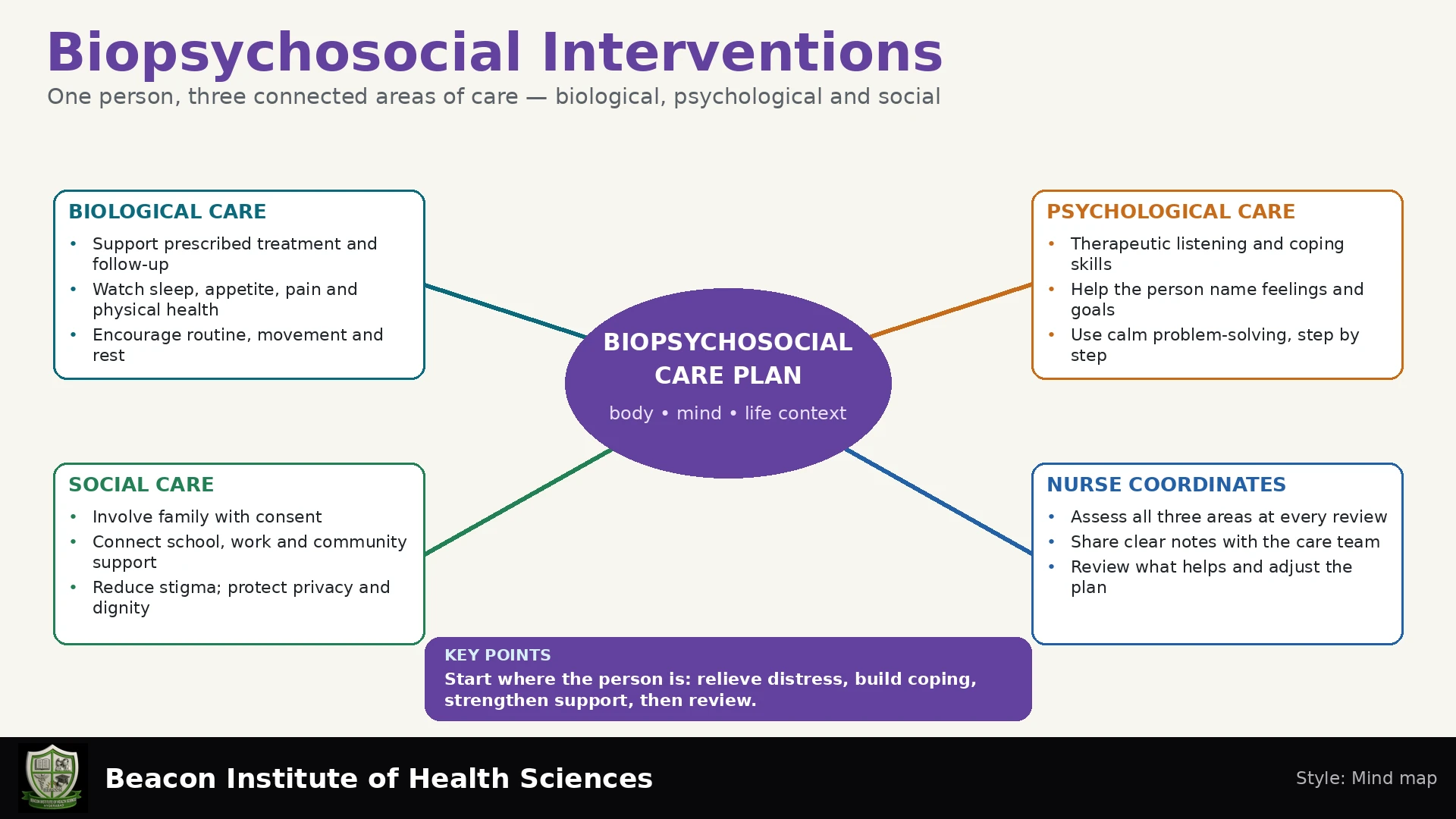
The biopsychosocial model provides a comprehensive framework for understanding health and illness, emphasizing the interconnectedness of biological, psychological, and social factors in a patient's well-being. In nursing, this model guides the development and implementation of integrated care, which involves addressing all these dimensions to achieve holistic patient outcomes. This approach ensures that care plans are tailored to the individual, promoting shared decisions between the patient and the healthcare team.
Components of Biopsychosocial Interventions
Integrated biopsychosocial interventions encompass a range of strategies aimed at supporting patients across their biological, psychological, and social needs.
Biological Interventions
- Physical Health Medication Monitoring: This includes careful assessment of medication effectiveness, side effects, adherence, and interactions, ensuring optimal pharmacological management for physical and mental health conditions.
- Indicated Brain Stimulation: For specific conditions where appropriate, interventions such as electroconvulsive therapy (ECT) or transcranial magnetic stimulation (TMS) may be indicated and monitored as part of the biological treatment plan.
Psychological Interventions
Psychological interventions focus on mental health and emotional well-being, often delivered by appropriately trained practitioners, including nurses with the relevant specialist competencies. While nurses provide therapeutic support, specialist psychotherapy is typically delivered by qualified psychotherapists.
- Cognitive Behavioral Therapy (CBT): A structured approach to help patients identify and change unhelpful thinking patterns and behaviors.
- Dialectical Behavior Therapy (DBT): Focuses on teaching skills for managing intense emotions, improving relationships, and reducing self-destructive behaviors.
- Supportive Interventions: Providing emotional support, empathy, and encouragement to help patients cope with stress and mental health challenges.
- Family Interventions: Involving family members in the care process to improve communication, address family dynamics, and provide education and support.
Social Interventions
Social interventions address the patient's environment, community, and functional aspects of daily living.
- Psychoeducation: Providing patients and their families with information about their condition, treatment options, and strategies for managing symptoms.
- Coping Routines: Assisting patients in developing healthy daily routines and coping mechanisms to manage stress and improve overall functioning.
- Housing Support: Connecting patients with resources for stable and safe housing, which is fundamental to recovery and well-being.
- Education and Employment Support: Helping patients access educational opportunities or find suitable employment, promoting independence and social integration.
- Peer Support: Facilitating connections with peer support groups or individuals with similar experiences, fostering a sense of community and mutual aid.
Therapeutic Nursing Support Versus Specialist Psychotherapy
It is crucial for nursing students to distinguish between therapeutic nursing support and specialist psychotherapy. While nurses provide essential therapeutic communication, psychoeducation, and emotional support, specialist psychotherapy (such as in-depth CBT or DBT sessions) is typically delivered by mental health professionals with advanced training and certification in these modalities. Nurses play a vital role in identifying needs, collaborating with specialists, and integrating psychological strategies into overall patient care plans, ensuring continuity and reinforcement of therapeutic goals.
Principles of Care Delivery
Effective implementation of biopsychosocial interventions relies on several core principles:
- Consent and Rights: Upholding patient autonomy by ensuring informed consent for all interventions and respecting patient rights throughout the care process.
- Team Coordination: Facilitating seamless communication and collaboration among all members of the interdisciplinary team, including physicians, psychologists, social workers, and other allied health professionals, to ensure an integrated and consistent approach.
- Safety and Monitoring: Continuously assessing for patient safety, including risk factors for self-harm or harm to others, and monitoring the effectiveness and side effects of all interventions. Individual assessment is key, as risk scales should not be used to predict suicide or determine treatment or discharge.
Integrated Care Plan Example
| Domain | Intervention Type | Specific Examples | Nursing Role/Focus |
|---|---|---|---|
| Biological | Pharmacological Management | Medication administration, monitoring for efficacy and side effects (e.g., antidepressants, antipsychotics), physical health checks (e.g., vital signs, lab work). | Administer medications, educate on use, monitor for adverse effects, collaborate with prescribers, track physical health indicators. |
| Biological | Physiological Support | Nutrition, sleep hygiene, exercise routines. | Educate on healthy lifestyle, identify barriers, provide resources. |
| Psychological | Psychoeducation | Education on diagnosis, symptom management, coping strategies. | Deliver clear, empathetic information, answer patient/family questions. |
| Psychological | Supportive Counseling | Active listening, empathy, validation, problem-solving support. | Provide emotional support, build therapeutic relationship, reinforce coping skills. |
| Social | Resource Navigation | Connecting to housing assistance, employment services, educational programs. | Assess social needs, provide referrals, advocate for patient access to resources. |
| Social | Community Integration | Facilitating access to peer support groups, community activities. | Encourage participation, provide information on local support networks. |
Case Study: Applying Biopsychosocial Interventions
Fictional Case: Mr. David Chen
Mr. David Chen, a 45-year-old man, was admitted with exacerbation of major depressive disorder, characterized by severe anhedonia, sleep disturbance, poor appetite, and social withdrawal. He recently lost his job, leading to financial strain and isolation from friends. He also reports experiencing chronic back pain that limits his physical activity.
Integrated Biopsychosocial Care Plan Goals and Evaluation
The nursing team, in collaboration with Mr. Chen and the interdisciplinary team, established the following goals:
- Biological Goals:
- Goal 1: Mr. Chen will report improved sleep quality (falling asleep within 30 minutes, sleeping 6-8 hours) within 2 weeks.
- Evaluation: Daily sleep diary, subjective report of sleep quality, observation of daytime alertness.
- Goal 2: Mr. Chen will demonstrate improved appetite and maintain stable body weight (no more than 2 kg fluctuation) within 1 month.
- Evaluation: Daily food intake log, weekly weight measurement, subjective report of appetite.
- Goal 3: Mr. Chen's back pain will be managed to a tolerable level (reporting pain ≤4/10 on a consistent basis).
- Evaluation: Pain scale ratings, observation of physical activity tolerance.
- Psychological Goals:
- Goal 1: Mr. Chen will identify and challenge at least two negative automatic thoughts daily within 3 weeks.
- Evaluation: Thought record entries, verbalization of alternative thoughts.
- Goal 2: Mr. Chen will engage in at least one enjoyable activity three times a week within 1 month.
- Evaluation: Activity log, subjective report of pleasure/engagement.
- Goal 3: Mr. Chen will verbalize understanding of his diagnosis and treatment plan by discharge.
- Evaluation: Teach-back method, verbal recall of information.
- Social Goals:
- Goal 1: Mr. Chen will reconnect with one supportive friend or family member weekly within 1 month.
- Evaluation: Self-report, family contact log.
- Goal 2: Mr. Chen will attend a vocational counseling session within 2 weeks of discharge.
- Evaluation: Appointment confirmation, verbal report of attendance.
- Goal 3: Mr. Chen will identify potential housing resources within 3 weeks.
- Evaluation: List of resources, contact made with at least one agency.
These goals emphasize a collaborative, patient-centered approach, reflecting the comprehensive nature of biopsychosocial interventions in nursing practice.
For further self-assessment, please take this quiz: Biopsychosocial Interventions Quiz
Explained Review Questions
- Why assess pain and employment together? Both may affect sleep, mood and participation. A combined plan addresses the person's needs rather than assuming one treatment can resolve every difficulty.
- Who chooses care goals? The person and team agree feasible priorities and review measures. Illustrative targets in this case are individual examples, not universal clinical standards.
- Does nursing support replace specialist therapy? No. Nurses provide care within their competence, reinforce agreed skills and coordinate access to appropriately trained practitioners.