
Introduction to Sleep and Rest in Patient Care
Understanding the basic nature of human fatigue, healing, and recovery is fundamental in professional clinical nursing. Both sleep and rest are essential components of physiological well-being and development. Every individual needs dedicated periods of low-stimulus or non-active states to allow the body to regain energy, rebuild muscle fibers, and restore cognitive stamina for daily living. This comprehensive guide details clinical processes, theoretical concepts, neurological mechanisms, and nursing management protocols for sleep and rest, serving as an essential academic and clinical roadmap for Bachelor of Science in Nursing (BSN) programs.
Core Concepts & Definitions: Sleep vs. Rest
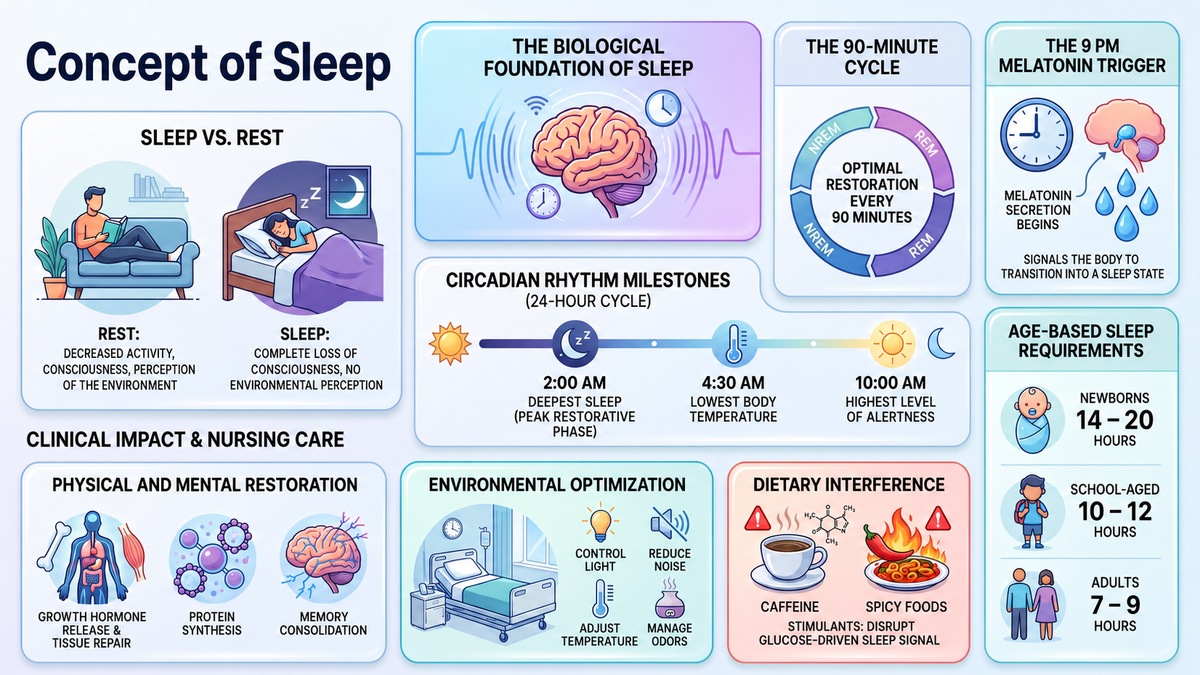
While both sleep and rest involve relaxation and a reduction in bodily activity, they differ fundamentally in the level of consciousness and the ability to perceive and respond to the external environment.
A. Concept of Sleep
Sleep is a naturally occurring state of rest characterized by altered and decreased consciousness, relative physical inactivity, and a significantly reduced perception and responsiveness to the surrounding environment. During sleep, conscious brain processing is temporarily altered or suspended, leading to a state of relative sensory detachment. Individuals do not actively perceive or respond to external stimuli like conversations or physical activities. This suspension of consciousness is fully reversible, and normal sensory stimuli can promptly wake an individual to full alertness.
B. Concept of Rest
Rest is a relaxed, peaceful state of decreased physical and mental activity, where the individual remains fully conscious, alert, and capable of perceiving and responding to their environment. A resting individual intentionally decreases physical exertion—for example, by lying in a comfortable bed or reclining on a sofa—and ceases active cognitive or work duties. However, conscious awareness is not lost; individuals remain fully aware of and connected to their surroundings, able to perceive and respond to environmental stimuli in real-time.
Summary Matrix: Sleep vs. Rest Comparison
| Functional Indicator | Resting State (Conscious Relaxation) | Sleeping State (Altered Consciousness) |
|---|---|---|
| Level of Consciousness | Fully conscious, alert, and responsive. | Altered, decreased, or suspended consciousness. |
| Environmental Awareness | Highly aware; perceives surrounding talk, laugh, and activity. | Relatively detached; does not perceive normal ambient stimuli. |
| Physical Exertion | Exertion is stopped or minimized; body is relaxed. | Complete physical inactivity; muscles are profoundly relaxed. |
| Reversibility of State | Immediate response (already awake). | Fully and promptly reversible by standard sensory stimuli. |
| Primary Physiological Goal | Provides quick physical relief and cognitive pause. | Facilitates deep cellular repair, growth, and tissue recovery. |
The Circadian Rhythm & Internal Biological Clock
Every living organism, including humans, is governed by an internal biological schedule known as the Circadian Rhythm. Derived from the Latin words 'circa' (about) and 'dies' (day), a circadian rhythm represents an internal, approximate 24-hour cycle of biological, physiological, and behavioral processes.
The Internal Body Clock functions as the body's master internal clock, regulated by neural structures in the brain that respond directly to light and dark cues. This biological clock controls body temperature, blood pressure, hormonal secretions (e.g., melatonin, growth hormone), and alertness.
The 24-Hour Physiological Cycle Timeline
The body undergoes major physiological shifts that repeat systematically every 24 hours. Understanding this timeline is crucial for nursing clinical practice, as it dictates optimal windows for medication, exercise, and clinical care scheduling.
| Time of Day | Physiological Event & Biological Transition | Clinical Significance for Nursing Care |
|---|---|---|
| 6:30 PM | Peak Blood Pressure | Highest natural BP observed; monitor hypertensive patients. |
| 7:00 PM | Highest Body Temperature | Peak body temperature; normal circadian spike, do not confuse with fever. |
| 9:00 PM | Melatonin Secretion Begins | Pineal Gland increases melatonin release, inducing natural sleepiness. |
| 12:00 AM | Midnight Transition | Transition toward deeper rest phases; systems slow down. |
| 2:00 AM | Deepest, Most Restorative Sleep | Profound state of rest, cellular repair, and REM cycles. |
| 4:30 AM | Lowest Body Temperature | Core temperature reaches its lowest diurnal drop. |
| 6:00 AM | Blood Pressure Rise | Natural surge in blood pressure as the body prepares for arousal. |
| 6:45 AM | Sharpest Rise in Blood Pressure | BP elevates sharply; high risk for cardiovascular events. |
| 7:30 AM | Melatonin Secretion Ceases | Melatonin suppressed by daylight, ending sleep drive. |
| 10:00 AM | Highest Alertness & Concentration | Peak cognitive concentration, focus, and stamina. |
| 2:30 PM | Best Physical Coordination | Optimal motor coordination and physical agility. |
| 3:30 PM | Fastest Reaction Time | Nervous pathways achieve fastest reaction times. |
| 5:00 PM | Greatest Muscle Strength & Cardio | Cardiovascular efficiency and muscle strength reach their peak. |
Sleep Architecture: NREM and REM Phases
A normal night of sleep is composed of a series of highly structured, repetitive cycles that alternate between two distinct physiological phases: NREM (Non-Rapid Eye Movement) Sleep and REM (Rapid Eye Movement) Sleep. A complete sleep cycle typically lasts approximately 90 minutes, repeating 4 to 6 times over a normal 6-to-8-hour night. The transition from awake to deep sleep requires a systematic progression through NREM and REM stages.
A. Non-Rapid Eye Movement (NREM) Sleep (Stages 1 - 4)
NREM sleep accounts for approximately 75% to 80% of total sleep time and is divided into four distinct stages, representing a progressive deepening of sleep. During NREM sleep, the body undergoes metabolic and physical slowdown: heart rate drops, breathing slows, muscle tone decreases, and blood pressure falls.
- Stage 1 (Falling Sleep / Transitional Stage): This is the lightest stage of sleep, lasting approximately 5 minutes as the individual drifts from wakefulness to sleep. It is characterized by slow, rolling eye movements under the eyelids. Muscles begin to relax, and responsiveness to the environment gradually declines. The individual is very easily awakened (e.g., by a quiet whisper) and may feel as if they are still awake.
- Stage 2 (Light Sleep): This stage represents a slightly deeper state of sleep, lasting about 10 to 15 minutes. Eye movements stop, and the heart rate and respiratory rate slow down further. Brain waves show high-voltage slow waves and brief bursts of electrical activity known as sleep spindles and K-complexes. Awakening requires a slightly stronger stimulus than Stage 1.
- Stage 3 (Deep Sleep Transition): A deeper, moderately restorative sleep stage. Large, high-voltage slow delta waves begin to appear on an EEG. The body begins its physical recovery processes: skeletal muscles are profoundly relaxed, blood pressure drops, breathing becomes steady, and the body's core temperature decreases. It is significantly more difficult to wake someone in this stage.
- Stage 4 (Deepest Sleep / Delta Sleep): This is the deepest, most physically restorative stage of NREM sleep. Large, slow delta waves dominate the brain's electrical activity. Muscles are completely relaxed, and the metabolic rate drops to its lowest level. Waking an individual from Stage 4 is extremely difficult; if awakened, they will appear highly confused, groggy, and disoriented.
B. Rapid Eye Movement (REM) Sleep (Stage 5 / Deep Psychological Sleep)
Approximately 90 minutes after first falling asleep, the individual transitions from the deep NREM stages into REM Sleep, often referred to as Stage 5 or 'paradoxical sleep.' REM sleep is characterized by high brain activity and rapid, jerky movements of the eyes under closed eyelids. The brain's metabolism increases, resembling the electrical patterns of an awake, alert brain.
- The Paradox of REM Sleep: While the brain is highly active, breathing is irregular, and the heart rate fluctuates, the body's skeletal muscles are completely paralyzed (muscle atonia). This paralysis is a vital protective mechanism that prevents the sleeping individual from physically acting out their dreams.
- Vivid Dreaming: REM is the primary stage where vivid, highly structured, and narrative dreams occur.
- Physiological Instability: Heart rate, respiratory rate, and blood pressure fluctuate and become irregular, and oxygen consumption by the brain increases.
- Cognitive Restoration: REM sleep is essential for psychological well-being, cognitive consolidation, memory storage, emotional regulation, and learning.
- First Cycle and Duration: The first REM period of the night is relatively short, but as the night progresses, REM periods become longer, and deep NREM sleep decreases.
Electro-Neurobiology: Brain Wave Patterns During Sleep
The electrical activity of the human brain changes dynamically depending on the state of consciousness and the specific stage of sleep. This electrical activity is measured and recorded as brain waves using an Electroencephalogram (EEG). The science of recording and analyzing brain waves during sleep is known as polysomnography, a field pioneered by German psychiatrist Hans Berger. Brain waves are classified into four distinct types based on their frequency (measured in Hertz, or cycles per second) and voltage amplitude.
| Brain Wave Type | Frequency (Hz) | Conscious / Sleep State & Clinical Presentation |
|---|---|---|
| Beta Waves | 14 to 30 Hz | Active, fully awake, and alert state. High frequency, low voltage amplitude. Present when an individual is active, focused, studying, or physically engaged. |
| Alpha Waves | 8 to 13 Hz | Relaxed, calm, and peaceful awake state. Present when an individual closes their eyes, visualizes, meditates, or relaxes before falling asleep. |
| Theta Waves | 4 to 7 Hz | Light sleep, deep relaxation, or meditation. Present in Stage 1 and Stage 2 of NREM sleep. Associated with visualization, daydreaming, and creative problem-solving. |
| Delta Waves | 0.5 to 3 Hz | Deepest, dreamless sleep. Lowest frequency, highest voltage amplitude. Dominates Stage 3 and Stage 4 of NREM sleep. Crucial for physical body recovery and growth. |
The EEG Milestone: Hans Berger first discovered and recorded the electrical activity of the human brain in 1924, introducing the Electroencephalogram (EEG). He identified alpha and beta waves, establishing the scientific foundation for modern sleep medicine and neurophysiology.
Lifespan Sleep Requirements & Melatonin Decline
Sleep requirements and sleep architecture change predictably across the human lifespan. As an individual ages, their total daily sleep duration decreases, and deep restorative NREM and REM phases become shorter. A major cause of reduced sleep in older adults is the progressive calcification of the Pineal Gland, leading to a marked decline in the secretion of the hormone melatonin.
| Developmental Stage | Age Group | Normal Sleep Duration Requirement |
|---|---|---|
| Newborns | 0 to 3 Months | 14 to 17 Hours / Day (Frequent sleep cycles due to rapid growth) |
| Infants | 4 to 11 Months | 12 to 15 Hours / Day (Includes daytime naps) |
| Toddlers | 1 to 2 Years | 11 to 14 Hours / Day (Decreasing daytime naps) |
| Preschoolers | 3 to 5 Years | 10 to 13 Hours / Day |
| School-Age Children | 6 to 13 Years | 9 to 11 Hours / Day |
| Adolescents (Teenagers) | 14 to 17 Years | 8 to 10 Hours / Day (Growth spurts require adequate rest) |
| Young Adults & Adults | 18 to 64 Years | 7 to 9 Hours / Day (Standard adult requirements) |
| Older Adults (Elderly) | 65+ Years | 7 to 8 Hours / Day (Sleep is fragmented; frequent nighttime awakenings) |
Systemic Functions and Clinical Importance of Sleep
Sleep is a vital, active biological necessity required for human survival, healing, and physiological restoration. It plays an active role in maintaining optimal health across multiple body systems.
A. Key Physiological Functions of Sleep
- Cellular Repair and Growth: During deep NREM sleep (Stages 3 & 4), the body accelerates the synthesis of proteins, promotes mitosis (cell division), and releases large amounts of growth hormone from the pituitary gland. This is essential for muscle recovery, bone growth, and the repair of damaged tissues.
- Recovery from Illness and Healing: Sleep enhances immune function. In a hospitalized patient, good sleep patterns accelerate healing, reduce inflammation, and support recovery from severe infections or surgical wounds.
- Energy Conservation: During sleep, the basal metabolic rate, heart rate, and body temperature drop, conserving vital energy reserves for the next day's activities.
- Cognitive and Memory Consolidation: REM sleep is essential for organizing brain pathways. It filters and consolidates daily learning, processes memories, and restores neurotransmitter levels, allowing the individual to wake up mentally fresh.
- Regulation of Emotions: Adequate sleep maintains emotional stability and prevents psychological distress. Sleep-deprived individuals are highly prone to irritability, mood swings, anxiety, and depression.
B. Clinical Consequences of Sleep Deprivation & Disturbance
A continuous or acute lack of sleep triggers a multi-systemic physiological and cognitive decline, manifesting in the following clinical symptoms:
- Chronic Fatigue & Exhaustion: Inability of the body to restore energy reserves, leading to severe physical weakness.
- Irritability, Anxiety & Mood Disturbances: Heightened emotional stress and mood swings due to lack of neurotransmitter restoration.
- Reduced Cognitive & Mental Capacity: Poor concentration, memory deficits, slow reaction times, and impaired learning abilities.
- Impaired Decision-Making: Patients struggle to make logical decisions and may seek frequent medical consults for sleep aids.
- Physiological Impairments: Reduced cardiovascular efficiency, weaker muscle strength, and a slower healing process.
Factors Influencing and Disrupting Sleep Patterns
A patient's ability to fall asleep and maintain a peaceful sleep cycle is highly sensitive to environmental, biological, and behavioral factors. Nurses must assess these factors to identify the root causes of sleep disturbances:
- Comfort Levels: The degree of physical and psychological comfort is critical. Physical pain, uncomfortable hospital beds, or emotional distress prevent relaxation and delay sleep.
- Environmental Factors: The clinical environment can severely disrupt sleep. High noise levels in hospital wards (alarms, staff talking, moving equipment), bright overhead lights, inappropriate ward temperatures (too hot or too cold), bad odors, and poor ventilation all inhibit sleep.
- Anxiety & Mental Stress: Overthinking, worrying about illness, family wellbeing, or financial costs generates cognitive and muscular tension, keeping the brain in a high-alert state.
- Lifestyle & Cultural Norms: Sleep schedules are shaped by culture. For example, rural environments tend to sleep early (e.g., 8:00 PM) and wake early, while urban settings feature late-night activities and delayed sleep. Placing a patient in an environment that opposes their cultural sleep habit disrupts their cycle.
- Diet & Nutritional Stimulants: Consuming foods rich in caffeine (coffee, tea, green tea), colas, or chocolates close to bedtime acts as a direct central nervous system stimulant. Additionally, consuming high-sugar foods elevates blood glucose levels, signaling the brain that energy is abundant and suppressing the desire to sleep. Heavy, spicy meals close to bedtime cause heartburn, indigestion, and gastric irritation, interrupting sleep.
- Drugs & Substances: Nicotine (found in cigarettes) is a stimulant that prevents sleep. Alcohol, while acting as a mild sedative in small amounts to help someone fall asleep, severely disrupts sleep architecture in larger amounts. It suppresses REM sleep, causes frequent nighttime awakenings, and leads to non-restorative sleep.
Pathological Alterations: Sleep Disorders
In clinical medicine, sleep disorders are classified into distinct categories based on their pathophysiology. The two primary classifications are Dyssomnias (disorders of initiating, maintaining, or experiencing excessive sleep) and Parasomnias (abnormal behaviors or physiological events occurring during sleep).
A. Dyssomnias (Primary Sleep Insufficiency & Excess)
| Sleep Disorder | Clinical Definition & Etiology | Observable Clinical Presentation |
|---|---|---|
| Insomnia | Difficulty falling asleep, staying asleep, or waking too early. Can be acute or chronic. | Tossing and turning, high fatigue, daytime sleepiness, and irritability. |
| Hypersomnia | Excessive, pathological daytime sleepiness despite long sleep hours (e.g., 15+ hours). | Sleeping for prolonged periods, waking up tired, and constant daytime grogginess. |
| Narcolepsy | Uncontrolled, sudden sleep attacks where the patient instantly falls asleep during normal activities. | Suddenly falling asleep mid-conversation, while working, or while eating without warning. |
| Sleep Apnea | Temporary cessation of breathing during sleep, commonly caused by airway obstruction in obese individuals. | Periods of silent breathing cessation alternated with loud, gasping snorts or heavy snoring. |
| Restless Legs Syndrome | A neurological disorder causing an irresistible urge to move the legs, especially during rest. | Continuous moving, kicking, or leg twitching during relaxation, delaying sleep onset. |
| Sleep Deprivation | Prolonged, chronic disturbance in the amount and quality of sleep over consecutive days. | Severe cognitive decline, memory deficits, confusion, and psychological distress. |
B. Parasomnias (Abnormal Behaviors During Sleep)
| Sleep Disorder | Clinical Definition & Etiology | Observable Clinical Presentation |
|---|---|---|
| Nightmares | Vivid, terrifying dreams occurring during REM sleep that wake the patient. | Waking up frightened, sweating, with a rapid heart rate, remembering the dream clearly. |
| Night Terrors | Sudden arousal from deep NREM sleep with extreme panic, screaming, and confusion. | Screaming, thrashing, and panic in bed; the patient is hard to wake and has no memory of the event. |
| Somnambulism | Sleepwalking. Performing complex motor activities, like walking, while asleep. | Getting out of bed, walking through the house, or opening doors while remaining fully asleep. |
| Confusional Arousal | Waking up in a highly confused, disoriented, and slow-reacting state. | Staring blankly, acting confused, and responding slowly to questions upon waking. |
| Sleep Paralysis | A temporary inability to move or speak while falling asleep or waking up. | Conscious but unable to move any skeletal muscles, causing intense panic. |
| Enuresis | Involuntary bed-wetting during sleep in children after bladder control should have matured. | Involuntary urination during deep sleep cycles at night. |
| Bruxism | Involuntary grinding or clenching of teeth during sleep, often due to stress. | Teeth-grinding sounds, jaw pain upon waking, and worn dental enamel. |
Nursing Management & Evidence-Based Interventions
To manage a patient with altered sleep patterns, nurses utilize both pharmacological and non-pharmacological therapies. Pharmacological therapy involves administering sedative-hypnotic drugs (e.g., Alprazolam, Midazolam, or other sleep-inducing agents) that chemically depress the central nervous system. Non-pharmacological therapy focuses on behavioral modifications, environmental adjustments, and nursing care scheduling.
Standard Nursing Interventions to Promote Sleep & Rest
- Prepare a Quiet, Restful Environment: Control ambient noise, dim bright overhead lights, ensure comfortable ward temperatures, maintain proper ventilation, and eliminate bad odors to match the patient's home environment as closely as possible.
- Promote Sleep Rituals & Routines: Encourage the patient to follow a structured bedtime routine, performing identical pre-sleep activities (such as washing the face, brushing teeth, reading, or praying) at a specific time each night.
- Provide Appropriate Bedtime Snacks: Offer light, non-stimulating snacks if needed. Strictly avoid offering coffee, tea, chocolate, colas, or heavy, spicy meals before bed.
- Support Physical Comfort & Relaxation: Administer back massages, adjust bed positioning, provide clean linens, and ensure adequate warm blankets to reduce muscular tension.
- Minimize Sleep Interruptions (Care Scheduling): Organize and cluster nursing care (such as administering routine medications, checking vital signs, or performing injections) to be completed before 8:00 PM. Avoid waking a sleeping patient in the middle of the night for routine care.
- Encourage Bladder Voiding Before Sleep: Advise the patient to pass urine immediately before going to bed to prevent nocturia and nighttime awakenings due to a full bladder.
- Remove Sleep-Disrupting Technology: Encourage the patient to turn off mobile phones, tablets, or television screens close to bedtime, as blue light suppresses melatonin release.
- Implement Comfort Lighting: Use soft, dim nightlights in the room instead of bright overhead lights to allow safe movement without waking the sleeping patient.
Critical Clinical Alert: Routine nursing tasks must never disrupt a patient's sleep. Plan and administer routine medications and injections early (e.g., before 8:00 PM) so the patient can experience uninterrupted sleep cycles. Only perform middle-of-the-night interventions for acute, emergency, or critically unstable patient conditions.
BSN Pakistan Curricular Study Matrix
This academic summary matrix synthesizes vital testable concepts of the Chapter 7 Sleep and Rest syllabus, aligning core physiological metrics with direct clinical nursing applications, providing an excellent review for PNC and KMU university licensure exams.
| Curricular Domain | Core Physiological Metric | Primary Nursing Application & Goal |
|---|---|---|
| Standard Sleep Hours | 6 to 7 Hours / Day (Adult average) | Educate patients to maintain a consistent sleep duration. |
| Circadian Peak Alertness | 10:00 AM Daily | Optimal time for teaching, rehabilitation, and active exercises. |
| Melatonin Timing | Starts 9:00 PM; Ends 7:30 AM | Encourage early sleep schedules and avoid bright screens after 9 PM. |
| Brain Wave of Deep Sleep | Delta Waves (0.5 to 3 Hz) | Ensure quiet environments during deep NREM sleep (Stages 3 & 4). |
| Muscle Paralysis (Atonia) | REM Sleep (Stage 5 / Paradoxical) | Protects patient from physically acting out narrative dreams. |
| Sleep Apnea Risk Group | Obese Patients | Monitor chest expansion and airway patency; elevate head of bed. |
| Defensive Reflex Trigger | Bruxism (Teeth Grinding) | Assess for jaw soreness, worn enamel, and promote relaxation. |