
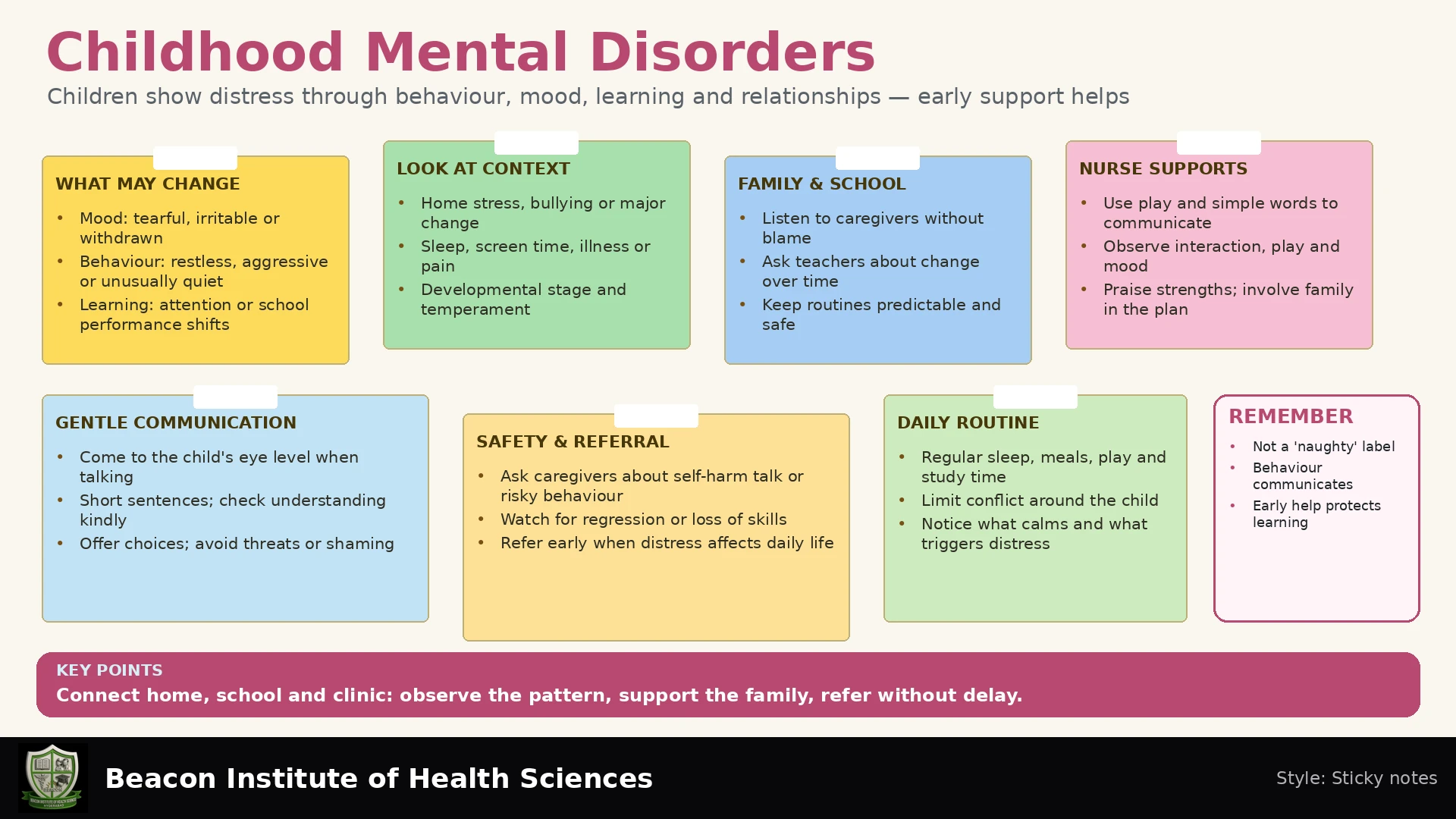
Understanding Childhood Mental Disorders
Childhood mental disorders are increasingly recognized as significant concerns impacting development, learning, and overall well-being. It is crucial for nursing students and educators to approach these conditions with a framework that emphasizes understanding and support. Anxiety, depression and disruptive behavior disorders are mental health conditions; ADHD, autism and specific learning disorders are neurodevelopmental conditions. These categories can coexist but should not all be called neurodevelopmental differences. None should be reduced to 'bad parenting.' This perspective fosters a non-stigmatizing environment essential for effective care.
A developmentally informed assessment forms the bedrock of understanding these conditions. This means recognizing that a child's symptoms and behaviors must be evaluated within the context of their chronological age, developmental stage, and individual maturational trajectory. Behaviors typical at one age may indicate a concern at another, necessitating a nuanced approach to evaluation.
The Role of Early Intervention
Early specialist evaluation is paramount in addressing childhood mental disorders. Timely assessment allows for the prompt initiation of appropriate interventions, which can significantly improve long-term outcomes for children and their families. Nurses play a vital role in identifying potential concerns, facilitating referrals, and supporting families through the diagnostic and treatment process.
Comprehensive Assessment in Pediatric Mental Health
A thorough and holistic assessment is fundamental when evaluating a child for potential mental health concerns. This process involves gathering diverse information from multiple sources to create a complete picture of the child's situation. Consent and safeguarding protocols must always be meticulously followed throughout the assessment to protect the child's rights and well-being.
Key Information Gathering Areas
- Child's Perspective: When age-appropriate, understanding the child's own feelings, experiences, and challenges is crucial.
- Caregiver Information: Insights from parents or primary caregivers are invaluable, covering developmental history, family dynamics, past medical issues, and observed behaviors at home.
- School Information: Reports from teachers and school staff provide context on academic performance, social interactions, and behavior in the educational setting.
- Developmental History: A comprehensive review of developmental milestones, including cognitive, motor, social, and language development, helps identify any delays or regressions.
- Medical Information: Past and current medical conditions, medications, and relevant family medical history are essential for ruling out physiological causes of symptoms.
Functional Assessments
Beyond historical data, a focused assessment of current functioning is critical. This includes evaluating:
- Sleep Patterns: Disturbances in sleep can significantly impact mood, concentration, and behavior.
- Functioning in Daily Activities: How the child manages self-care, chores, play, and other age-appropriate tasks.
- Hearing: Ensuring no hearing impairment is contributing to communication difficulties or apparent inattention.
- Learning Abilities: Observing and gathering information on how the child processes and retains information, identifying potential learning disorders.
It is important to remember that a diagnosis should never be made based on a single classroom behavior or isolated incident. Mental health conditions are complex and require a comprehensive, multi-faceted assessment.
Intervention Strategies and Nursing Considerations
Once an evaluation is complete and concerns are identified, a range of intervention strategies may be employed, with nursing care often central to their implementation and monitoring.
- Age-Appropriate Skills-Based Therapy: This involves therapeutic interventions tailored to the child's developmental level, focusing on teaching coping mechanisms, social skills, emotional regulation, and problem-solving abilities.
- Parent Support: Providing education, guidance, and emotional support to parents is critical. Empowered parents are better equipped to understand their child's needs and participate effectively in their care plan.
- School Adjustments: Collaborating with schools to implement accommodations, such as individualized learning support or behavioral support strategies available in the local school, can create a more conducive learning environment.
- Specialist Medications: When appropriate, specialist medications may be prescribed by qualified medical professionals. Nurses play a crucial role in administering these medications, educating families about their purpose and potential side effects, and monitoring their effectiveness.
- Monitoring Growth, Appetite, and Sleep: Especially when medications are prescribed, ongoing monitoring of the child's physical health, including growth, appetite, and sleep patterns, is essential to detect and manage any adverse effects.
Case Study: Understanding Applied Concepts
Case Scenario
Meet Ahmed, a 9-year-old boy whose parents have brought him to the primary care clinic for persistent concerns. His parents report that Ahmed frequently seems withdrawn, often expresses feelings of sadness, and has lost interest in playing football, an activity he previously loved. At school, his teacher notes a significant decline in his academic performance over the last six months, and he struggles to complete assignments, often appearing distracted. He also has difficulty making friends and often isolates himself during recess. His sleep has become erratic; he has trouble falling asleep and often wakes up during the night. The parents deny any recent major family stressors but are worried about Ahmed's noticeable change in behavior and mood.
Questions
- Based on the information provided, what potential childhood mental disorder categories might Ahmed's symptoms align with?
- What specific information should the nurse gather from Ahmed's parents, Ahmed himself (age-appropriately), and his school to conduct a comprehensive assessment?
- Outline the key functional areas the nurse should assess in Ahmed.
- What initial intervention strategies, based on the course material, might be considered for Ahmed?
Answer Key
- Ahmed's symptoms of withdrawal, sadness, loss of interest in previously enjoyed activities, decline in academic performance, social isolation, and sleep disturbances strongly suggest potential alignment with depression. The reported difficulty completing assignments and distraction at school could also hint at elements of a learning disorder or potential difficulties with focus, though depression is a primary concern.
To conduct a comprehensive assessment, the nurse should gather:
- From Parents: Detailed developmental history (milestones, past medical issues), specific observations of Ahmed's mood and behavior at home, changes in appetite or energy levels, family history of mental health conditions, and any prior interventions or support sought.
- From Ahmed (age-appropriately): His feelings about school, friends, and his activities; what he finds enjoyable or difficult; how he describes his sleep; and any worries or concerns he might have.
- From School: Teacher reports on academic performance trends (specific subjects, types of assignments affected), social interactions with peers and teachers, classroom behavior, attention and focus levels, and any observed changes in his participation or motivation.
The key functional areas to assess in Ahmed include:
- Sleep Patterns: Documenting the frequency of sleep difficulties, time to fall asleep, nighttime awakenings, and daytime fatigue.
- Daily Functioning: How his mood and attention issues impact self-care (e.g., hygiene), completion of chores, and engagement in family activities.
- Hearing: A basic screening or inquiry to rule out hearing difficulties contributing to inattention or social withdrawal.
- Learning Abilities: Assessing reported difficulties in school (e.g., specific subjects, reading, writing, comprehension) to identify if a learning disorder needs further evaluation.
- Appetite and Growth: Inquiring about any changes in eating habits or weight, as these can be affected by depression and are crucial for overall health.
Initial intervention strategies for Ahmed, based on the course material, might include:
- Early Specialist Evaluation: Referring Ahmed for a formal evaluation by a child psychiatrist or psychologist to confirm diagnosis and develop a tailored treatment plan.
- Age-Appropriate Skills-Based Therapy: Initiating therapy focused on teaching Ahmed coping strategies for sadness, improving social skills, and techniques for emotional regulation.
- Parent Support: Providing education and guidance to Ahmed's parents on how to support him at home, encourage engagement in activities, and manage his sleep routine.
- School Adjustments: Collaborating with the school to implement temporary accommodations, such as reduced workload, extended time for assignments, or designated check-ins with a school counselor, while further evaluations are underway.
- Monitoring: Continuously monitoring his mood, behavior, sleep, appetite, and academic progress, and communicating these observations to the specialist.
Quiz
Test your knowledge on childhood mental disorders by taking our quiz: Quiz on Childhood Mental Disorders
Safety and Safeguarding
Use developmentally appropriate questions about distress, bullying, abuse, self-harm and immediate safety. Explain privacy and its limits to the child and caregiver. Follow local safeguarding and clinical procedures when there are concerns; do not promise secrecy. Severe deterioration, suspected abuse, suicidal intent or inability to maintain nutrition or basic safety warrants urgent assessment.
Listen to the child's preferences and seek their assent alongside legally appropriate consent. Provide general information to caregivers while respecting privacy and safety. For Ahmed, the assessment should explicitly include bullying, safety and possible self-harm, rather than assuming that his difficulties are academic. Coordinate a clear follow-up plan and confirm how the family will access help.